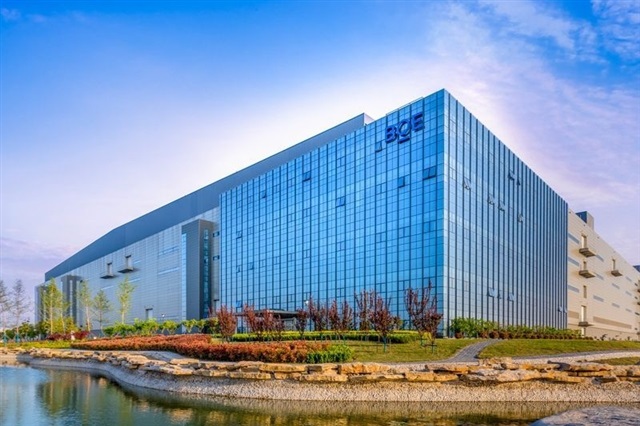
China’s leading display manufacturer BOE is still facing ongoing OLED production challenges for Apple’s iPhone lineup, and the issue has reportedly persisted since late 2025. With these manufacturing problems yet to be fully resolved, Apple’s supply chain is shifting in a way that could reshape who wins the next wave of iPhone display orders.
The biggest immediate beneficiary appears to be Samsung Display. As BOE struggles to meet Apple’s strict quality and production requirements, Samsung Display has stepped in and taken over millions of iPhone OLED panel orders that were originally allocated to BOE. This kind of reallocation isn’t unusual in Apple’s tightly managed supplier ecosystem, but the scale matters: when millions of units move from one supplier to another, it can quickly influence pricing, production planning, and long-term supplier standing.
For Apple, the priority is straightforward: secure enough high-quality OLED panels to meet iPhone demand without delays, quality inconsistencies, or last-minute shortages. OLED displays are one of the most important iPhone components, affecting everything from brightness and color accuracy to battery efficiency and user experience. If a supplier can’t consistently deliver to spec, Apple typically reduces dependency and increases orders from partners with proven capacity and yield stability.
For BOE, this is a critical moment. The company has been working to increase its role in the premium smartphone OLED market, and iPhone orders represent both major revenue potential and a strong validation of manufacturing capability. Continued production difficulties, especially over a long stretch of time, can make it harder to regain trust and reclaim lost volume—particularly when competitors are ready to absorb that demand.
For Samsung Display, taking on additional iPhone OLED orders strengthens its position as a key supplier for Apple. Beyond short-term shipment boosts, it can also reinforce Samsung Display’s leverage in future negotiations, capacity planning, and technology roadmaps tied to Apple’s next iPhone generations.
More broadly, this situation highlights how competitive and unforgiving the smartphone OLED supply chain has become. Apple’s suppliers must meet high standards at massive scale, and even temporary production setbacks can quickly translate into lost business. If BOE’s OLED production issues continue, more iPhone display orders may remain with South Korea’s established players rather than shifting toward newer alternatives.
If you’d like, share the rest of the post content (the full text after the cutoff), and I can rewrite the complete article with better flow, more search-friendly phrasing, and a more engaging structure while keeping the same meaning.