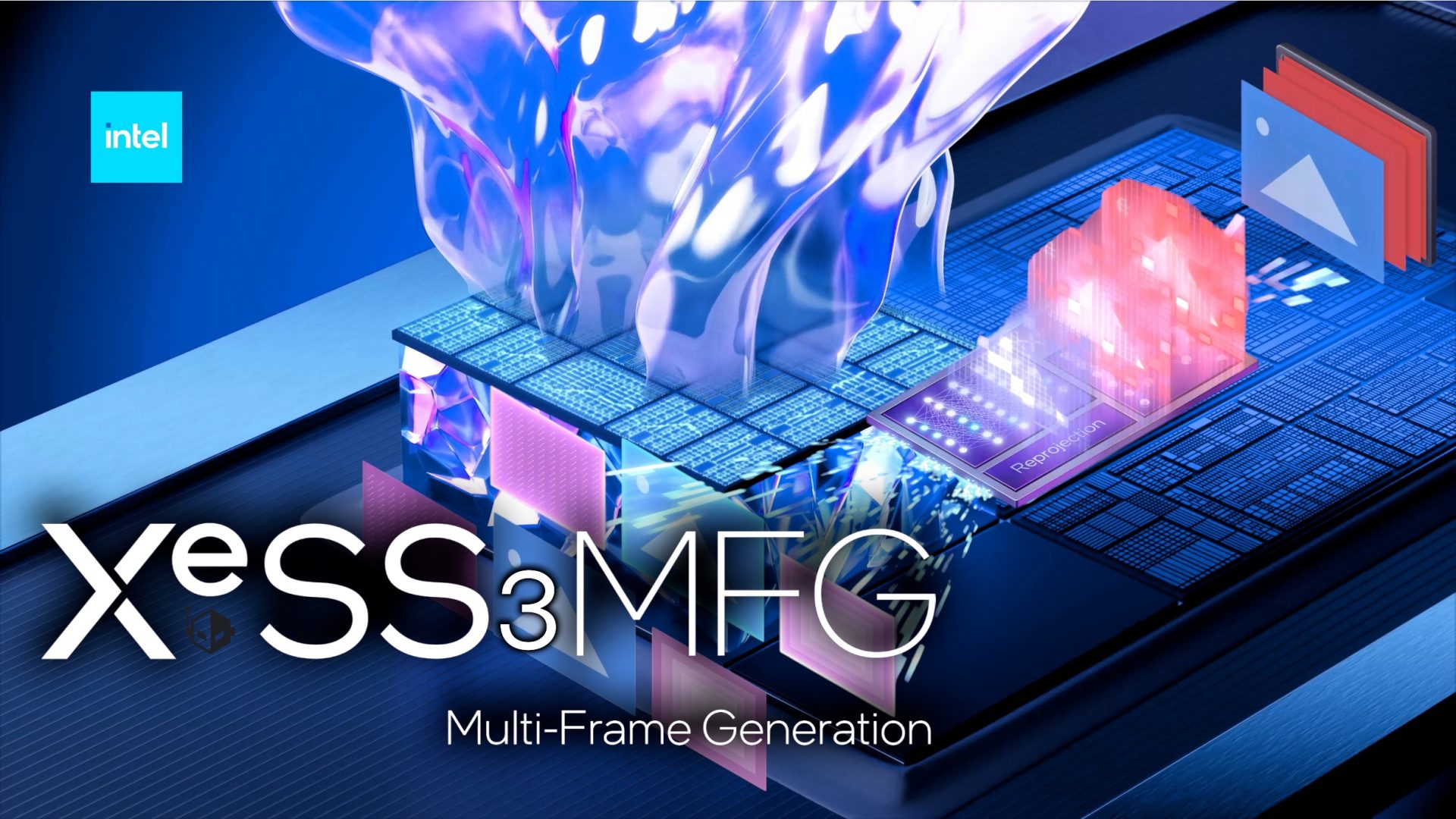
Intel has officially rolled out the XeSS 3 SDK on GitHub, giving game developers easier access to its newest AI-powered upscaling and frame-generation features. On paper, that’s a big step toward wider adoption of Intel’s XeSS technology. In practice, though, it comes with a major catch: despite earlier expectations that XeSS would move toward an open-source future, the XeSS 3 SDK is still distributed as proprietary Windows binaries, keeping the core technology closed-source.
XeSS 3 is Intel’s latest push in the increasingly competitive world of upscaling and frame generation, where features like AI upscaling and synthetic frames can dramatically raise frame rates and smooth gameplay. Alongside XeSS 3, Intel’s Multi-Frame Generation (MFG) has been positioned as a performance booster designed to help games hit higher FPS when hardware is being pushed to its limits. Originally tied to Intel’s Panther Lake era messaging, these features have since broadened in hardware support and now extend across Intel Arc Alchemist and Arc Battlemage graphics products.
That expansion is great news for Intel gamers, especially as frame generation becomes a go-to setting for players trying to get better performance without buying expensive new hardware. For many people, upgrading a GPU just to gain more frames isn’t realistic, and solutions like Intel’s MFG can be a practical alternative—so long as you’re on supported hardware and the right platform.
The platform limitation is the sticking point. Since the SDK relies on Windows-only binary libraries, XeSS 3 remains effectively locked to Windows. That means developers can’t inspect, audit, or modify the code in the way they can with truly open solutions, and users on other operating systems are left out. For Linux gamers in particular, this is a frustrating outcome: no XeSS 3.0 or Multi-Frame Generation benefits, even as more PC players explore Linux gaming and compatibility layers continue to improve.
The closed nature of XeSS also stands out when compared to AMD’s more open approach with FidelityFX Super Resolution, which allows developers to review and adjust source code. That level of transparency can make it easier to integrate the tech across more engines and platforms, and it can help build long-term trust within developer communities. By keeping XeSS proprietary and Windows-focused, Intel risks slowing broader adoption, even as interest in upscaling and frame generation keeps surging.
For now, Intel’s GitHub release improves distribution and visibility for the SDK, but it doesn’t deliver the open-source shift many were hoping for. If Intel eventually follows through with a truly open release and expands support beyond Windows, it could accelerate adoption and encourage more games to implement the latest XeSS features. Until then, XeSS 3 remains a powerful option—just one that’s still gated by closed binaries and limited platform reach.