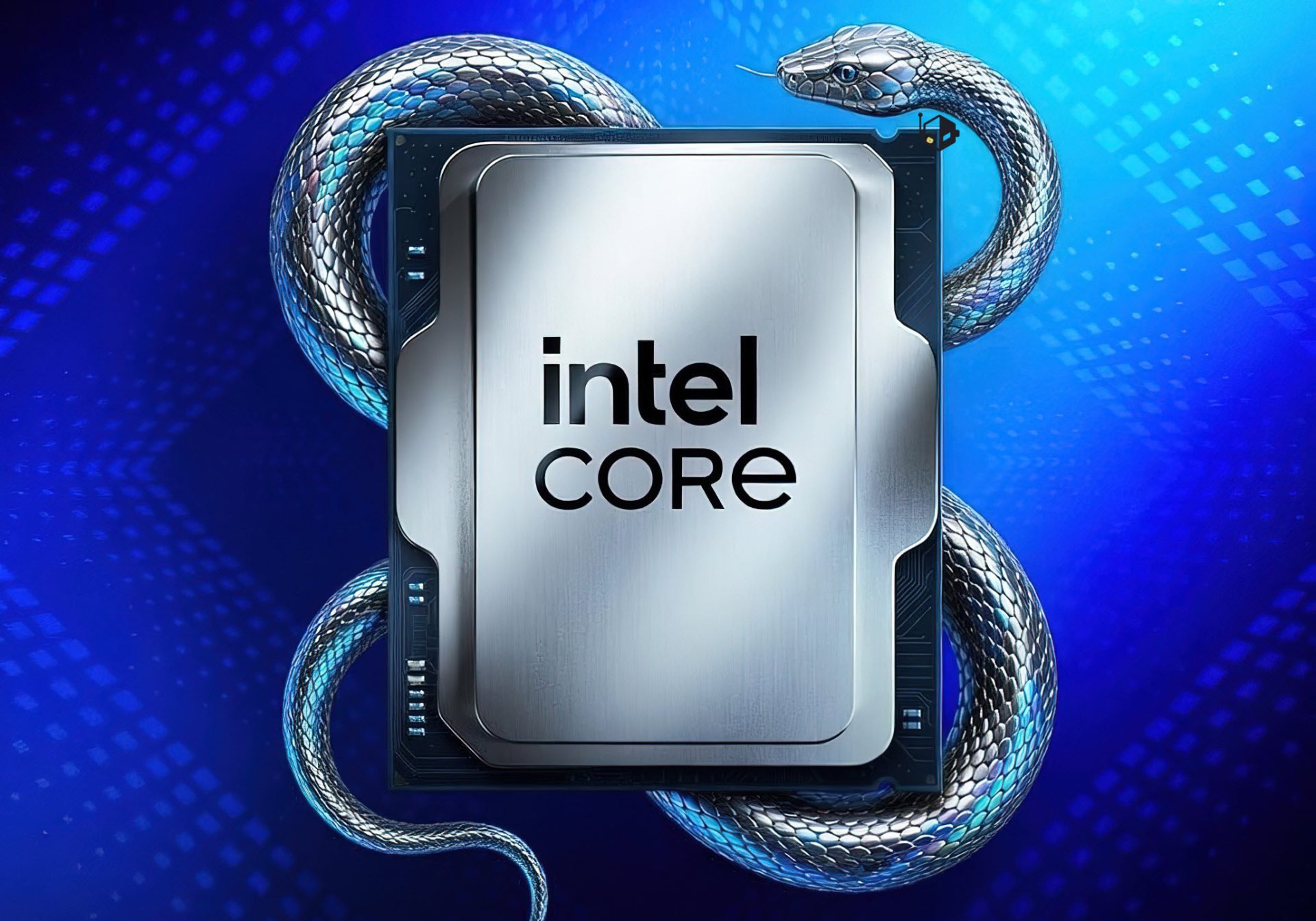
Intel’s next big leap in CPU design could involve an unexpected partner on the graphics side. Fresh leaks point to Intel Serpent Lake CPUs as the first Intel processors expected to integrate an NVIDIA RTX-based GPU tile, potentially creating a powerful “Halo-style” system-on-chip (SoC) that blends Intel’s x86 CPU technology with RTX-class graphics.
If the timeline holds, Serpent Lake is still years away. Current chatter suggests Intel’s Razer Lake will arrive as the successor to Nova Lake, likely around 2027–2028, with Titan Lake following after that and Hammer Lake coming next. Serpent Lake appears to be a special offshoot: not simply the next step in the usual roadmap, but a distinct SoC branch tied to Titan Lake that’s said to pursue a Halo-like design approach.
What makes Serpent Lake stand out is the GPU tile. While the exact configuration and performance tier are unknown, the key detail is that the graphics tile is reportedly based on NVIDIA’s RTX IP. Assuming Serpent Lake lands in the 2028–2029 window, that could line up with NVIDIA’s future Rubin generation (or whatever succeeds it), meaning this chip could deliver much more advanced integrated graphics than what typical CPU iGPUs have offered in the past. If accurate, Serpent Lake would represent a major shift: an Intel CPU that includes RTX-class graphics technology on-package, rather than relying on Intel’s own iGPU architecture or a separate discrete graphics card.
Alongside the Serpent Lake rumor, another leak sheds light on Intel’s core architecture plans. A next-generation P-Core design called Cooper Shark has surfaced, paired with a next-generation E-Core architecture referred to as Golden Eagle. This is notable because there have been ongoing rumors that Intel might move to a “unified core” strategy—bringing P-Core and E-Core concepts closer together, or even merging them into a single core design approach. However, the appearance of Cooper Shark and Golden Eagle suggests Intel may still be developing distinct P-Core and E-Core families rather than fully committing to one unified architecture in the near term.
Earlier speculation had suggested Griffin Cove P-Cores and Golden Eagle E-Cores might be associated with Razer Lake, while Titan Lake was often mentioned in connection with a unified core approach. The latest claims muddy that picture and hint that a unified-core transition could be delayed, redesigned, or limited in scope, with Intel instead leaning on a new round of traditional P-Core and E-Core advancements.
Of course, it’s important to treat all of this as early information rather than confirmed specifications. Product names, launch timing, and architectural plans can change well before release. Still, these leaks offer an intriguing preview of where Intel CPUs and SoCs might be headed: higher-performance “Halo-like” designs, bigger emphasis on integrated graphics capability, and the possibility of RTX-derived GPU technology appearing in an Intel package for the very first time.
For quick context on Intel’s recent and rumored desktop CPU progression, here’s the broad generational arc mentioned in current roadmap discussions: Alder Lake (12th Gen), Raptor Lake (13th Gen), Raptor Lake Refresh (14th Gen), Arrow Lake (Core Ultra 200), Arrow Lake Refresh (Core Ultra 200 Plus), Nova Lake (often referenced as a future Core Ultra series), followed by Razer Lake, Titan Lake, and Hammer Lake in the years after—though the later entries remain largely unconfirmed and subject to change.