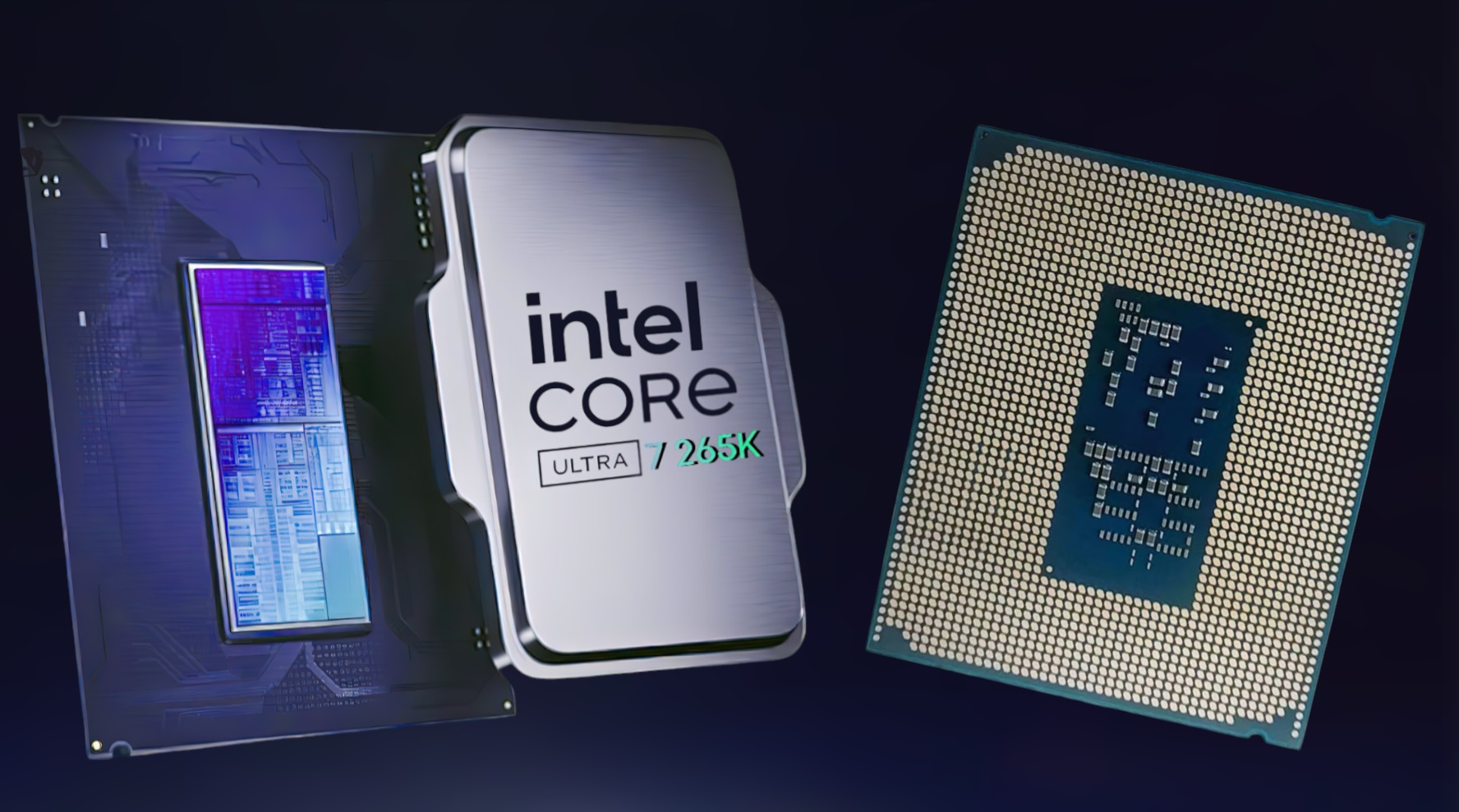
The Intel Core Ultra 7 265K CPU Is a Mixed Bag in Cache Performance Benchmarks
The Intel Core Ultra 7 265K CPU has recently been put through its paces in the AIDA64 benchmark, shedding light on its performance in memory and cache latency tests. Although it boasts significant improvements in L1 and L3 cache speeds compared to its predecessors, it stumbles noticeably when it comes to the L2 cache.
A detailed look at the AIDA64 benchmark reveals a mixture of impressive and underwhelming results for the Intel Core Ultra 7 265K CPU. While some of these performance issues may stem from early engineering samples or suboptimal optimizations, the chip does exhibit substantial progress in some areas, particularly in the L1 and L3 caches.
Twitter user @9550pro shared an image of the AIDA64 Cache & Memory Benchmark. It shows the system configuration, including the Intel Core Ultra 7 265K CPU paired with a DDR5 RAM kit clocked at 6400 MT/s with CL 32-40-40-80 timings. The results highlight a high memory latency of 75.8ns, indicative of subpar Integrated Memory Controller (IMC) optimizations. When compared to Raptor Lake chips with a similar or even higher CL kit, the Core Ultra 7 265K’s latency is notably higher, suggesting slower communication than expected.
Despite the high memory latency, the L1 and L3 cache performances are promising. The L1 cache delivers Read/Write/Copy speeds of 5032.1/3508.0/7265.1 GBps, while the L3 cache registers 2222.4/1247.8/988.79 GBps. These numbers reflect respectable improvements over previous models. However, the L2 cache appears to be a weak point, lagging behind its Raptor Lake counterparts.
The L2 cache underperformance might be linked to the lower ring clock speeds or an immature BIOS version. The Ring Bus architecture is crucial for efficient communication between the CPU cores, caches, and memory controller. Reduced ring bus speeds can increase cache latency, potentially explaining why the Core Ultra 7 265K’s memory latency is higher than its predecessors. Given the multitude of factors affecting the final performance, it’s challenging to pinpoint the exact cause without further investigation.
The Intel Core Ultra 7 265K CPU is positioned to succeed the Core i7-14700K and 13700K, featuring 20 cores (8 performance cores and 12 efficiency cores). Clock speeds are set at 3.9 GHz base and 5.5 GHz boost for the performance cores, and 3.3 GHz base and 4.6 GHz boost for the efficiency cores. Recently, the CPU also showcased faster single-core performance than the Ryzen 9950X in a CPU-Z benchmark.
While the Intel Core Ultra 7 265K shows promise in several areas, some aspects still require optimization. Enthusiasts and professionals should keep an eye on future benchmarks and updates to get a clearer picture of its true potential.