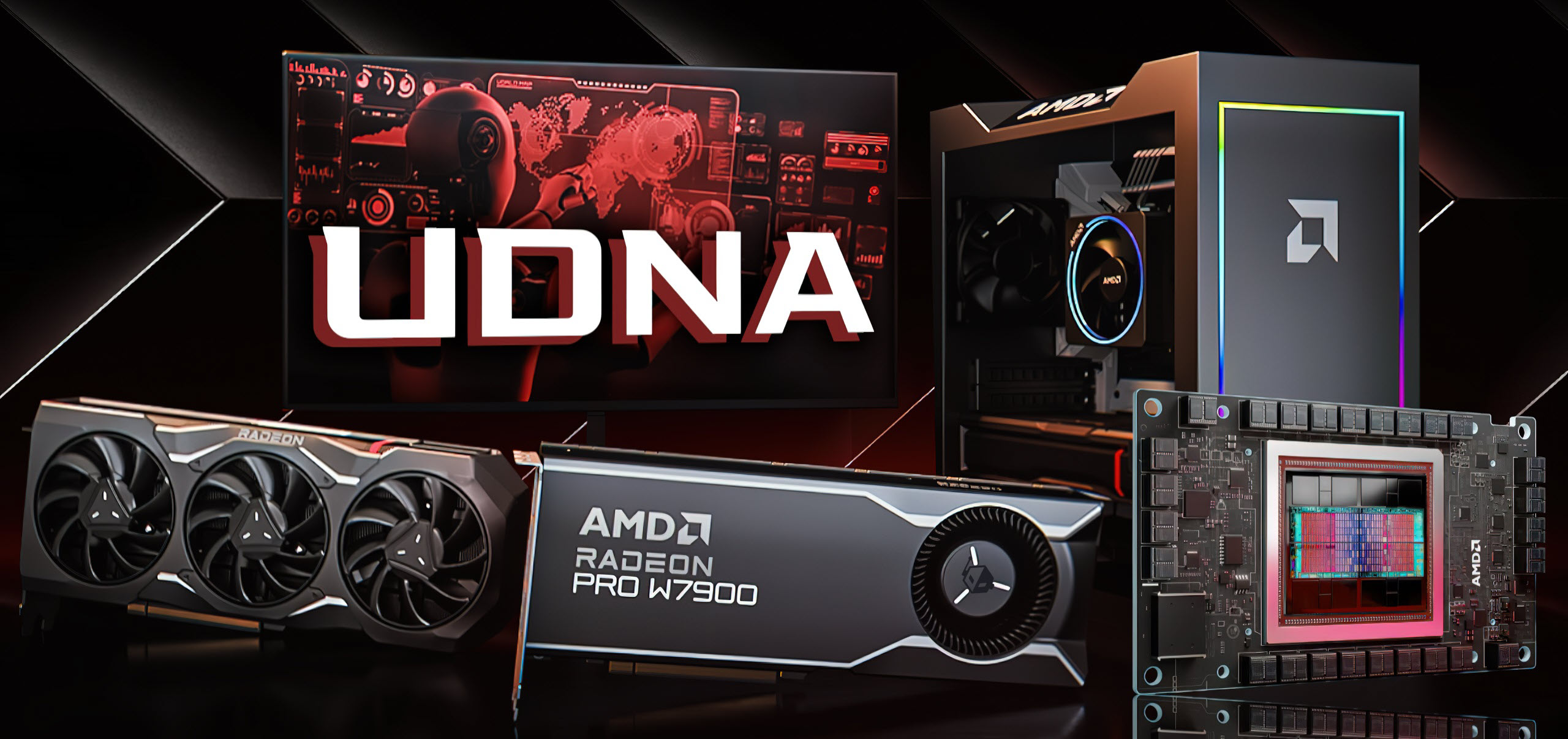
AMD is stepping up its game by merging its consumer RDNA and data center CDNA GPUs into a single, powerful architecture named UDNA. This strategic shift indicates AMD’s ambitious plans to expand its market share and present a formidable challenge in the next-generation GPU market.
The move isn’t completely new for AMD, given that they have previously worked under a unified architecture with their GCN product lineup until 2019. The introduction of separate RDNA and CDNA architectures helped AMD cater to emerging markets efficiently. However, in today’s fiercely competitive landscape, AMD aims to streamline development and increase its technological prowess by adopting a single, unified UDNA architecture.
AMD’s Jack Huynh explained that the new UDNA approach is designed to reinforce the firm’s business structure. By merging the consumer and data center GPU architectures, AMD aims to simplify the development process significantly. This unified framework will not only boost development productivity but also make it easier for developers, as they will no longer need to choose between different architectures, ultimately enhancing performance and value.
Interestingly, this strategy mirrors NVIDIA’s approach with its modern consumer and AI GPUs, where products like the “Blackwell” architecture share a single label for both AI and GeForce RTX 50 series GPUs.
With AMD’s new unified UDNA architecture, future GPU generations will adhere to a consistent naming scheme, such as UDNA 6 and UDNA 7, ensuring backward compatibility with existing RDNA and CDNA architectures. This forward-thinking strategy requires meticulous planning and extensive work but promises substantial optimization without overhauling memory hierarchies.
Huynh emphasized that the unified architecture would be accessible for developers to build on, hoping it would eventually compete with NVIDIA’s CUDA. Although achieving parity with NVIDIA will be challenging, especially on the software front, AMD is committed to enhancing its open-source ROCm software stack to close the gap.
In line with these ambitious plans, AMD also announced a focus on GPU scalability, aiming to capture a broader slice of the market rather than solely vying for the flagship GPU segment. While AMD’s bold moves suggest a promising direction, the highly volatile and unpredictable market landscape means the outcome of these decisions remains to be seen.
AMD’s determination to innovate and expand could lead to exciting developments in the GPU industry, and the unified UDNA architecture might just be the key to unlocking new levels of performance and market reach.