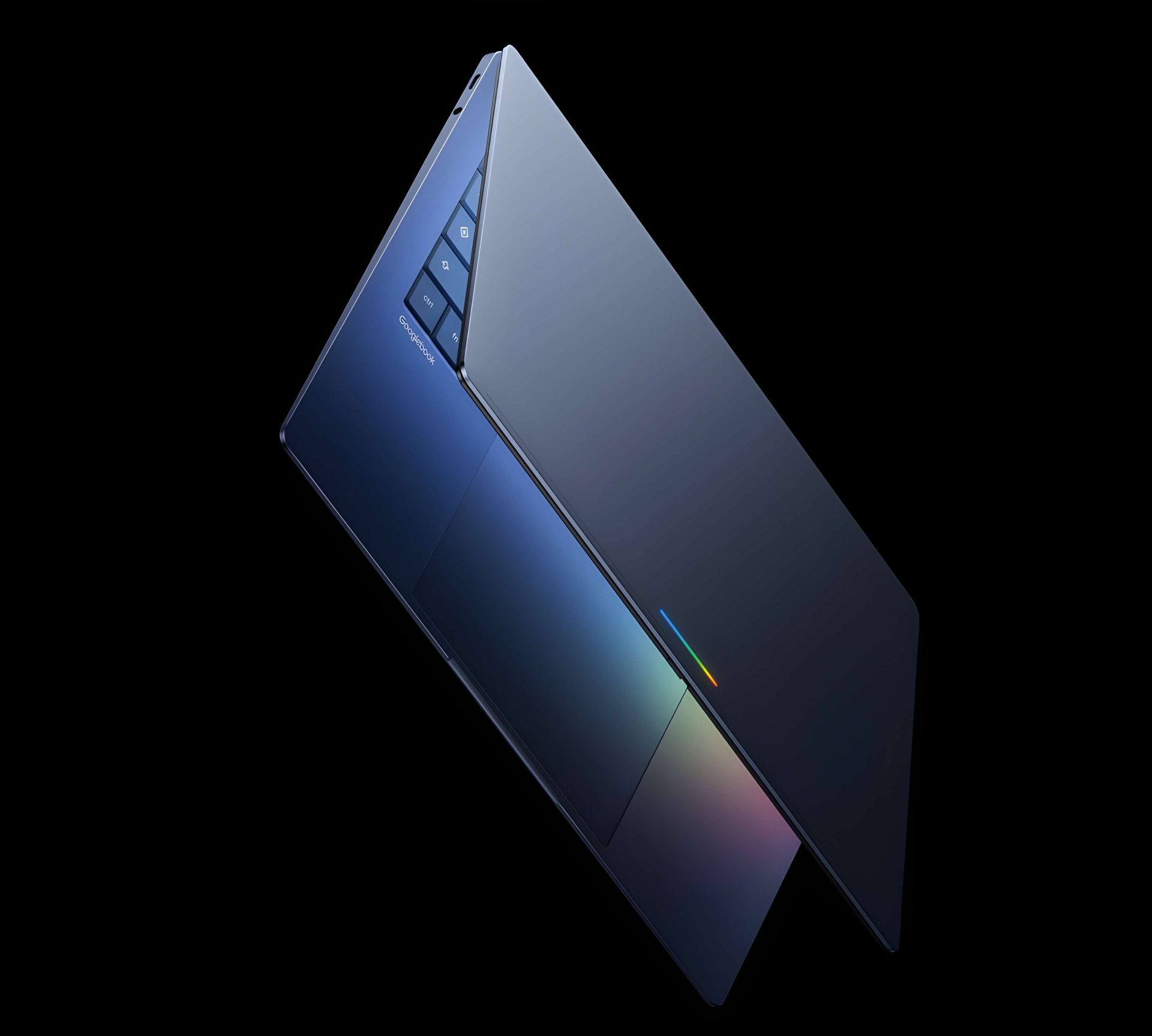
Google just dropped a surprise at the Android Show (I/O edition): a new premium laptop initiative that looks designed to go straight at Apple’s rumored MacBook Neo. The project is being widely referred to as the “Googlebook,” and it’s shaping up to be more than just another Chromebook refresh.
Right after the show, Intel publicly confirmed it’s partnering with Google on the Googlebook and says the two companies have been working together for some time. Intel didn’t share specs, timelines, or chip branding, but the early talk points to Intel’s upcoming Wildcat Lake processors as a possible fit. At the same time, it’s still unclear whether this is an exclusive silicon arrangement or whether some models will also use alternatives like next-generation Snapdragon chips. In fact, an update suggests Google is also working with MediaTek and Qualcomm, hinting that Googlebook could become a broader platform with multiple chip options rather than a one-CPU strategy.
What makes the Googlebook especially interesting isn’t just the hardware, but the software direction behind it. Google’s apparent goal is to fuse Chrome OS and Android into a single laptop-ready experience, with Gemini AI deeply integrated into the system. The idea is to deliver a more modern, AI-forward operating environment that supports laptop productivity features while keeping the app ecosystem and phone integration people already rely on.
According to current expectations, this new platform will be built around multimodal AI capabilities, improved cursor and pointer behaviors, and more flexible personalization such as custom widgets. It’s also expected to offer tighter integration with your phone, including access to mobile apps and files in a more seamless way than what most users are accustomed to on traditional laptops. There’s also chatter that Google may give this Chrome OS + Android fusion a new name, potentially “Aluminum OS,” and that the upcoming Google I/O event could go deeper on what the software actually is and how Google plans to position it.
The broader strategy seems clear: Google wants a unified foothold across devices—phones, laptops, cars, and XR—using one modernized software stack. If developers can build for smartphones first and then bring those apps to Googlebook with only small adjustments, Google could make it much easier to create apps that scale across form factors. One example of this new laptop-focused approach is a cursor concept being discussed as the “Magic Pointer,” which would use Gemini to provide contextual suggestions, summarize content, and trigger multimodal tasks while you work.
On the hardware side, Googlebook doesn’t appear to be positioned as a budget machine. Google has reportedly lined up an unusually strong list of PC partners—HP, ASUS, Dell, Lenovo, and Acer among them—which suggests this is intended to be a major category push rather than a single experimental product. The early expectation is that Googlebooks will come with premium builds, and there’s even a distinctive design cue mentioned: a light bar on the laptop lid. The timing also matters, with launch expectations pointing to this fall.
Still, there are potential pain points. One concern being raised is app compatibility—particularly for tools that rely on Electron. Since Android doesn’t natively support Electron apps the way desktop operating systems do, certain popular productivity or AI work apps may not run as expected without wrappers or other solutions. That could be a sticking point if Googlebook is meant to compete directly with macOS and Windows for power users. Google may have an answer by launch, but for now it remains a question mark.
All of this makes Googlebook feel like a coordinated, multi-company attempt to counter Apple’s momentum in thin, premium laptops—especially if Apple is aiming for a more affordable MacBook tier. The big unknown is pricing. If a model lands around the often-rumored $599 sweet spot, it could turn into a very real head-to-head fight for students, creators, and everyday buyers who want a premium-feeling laptop without premium pricing. With multiple OEMs involved, it wouldn’t be surprising if at least one partner manages to hit that kind of price point.
As more details are expected around Google I/O and closer to the rumored fall release window, the key things to watch are the final name and features of the new OS, the real-world app compatibility story, and whether Googlebook launches as a single “reference” product or a full family of AI-first laptops across Intel, Qualcomm, and MediaTek platforms.


