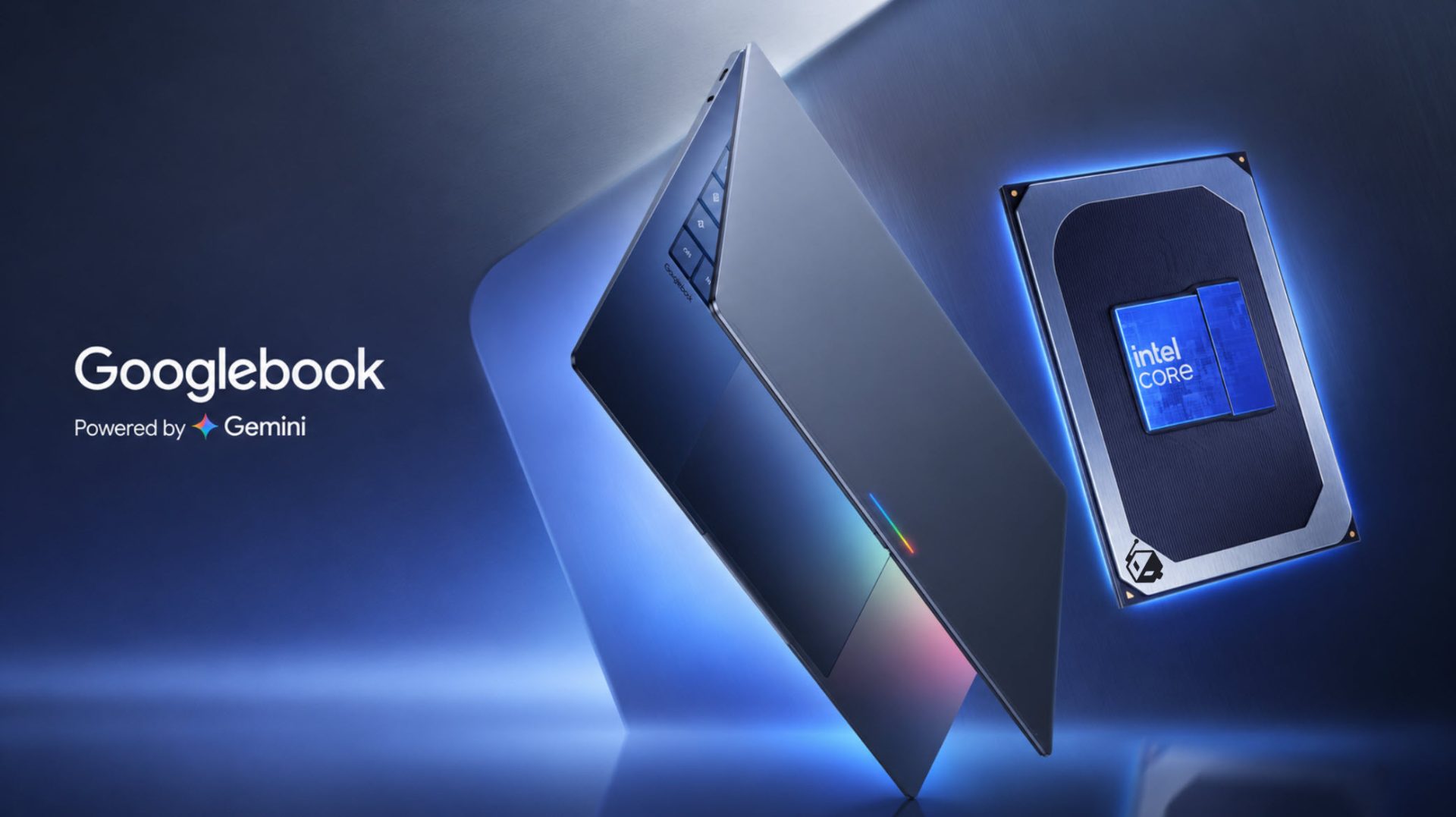
Googlebook laptops could arrive with premium Intel Panther Lake specs and powerful Xe3 graphics
Google’s newly introduced Googlebook laptop family may be aiming much higher than standard Chromebook devices. While Chromebooks have traditionally focused on affordability, simplicity, and cloud-first computing, early clues suggest Googlebook could be positioned as a more premium laptop lineup with stronger hardware, larger memory options, and next-generation processors.
A year-old shipping listing appears to point toward a high-end Google laptop configuration powered by Intel Panther Lake processors. The listing mentioned Intel Panther Lake chips with 12 Xe3 graphics cores, which would place the device firmly in the premium laptop category rather than the entry-level segment usually associated with many ChromeOS machines.
The most interesting part is that the references surfaced long before Google officially introduced the Googlebook name. At the time, the device was listed as a Chromebook, but the hardware described in the records looks far more advanced than what users typically expect from a conventional Chromebook. That raises the possibility that the listing may have been an early Googlebook prototype, an internal test platform, or a design that was delayed and later evolved into the new product family.
Intel and Google have reportedly been working together on Googlebook hardware, which makes the Panther Lake connection more believable. The listing refers to Intel’s Core Ultra Series 3 processors, including versions with 12 Xe3 GPU cores. These chips are expected to deliver a major jump in CPU and integrated graphics performance, especially for thin-and-light laptops that do not rely on dedicated graphics cards.
One key identifier appearing across the listings is “Q7AP,” which seems to refer to a Panther Lake 12Xe motherboard platform. The specific Google device carried the codename “Felino” and was associated with a 16-inch laptop design. The listed configuration included 32GB of LPDDR5X memory and 1TB of storage, both of which are clearly premium-tier specifications.
Interestingly, the same motherboard platform also appears to support 14-inch laptop designs. This suggests Googlebook devices may not be limited to one size and could launch in multiple form factors, including compact models for portability and larger versions for productivity-focused users.
Intel’s Panther Lake lineup under the Core Ultra Series 3 family includes several processor options across different performance levels. The higher-end models feature configurations with up to 16 CPU cores, combining performance cores, efficiency cores, and low-power efficiency cores. Some models also include integrated Xe3 graphics with up to 12 GPU cores, which could make them appealing for users who want stronger visual performance without needing a separate GPU.
If Google uses these Panther Lake 12Xe chips in Googlebook laptops, the company may be preparing to compete more directly with premium consumer laptops rather than budget Chromebooks. A Googlebook with a 16-inch display, 32GB of fast memory, 1TB of storage, and Intel’s next-generation integrated graphics would be a serious productivity machine for students, professionals, creators, and everyday users who want a polished Google-centered laptop experience.
Earlier expectations suggested that Googlebook laptops might use more mainstream processors such as Intel Wildcat Lake or lower-tier Core Series 3 chips. That could still happen. Google may split the lineup into multiple segments, with Panther Lake powering higher-end Googlebook models and more affordable chips reserved for mainstream versions.
This kind of strategy would make sense. A premium Googlebook could target users who want MacBook-like quality, better multitasking, stronger local performance, and longer useful lifespan. Meanwhile, lower-cost Googlebook models could appeal to students, casual users, and buyers who want a modern Google laptop without paying flagship prices.
Intel is not expected to be the only chip supplier for the Googlebook project. Qualcomm and MediaTek are also said to be involved, which means the lineup could include different processor architectures depending on the model. Qualcomm-based Googlebook laptops may focus on battery life and always-connected features, while MediaTek options could help Google offer more affordable or power-efficient designs.
Several PC manufacturers are also expected to prepare Googlebook hardware, so the final lineup may include a wide variety of designs, sizes, specifications, and price points. This could give Googlebook a broader market presence and help it compete more effectively against established laptop brands.
Googlebook is expected to become one of Google’s key laptop products as it moves beyond the traditional Chromebook image. The company appears to be building a lineup that can challenge premium laptops while still offering the benefits of Google’s software ecosystem.
Pricing will be one of the biggest factors. If Googlebook is designed to compete with Apple’s upcoming MacBook Neo, the starting price will matter greatly. The MacBook Neo is expected to begin around $599, although market conditions and supply constraints could push pricing higher. For Googlebook to stand out, Google and its partners will need to balance premium specifications with aggressive pricing.
For now, the Panther Lake-powered Googlebook remains based on early listing information rather than a confirmed retail product. Still, the details are promising. A Google laptop with Intel Core Ultra Series 3 processors, 12-core Xe3 graphics, up to 32GB of LPDDR5X memory, and 1TB of storage would signal a major shift in Google’s laptop ambitions.
If the final devices match these early specifications, Googlebook could become one of the most interesting new laptop families to watch, especially for users looking for a premium alternative to traditional Chromebooks and mainstream notebooks.