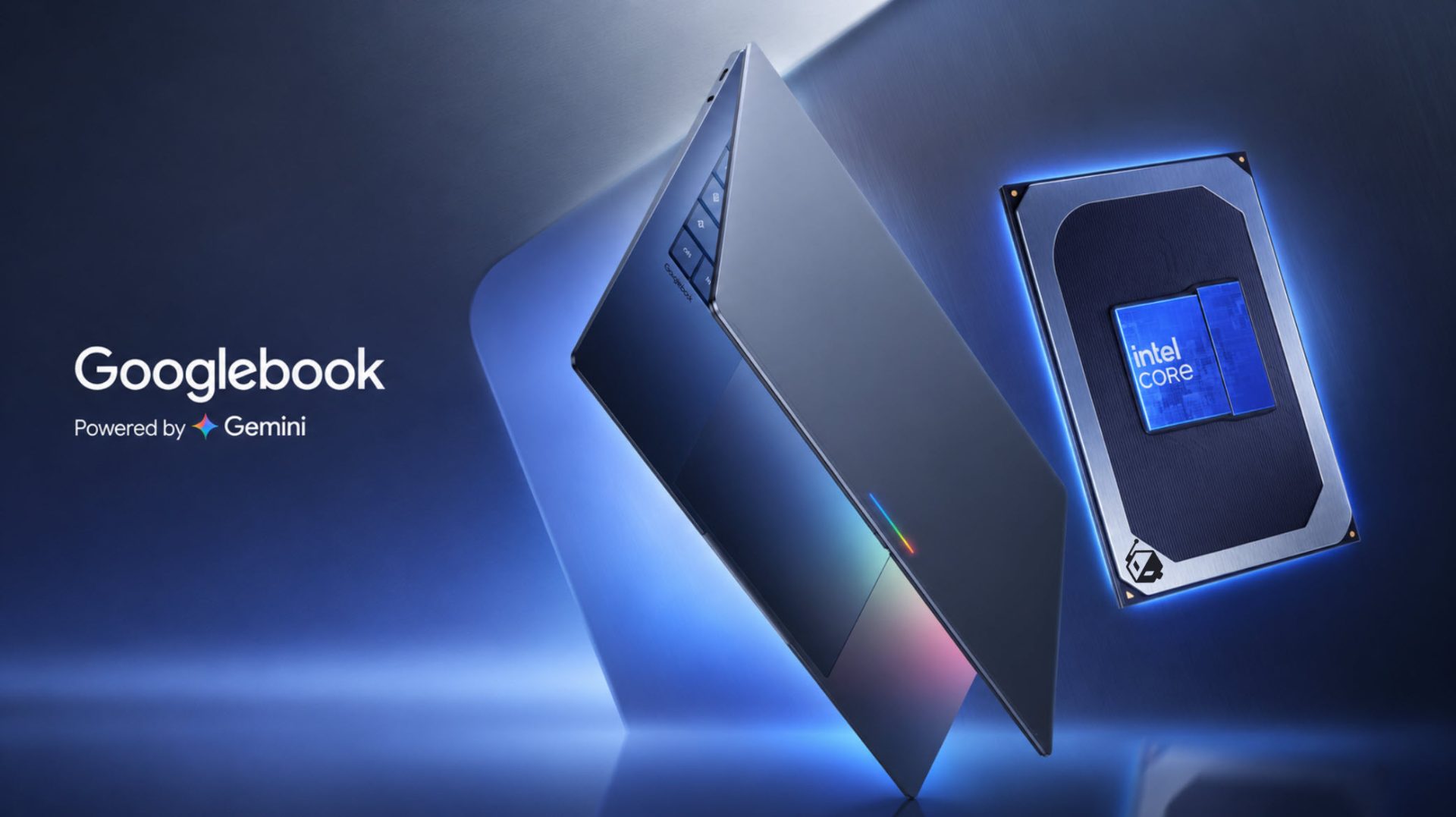
Intel has officially confirmed it will supply the processors for Google’s newly announced Googlebook laptops, signaling that the upcoming lineup is being positioned as a premium, performance-focused alternative in the modern laptop market.
Unveiled during Google’s annual I/O event, Googlebook is a brand-new laptop family built around a fresh software experience that brings Android, Google Play, and ChromeOS-style productivity together in a single platform. Google is also making its Gemini AI a central part of the experience, shaping Googlebook into a laptop designed for AI-first workflows rather than traditional lightweight web-only computing.
One of the standout additions is a feature Google calls Magic Pointer. Users can shake the pointer to trigger a Gemini mode, essentially putting AI tools front and center for writing, organizing, and completing tasks faster. Googlebook is also expected to run Android apps natively, aiming to deliver a smoother app experience on laptops without relying on workarounds that try to “simulate” phone-style apps on a bigger screen. On top of that, Google says users will be able to create their own widgets through Gemini, expanding personalization and productivity features.
To bring Googlebook to market, Google is working with major PC makers, including Acer, ASUS, Dell, HP, and Lenovo. But the biggest hardware confirmation so far comes from Intel itself. In a statement shared on X, Intel said it’s excited to partner with Google on Googlebook and described the devices as “premium” and “powerful,” built for “intelligence.” In other words, Intel is not just loosely involved—it’s providing the silicon that will power these laptops.
This move also highlights how aggressively the laptop landscape is shifting. Apple’s MacBook Neo has shaken up the mainstream segment, prompting traditional x86 PC players to respond with more competitive performance, efficiency, and AI capabilities. Intel is preparing its own push with its Core Series 3 “Wildcat Lake” family, which is expected to land in a wave of mainstream laptops over the coming quarters. With Googlebook, Intel and Google appear to be forming a two-pronged strategy to challenge Apple: competitive x86 laptop hardware combined with a new AI-driven operating experience designed to feel modern, unified, and fast.
For now, the exact Intel chip inside Googlebook hasn’t been named. It could be a custom design produced by Intel, or it could be a tuned version of Wildcat Lake optimized specifically for Googlebook’s AI-heavy feature set. Still, Intel’s emphasis on “powerful” suggests these won’t be entry-level parts, and that Googlebook will aim higher than the low-cost, low-spec reputation many people associate with earlier cloud-focused laptops.
It’s also worth noting that Googlebook isn’t being framed as a direct Chromebook replacement—at least not yet. Chromebooks are expected to continue selling alongside it. Instead, Googlebook looks like an additional tier: a more premium laptop category for users who want Android apps, desktop-style productivity, and built-in Gemini AI features as core functionality.
More specifics should arrive closer to release, with Googlebook currently expected to launch in Fall 2026. Until then, Intel’s confirmation is the clearest signal yet that Google is serious about making Googlebook a high-end laptop platform rather than a simple experiment—and that it’s leaning on Intel’s performance ecosystem to do it.


