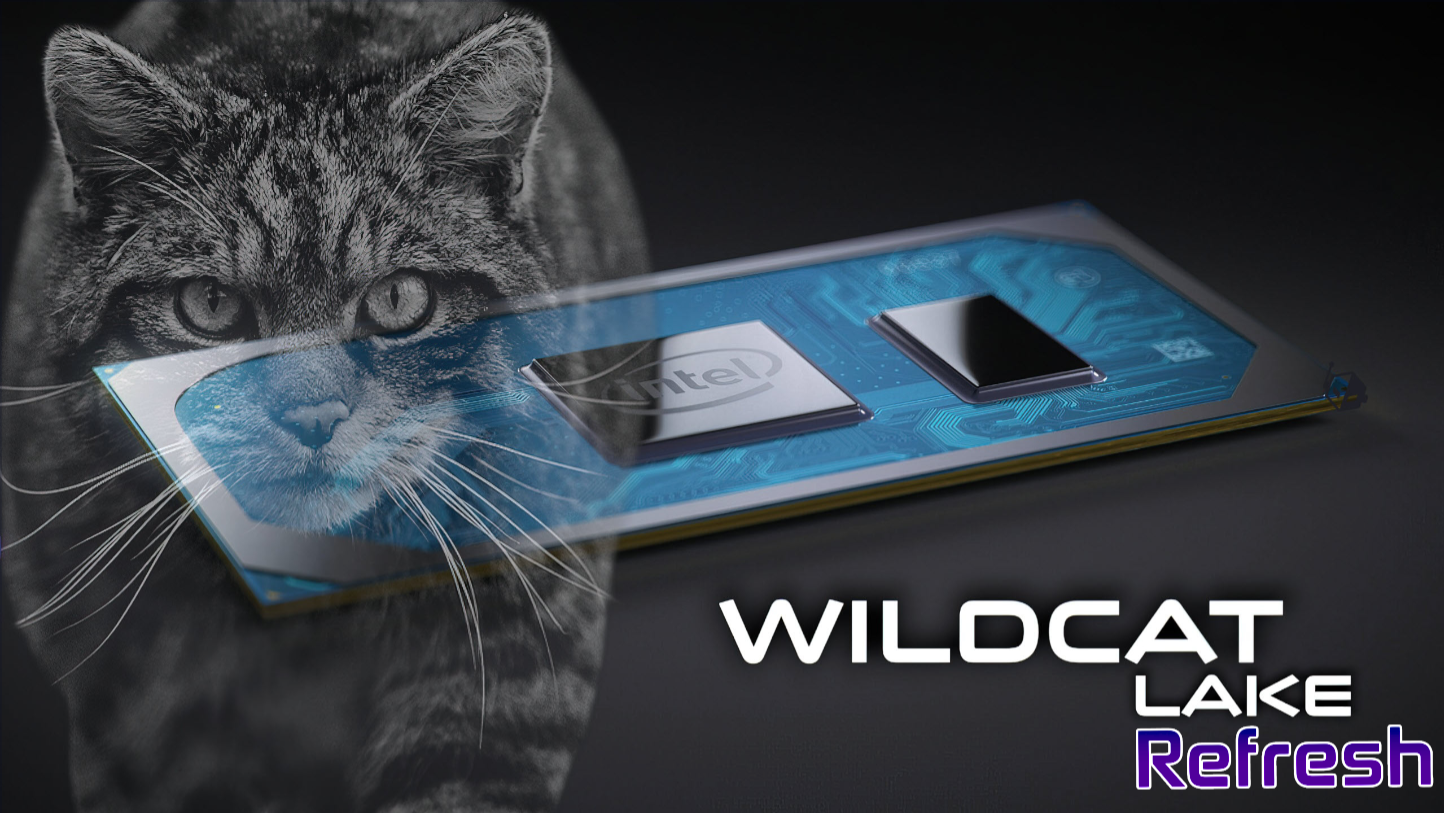
Fresh details are surfacing about Intel’s Wildcat Lake Refresh, a future entry-level CPU family that’s expected to build on Intel’s low-power, budget-friendly roadmap with a modern chiplet-based design. The information comes from well-known industry insider Jaykihn, and it points to a notable core-count upgrade arriving a year after the first Wildcat Lake chips.
Wildcat Lake is positioned as Intel’s affordable, low-wattage option for compact and cost-conscious PCs. It’s expected to arrive close to Intel’s Panther Lake releases and share several key building blocks, including Cougar Cove performance cores, Darkmont efficiency cores, and Xe3 integrated graphics. The target power range is believed to sit around 9–15W, which typically aligns with small desktops, mini PCs, and lightweight laptops that prioritize battery life, low heat, and a lower price tag.
Even though the first Wildcat Lake processors haven’t launched yet, early information suggests Intel is already planning a refresh for around 2027. The big change is an added configuration aimed at boosting CPU performance without drifting away from the entry-level segment.
The initial Wildcat Lake lineup is expected to include a 2+0+4 layout, meaning 2 performance cores, no standard efficiency cores, and 4 low-power efficiency cores (LP-E). In the refresh, Intel is reportedly adding a higher-core option featuring a 4+0+4 configuration. That would double the performance cores compared to the original Wildcat Lake setup while keeping the same count of LP-E cores, potentially offering a much snappier experience in everyday productivity, multitasking, and light content creation—especially in low-power devices.
On the graphics side, current details are less definitive. The first Wildcat Lake chips are said to come with 2 Xe3 GPU cores along with 2 RT units and XMX hardware. It’s unclear whether the refresh will keep the same iGPU configuration or scale it up on the higher-CPU-core model. There have also been claims that these chips won’t include ray tracing support, which would matter mostly for gaming and certain GPU-accelerated workloads. Until Intel confirms final specs, the safest expectation is that Wildcat Lake Refresh focuses primarily on CPU-side improvements.
One of the most interesting parts of the Wildcat Lake plan is the move to a chiplet design rather than a traditional monolithic die. Chiplets can help reduce costs and improve manufacturing flexibility—two things that make a lot of sense for entry-level products where value and efficiency are critical.
Platform features look surprisingly modern for a budget-oriented series. Wildcat Lake is expected to support Thunderbolt 4 connectivity and both LPDDR5X and DDR5 memory, which should help OEMs build machines that feel current rather than cut down. AI performance is also a major talking point, with a claimed total of up to 40 TOPS split across the CPU, GPU, and NPU (4 TOPS from the CPU, 18 from the GPU, and 18 from the NPU). That kind of AI throughput is increasingly important as Windows and popular apps expand on-device AI features, even in affordable systems.
Packaging details suggest where Wildcat Lake fits in Intel’s lineup. These chips are expected to use a BGA 1516 package, significantly smaller and more cost-efficient than higher-tier mobile silicon such as Panther Lake-H, which is associated with a much larger BGA 2540 package. In practical terms, that points to smaller motherboards, more compact devices, and potentially better pricing.
As for timing, Wildcat Lake is currently expected to arrive in the first half of 2026, with Wildcat Lake Refresh likely following in 2027—possibly around the early-year product announcement window.
If these leaks hold, Wildcat Lake Refresh could become a compelling option for budget PCs that still want modern connectivity, DDR5/LPDDR5X support, and meaningful AI acceleration—while also delivering a more capable CPU configuration than the first wave of Wildcat Lake processors.