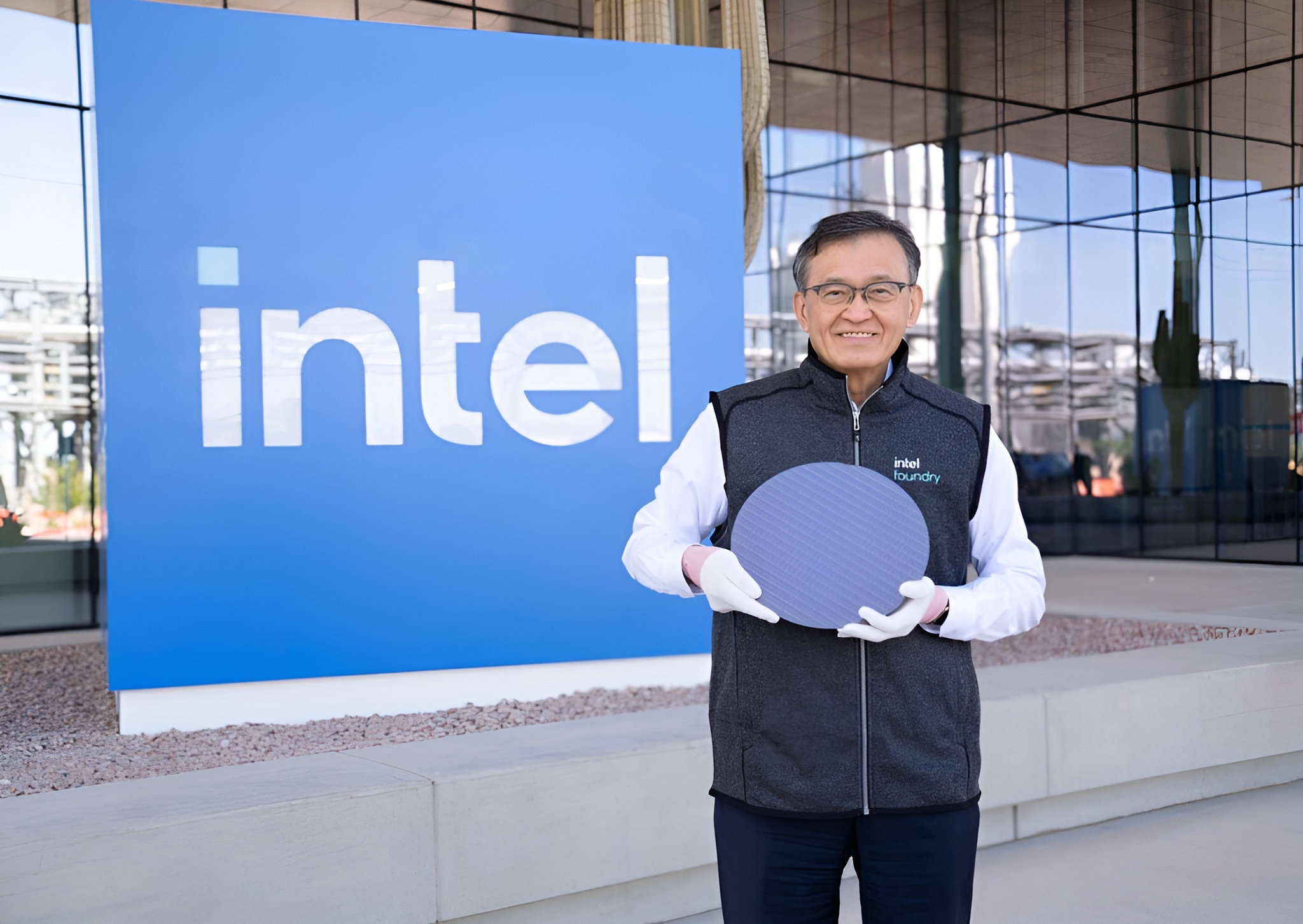
Intel’s foundry business is getting a renewed vote of confidence from the company’s leadership, with CFO David Zinsner pushing back on the idea that Intel is preparing to spin it off. Speaking at the UBS Global Technology and AI Conference, Zinsner outlined why Intel believes its next-generation manufacturing and advanced packaging roadmap still has major upside—especially as the company moves closer to broader adoption of its 18A process technology.
A key focus of Zinsner’s comments was Intel 18A, one of the company’s most important upcoming chipmaking nodes. Intel is already mass-producing Panther Lake chips, with a retail spotlight expected by January 5. Still, the big question for Intel Foundry’s long-term profitability comes down to yield rates—how many usable chips can be produced from each wafer—and whether those yields can reach levels that support healthy margins.
According to Zinsner, yields haven’t yet reached the “optimal” point Intel wants. However, he emphasized that progress has accelerated since CEO Lip-Bu Tan took the helm in March. Intel is now seeing predictable month-over-month yield improvement that aligns with what the broader semiconductor industry typically expects as a process matures. That kind of consistency matters, because stable yield gains can translate into better costs, better output, and stronger economics for both Intel’s own products and external foundry customers.
Zinsner also addressed growing talk about outside interest in Intel’s 18A variants, including 18A-P. He said the process is showing good maturity in its process design kit (PDK)—the critical set of tools and data chip designers need to build products on a manufacturing node. With that level of readiness, Intel plans to re-engage external customers to measure demand and explore potential commitments. Intel expects 18A-P and 18A-PT to support both internal products and outside clients, which helps explain why industry attention around the node has been building.
At the same time, Zinsner noted that Intel Foundry will not publicly discuss specific customers and will leave it to clients to disclose any future adoption of Intel’s nodes.
Beyond manufacturing, Intel is leaning heavily into advanced packaging as another major growth driver for its foundry unit. Zinsner pointed to strong customer interest in Intel’s packaging technologies such as EMIB, EMIB-T, and Foveros—options that can serve as alternatives when demand outstrips supply elsewhere. He described a “spillover effect” where market constraints have pushed customers to explore Intel’s capabilities, opening the door to deeper, longer-term engagements.
Zinsner acknowledged that while Intel was optimistic about the packaging opportunity 12 to 18 months ago, the company didn’t fully capitalize on the moment. He credited a capacity ramp elsewhere for easing some of the packaging bottlenecks that originally sparked the surge of interest, and also admitted Intel underperformed in getting some of its own packaging technology—particularly Foveros—to where it needed to be quickly enough. Even so, Intel views that early customer attention as a meaningful advantage because it helped move discussions from short-term capacity needs to more strategic partnerships.
The broader takeaway from Zinsner’s remarks is that Intel’s confidence in its foundry direction has not materially faded in recent months. With improving 18A yields, maturing PDKs, and packaging demand growing into more strategic conversations, Intel leadership is signaling that the foundry business can strengthen over time—without a spinoff on the horizon.


