NVIDIA CEO Jensen Huang recently made a surprising appearance on The Joe Rogan Experience, and one story in particular has been turning heads across the tech world: when NVIDIA unveiled its first DGX-1 AI supercomputer, interest from the market was almost nonexistent. According to Huang, the company invested billions into building the DGX-1, believing it would become the foundation for modern AI computing. But after the announcement, he says the response was basically silence.
Huang recalled that when DGX-1 was introduced, there were no purchase orders and no rush of customers eager to try it. At the time, most organizations were still focused on traditional, CPU-based computing for their workloads. GPU-accelerated AI infrastructure wasn’t yet viewed as essential, and the idea of buying a purpose-built AI machine seemed unnecessary to many.
That is, until Elon Musk showed interest.
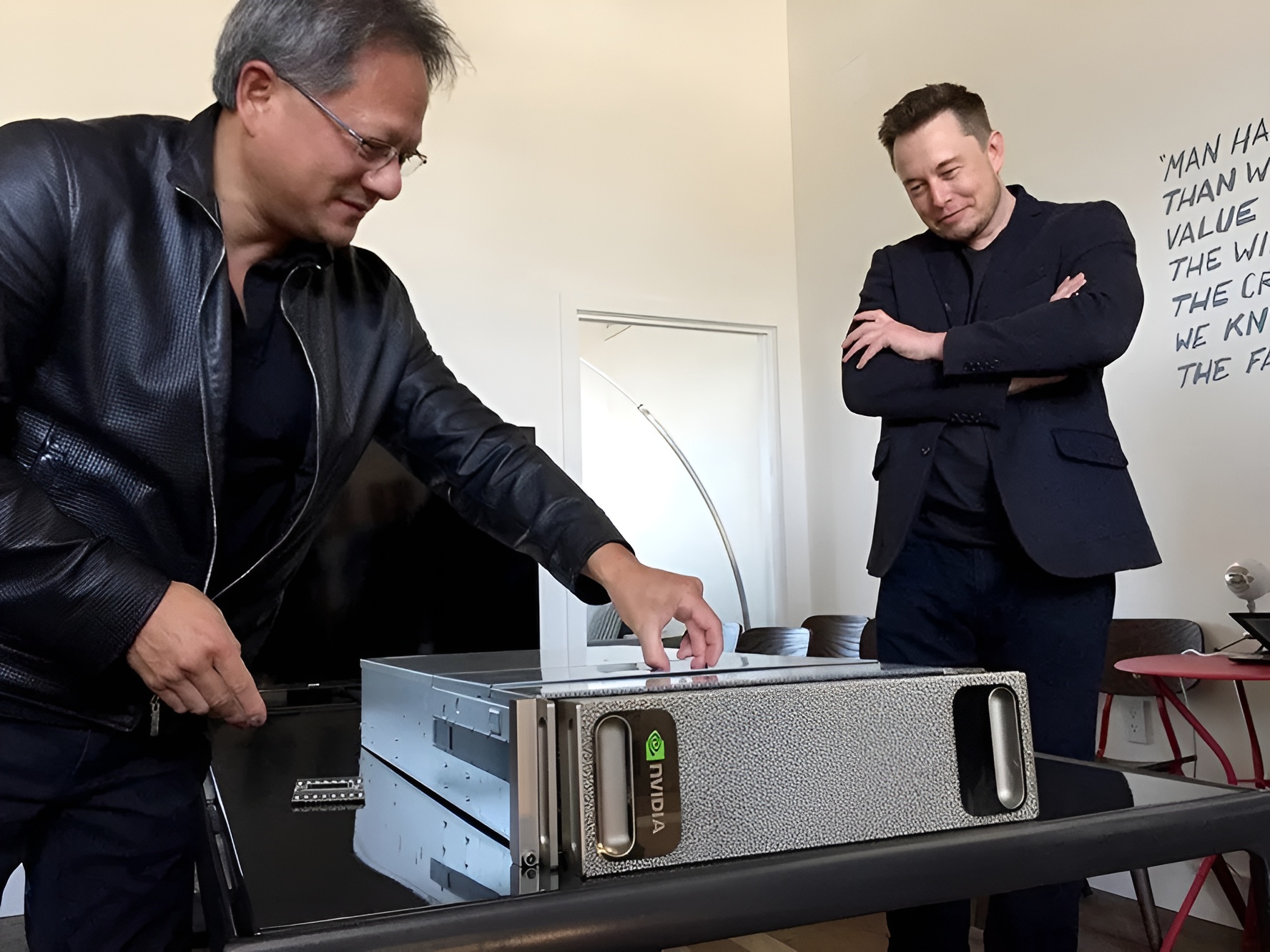
Huang says Musk was the first person who truly recognized what NVIDIA was building. Musk reportedly told him he had an organization that could really use a system like DGX-1: an AI-focused nonprofit. That nonprofit was OpenAI in its early days. Huang described how he boxed up a DGX-1 and personally delivered it to Musk in San Francisco back in 2016—effectively making Musk the first major customer for NVIDIA’s DGX AI platform.
Looking back, that early adoption became a pivotal moment in the broader AI revolution that would accelerate in the years that followed. At a time when AI compute wasn’t taking center stage, Musk’s decision gave NVIDIA a crucial validation point: someone with a big vision saw immediate value in GPU-powered AI infrastructure. That kind of real-world endorsement helped reinforce NVIDIA’s long-term direction in data center and AI computing.
Huang also touched on NVIDIA’s humble beginnings and how dramatically things have changed since those early DGX-1 days. Today, demand for NVIDIA AI systems has surged to extraordinary levels, with businesses and institutions racing to build out data centers and AI infrastructure. NVIDIA’s platforms now span multiple generations of AI computing technologies, and the company is preparing to launch its next wave of AI systems in the near future as the industry’s appetite for compute continues to grow.
The story is striking because it highlights how revolutionary technologies often look unnecessary—until the world catches up. And in this case, Huang’s account suggests Elon Musk saw the future of AI computing before almost anyone else was ready to buy into it.


