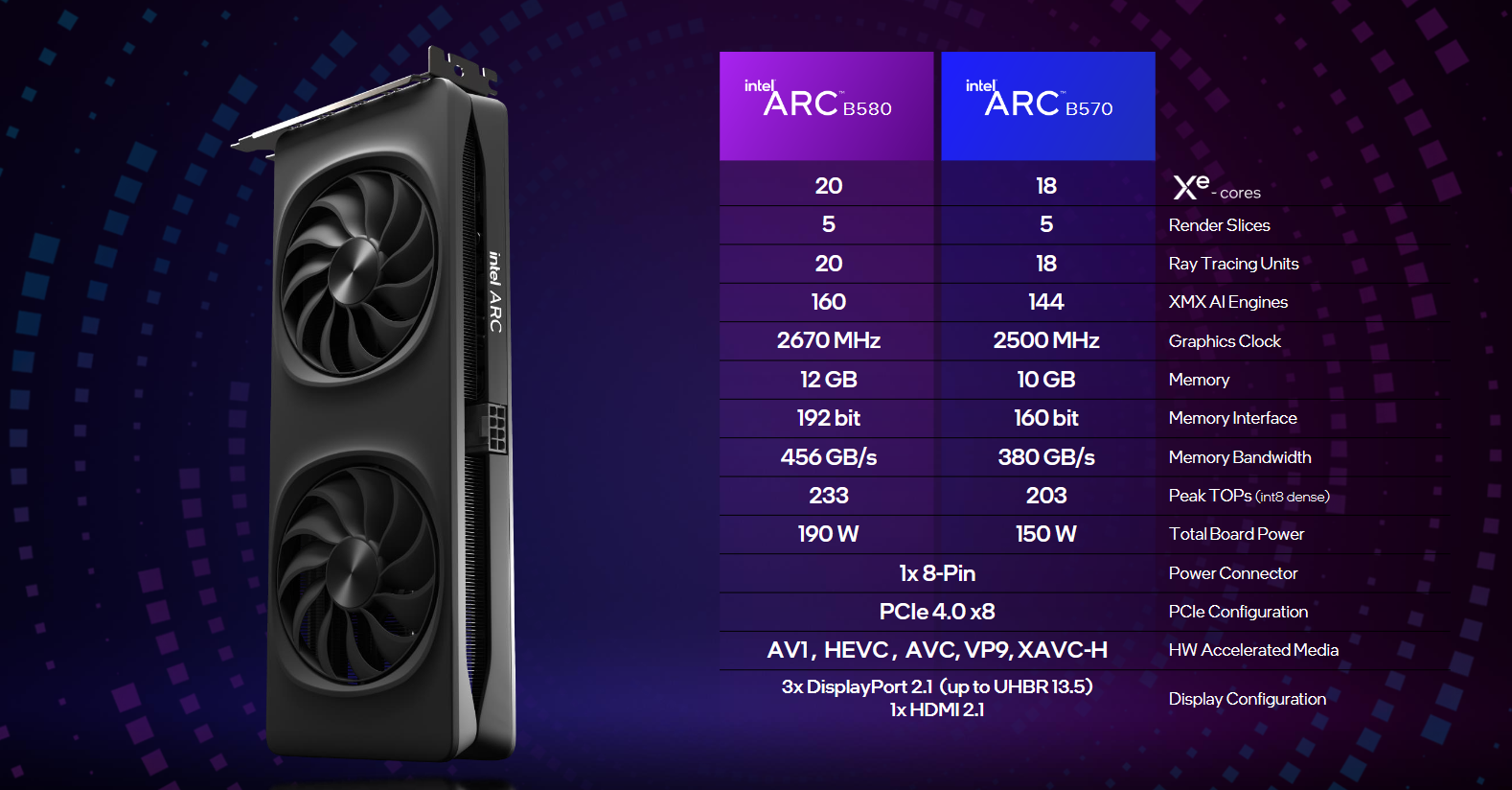
The Intel Arc B580 has made a splash with its recent 3DMark Time Spy test results, showcasing impressive performance numbers. With an overall score of 15,551, a graphics score of 14,719, and a CPU score of 22,881, the Arc B580 is living up to Intel’s claims of challenging mid-range competitors from Nvidia.
Intel had initially positioned the Arc B580 as a formidable contender against the Nvidia GeForce RTX 4060 Ti, offering similar performance at a more attractive price point. This claim seems well-supported as the Arc B580 outpaced the RTX 4060 Ti by approximately 12%, despite being tested with an Intel Core i9-14900KF to avoid any CPU bottlenecks.
When looking at the previous generation, the Arc B580 is only about 3% slower than the GeForce RTX 3080, and it performs comparably with the AMD Radeon RX 7700 XT. Furthermore, it outperforms Intel’s own last-gen Arc A770 by roughly 10%, showcasing a significant improvement.
While synthetic benchmarks have painted a promising picture for the Arc B580, the real question is how this translates into gaming performance, the true battleground for graphics cards. Past experiences with Intel’s Alchemist series showed strong benchmark numbers but a lack of impact on gaming performance. However, with time for driver updates and optimizations, the Arc B580 could potentially deliver the performance promised by its synthetic benchmarks.
Ultimately, the Arc B580’s performance in both synthetic and real-world gaming situations will determine its competitive edge in the ever-evolving graphics card market. With these early benchmark results, it’s off to a promising start.