Intel has made a strategic pivot in the AI landscape, recognizing the daunting challenge of directly competing with NVIDIA. Instead, the company is focusing on a more budget-friendly niche within the AI sector with its new Gaudi 3 AI offerings, aiming to provide the best bang for your buck in the market.
This move signals Intel’s shift away from trying to match NVIDIA in raw computational power, an area where NVIDIA holds a strong lead, towards targeting an untapped segment of cost-effective AI solutions. According to a report, Intel’s Gaudi 3 AI GPUs are being touted as having remarkable price-to-performance ratios, designed to appeal to a broader section of the industry.
Though not on par with NVIDIA’s latest GPU in terms of head-to-head performance, Gaudi 3 is engineered to facilitate economical AI systems for enterprises focusing on task-based and open-source models. Intel’s expert Nanduri noted that the company is leveraging its traditional strengths in these areas.
The Gaudi 3 lineup is claimed to rival NVIDIA’s renowned H100 AI accelerator, especially for inferencing tasks, which have gained popularity following the introduction of reasoning-focused language models. Intel states that their Gaudi 3 delivers 80% better performance-per-dollar compared to NVIDIA’s offering, with an even more impressive double the value when benchmarked with Llama-2.
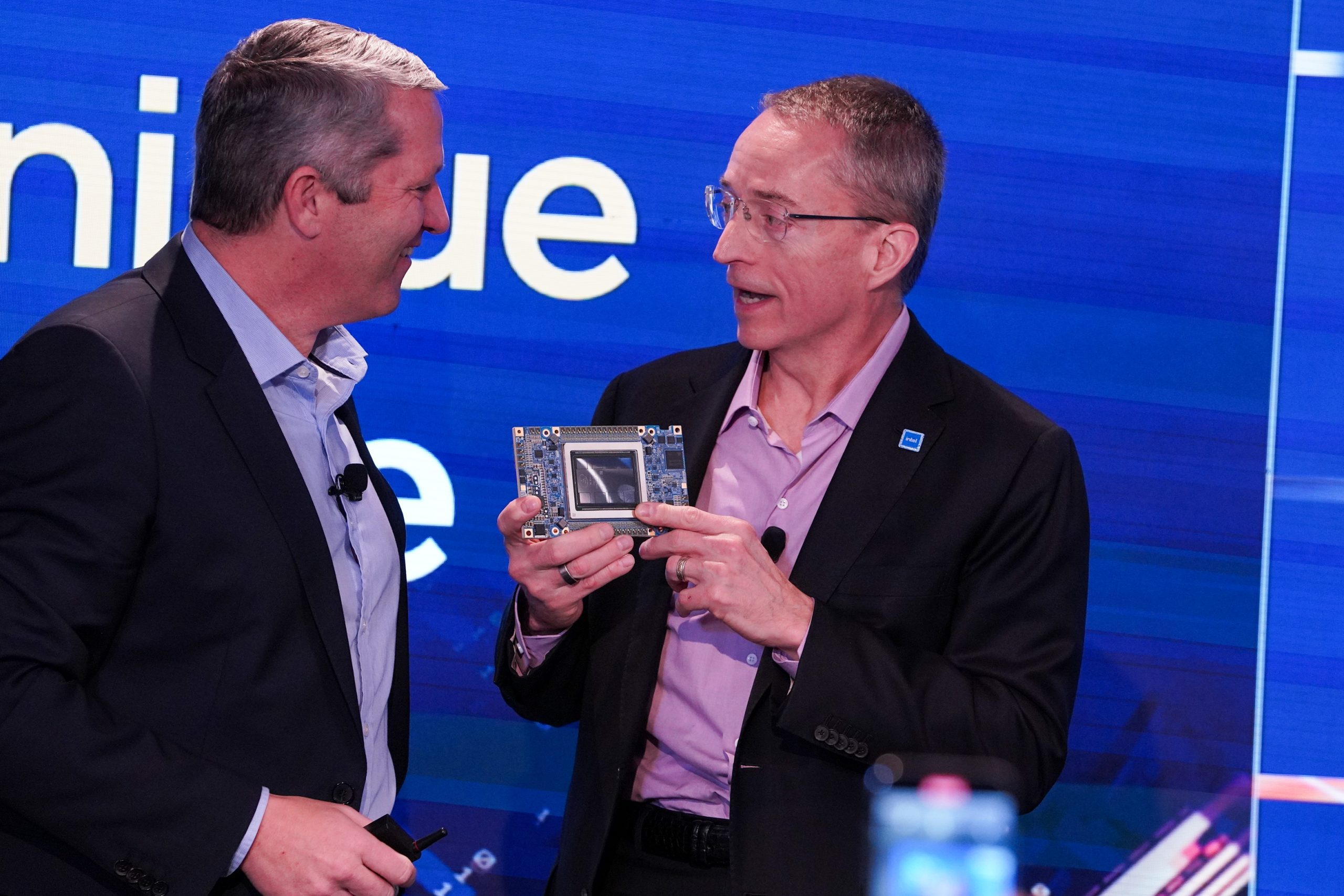
Intel launched the Gaudi 3 AI accelerator at their Vision event in Phoenix, Arizona, aiming to disrupt proprietary barriers and offer more choices within the enterprise generative AI space. The product is tailored specifically for startups and individuals seeking cost-effective AI computational power. However, when it comes to floating-point tasks, Gaudi 3 falls short of NVIDIA’s capabilities, indicating that Intel is not pursuing top-tier AI performance for now.
Intel has acknowledged that the mainstream market might not be where their current AI strengths lie. The company believes that as the initial excitement around large-scale AI data centers wanes, smaller language models will become more prevalent. Anil Nanduri from Intel elaborated on this strategy, suggesting that the company is intentionally navigating this space to solve specific customer problems and anticipates a growing market for individual inferencing solutions in the future.
Intel’s Gaudi 3 AI solutions have already gained traction with industry leaders like IBM Cloud, Hewlett Packard Enterprise, and Dell incorporating them into their data center offerings. While this adoption is encouraging, Intel’s larger AI aspirations are still developing, especially as they compete with NVIDIA’s dominant CUDA compute stack.
As Intel continues to explore this evolving market, the outcomes will be crucial for the company amidst its current financial challenges. With the AI race still heating up, Intel’s future strategies and market adaptation will be key areas to watch.