Nvidia and MediaTek Share the Story Behind RTX Spark, Their New AI PC Platform
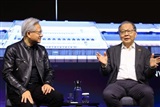
Nvidia CEO Jensen Huang used a global media session on June 2 to spotlight one of the company’s most interesting recent collaborations: RTX Spark, an AI PC platform developed with MediaTek. Joining him was MediaTek vice chairman and CEO Rick Tsai, who helped explain how the partnership came together and why both companies see AI-powered personal computers as a major next step for the industry.
The appearance of both executives highlighted the importance of RTX Spark. Rather than treating it as just another hardware announcement, Huang framed the platform as part of a broader shift in computing, where artificial intelligence is moving from cloud-based systems into everyday devices. With AI features becoming more common in productivity apps, creative tools, development software, and gaming experiences, PC makers are racing to deliver machines that can handle demanding AI workloads locally.
That is where Nvidia and MediaTek believe RTX Spark fits in.
According to the discussion, the platform was shaped by the strengths of both companies. Nvidia brings its experience in AI acceleration, graphics technology, and software ecosystems, while MediaTek contributes its knowledge in efficient chip design and high-volume computing platforms. Together, the two companies aim to create a foundation for AI PCs that can offer strong performance without ignoring power efficiency, portability, and accessibility.
Huang has frequently described the AI PC as a new category of computer, one designed not only to run traditional software but also to support generative AI, intelligent assistants, real-time content creation, and advanced local processing. RTX Spark appears to be positioned for that future, giving device makers a platform that can help bring AI capabilities to more users.
Rick Tsai’s presence at the media event also signaled MediaTek’s growing ambitions beyond smartphones and connected devices. The company has already built a major reputation in mobile processors, smart TVs, networking hardware, and other consumer electronics. Working with Nvidia on an AI PC platform could give MediaTek a stronger role in the next wave of personal computing.
For Nvidia, the collaboration opens another path to expand its RTX brand beyond gaming and professional graphics. RTX has become closely associated with ray tracing, AI-enhanced visuals, and GPU-accelerated workloads. With RTX Spark, Nvidia is connecting that brand to the fast-growing AI PC market, where users increasingly expect laptops and desktops to handle AI tasks directly on the device.
The timing is important. Demand for AI-ready PCs is expected to grow as more software companies add AI tools into their products. Running these features locally can improve responsiveness, reduce dependence on internet connections, and offer better privacy for certain tasks. Consumers and businesses alike are beginning to look for computers that can support these experiences smoothly.
While the June 2 media session focused on how the partnership began and why the companies joined forces, it also pointed to a bigger message: AI PCs are becoming a central battleground for the tech industry. Nvidia and MediaTek want RTX Spark to be part of that transition, combining AI performance with the kind of efficient platform design needed for modern PCs.
The collaboration between Jensen Huang and Rick Tsai’s companies shows how quickly the PC landscape is changing. Traditional performance is no longer the only priority. The next generation of computers will be judged by how well they can manage AI-driven workloads, support smarter applications, and deliver fast experiences without sacrificing battery life or usability.
RTX Spark may still be an emerging platform, but its announcement reflects a clear direction for the market. Nvidia and MediaTek are betting that the future of personal computing will be built around AI, and they want to provide the technology that helps bring that future to consumers, creators, developers, and businesses.