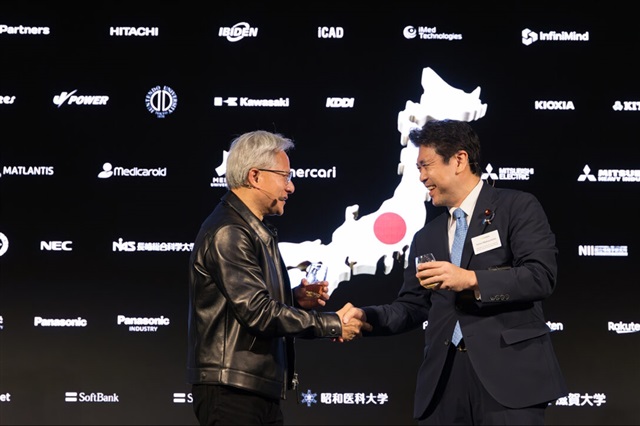
Nvidia CEO Jensen Huang’s recent visit to Tokyo is drawing attention across the technology and manufacturing sectors, as the company appears to be strengthening its presence in Japan’s rapidly expanding artificial intelligence ecosystem.
During his week in Japan’s capital, Huang reportedly met with government officials, robotics companies, and a wide range of supply chain leaders. The trip highlights Nvidia’s growing interest in Japan as a key market for AI infrastructure, advanced manufacturing, robotics, and next-generation computing.
Japan has long been known for its strength in industrial automation, precision engineering, electronics, and robotics. With global demand for AI chips and accelerated computing continuing to rise, Nvidia’s deeper engagement with Japanese partners could play an important role in shaping the country’s next phase of digital transformation.
Huang’s meetings suggest that Nvidia is looking beyond traditional chip sales. The company is increasingly positioning itself as a central player in the development of AI factories, robotics platforms, data centers, and industrial AI systems. For Japan, this aligns with national priorities around automation, productivity, and technological competitiveness.
Robotics is likely one of the biggest areas of focus. Japan is home to some of the world’s most advanced robot makers, serving industries such as automotive production, electronics assembly, logistics, healthcare, and factory automation. Nvidia’s AI hardware and software platforms could help these companies build smarter machines capable of learning, adapting, and operating more efficiently in real-world environments.
The visit also points to the importance of Japan’s supply chain network. As AI adoption accelerates worldwide, companies involved in components, manufacturing equipment, materials, and precision systems are becoming increasingly vital. By engaging directly with supply chain executives, Nvidia may be working to secure stronger partnerships and improve the foundation needed for future AI hardware production and deployment.
Government involvement is another important part of the story. Japan has been investing heavily in semiconductor development, AI research, and digital infrastructure as it seeks to strengthen its position in the global technology race. Nvidia’s presence in Tokyo could support those efforts by encouraging collaboration between public institutions, private manufacturers, and AI developers.
For Nvidia, Japan represents both a major customer base and a strategic partner. The country’s industrial expertise makes it well suited for applying AI in factories, robotics, transportation, and scientific research. As companies look for ways to modernize operations and reduce labor shortages through automation, Nvidia’s technology could become increasingly important.
Huang’s Tokyo trip also reflects a broader global trend: AI is no longer limited to cloud platforms and consumer applications. It is moving into factories, machines, vehicles, and physical infrastructure. This shift is often described as the rise of physical AI, where artificial intelligence is used to power robots, industrial systems, and autonomous equipment.
Nvidia has been aggressively expanding into this area, and Japan’s manufacturing base offers a strong opportunity. By working with Japanese robotics makers and industrial companies, Nvidia can help accelerate the adoption of AI-powered automation while expanding its influence in one of the world’s most advanced manufacturing markets.
Although the full details of Huang’s meetings have not been disclosed, the message is clear: Nvidia sees Japan as a crucial part of its long-term AI strategy. The company’s growing focus on Tokyo, robotics, supply chains, and government collaboration suggests that Japan could become a major hub for AI-driven manufacturing and automation in the years ahead.
As artificial intelligence continues to reshape industries, partnerships between chipmakers, governments, and manufacturers will become increasingly important. Jensen Huang’s visit to Tokyo may be remembered as another step in Nvidia’s effort to build the infrastructure and alliances needed for the next generation of AI technology.