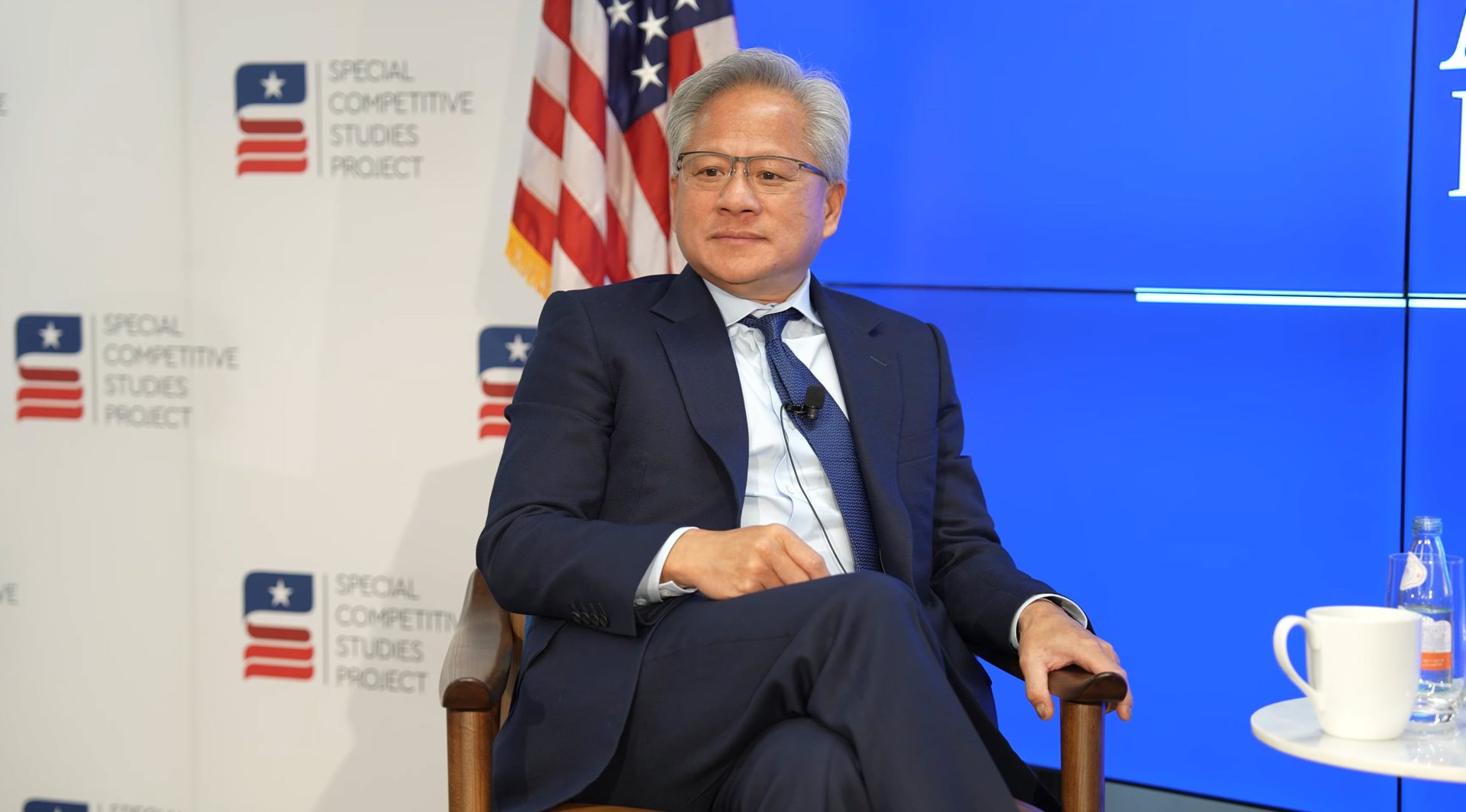
NVIDIA Board Launches Independent Review After Reports of Alleged Foreign Influence Targeting Jensen Huang
NVIDIA is facing one of its most sensitive corporate and political moments yet, as questions surrounding CEO Jensen Huang’s personal life have collided with Washington’s intensifying scrutiny of U.S.-China technology ties.
The company’s board has now opened an independent investigation following reports that Huang may have been targeted by a foreign intelligence effort connected to China. The matter centers on Huang’s reported relationship with Alice Huang, a senior executive at Megaspeed, also known as Mega Speed International, a Singapore-based data center company.
Alice Huang is not related to Jensen Huang.
The controversy began after reports cited a U.S. intelligence memo suggesting that China may have attempted to influence NVIDIA’s chief executive through Alice Huang. The two were reportedly photographed together at a Taipei bar in 2024, around the same period when Megaspeed began pursuing a multibillion-dollar purchase of advanced NVIDIA AI chips.
The situation quickly escalated beyond personal headlines. Jensen Huang reportedly acknowledged in an internal memo to NVIDIA employees that he had been unfaithful to his wife, writing that his actions hurt his family and that there was no excuse for what happened.
Now, NVIDIA’s board is moving to contain the issue before speculation grows further.
In a formal statement, NVIDIA said its board is initiating an independent investigation in response to recent reporting that Huang was the target of a foreign intelligence effort. The review will be overseen by a committee of independent directors with the assistance of outside counsel.
The board emphasized that U.S. national and economic security remain critical to NVIDIA and its shareholders. It also stated that it currently has no reason to believe national security or NVIDIA’s confidential information was compromised. However, the inquiry will examine all available information.
According to the company, Jensen Huang fully supports the review and has committed to cooperating with the investigation. The board also said it continues to have confidence in Huang and NVIDIA’s leadership team.
The political stakes are high. Republicans on the House Foreign Affairs Committee have reportedly requested that Huang appear at a joint closed-door briefing focused on his interactions with Alice Huang, who has been publicly described in reports as a possible intelligence asset linked to the People’s Republic of China. That briefing is expected to take place on November 18.
The controversy arrives at a time when NVIDIA’s China business is already under intense examination in Washington.
Huang has been one of the most visible corporate voices arguing for continued U.S. chip sales to China under controlled conditions. He personally lobbied President Donald Trump to ease restrictions on artificial intelligence chip exports, including limits affecting NVIDIA’s H20 and H200 GPUs.
That lobbying reportedly led to an unusual arrangement under which the U.S. government would receive a 25 percent share of NVIDIA’s revenue from certain AI chip sales to China.
Critics are now revisiting those policy decisions in light of the new allegations. For China hawks in Washington, the concern is whether NVIDIA’s commercial interests may have influenced U.S. technology policy at a time when advanced AI chips are viewed as strategically vital.
The issue has become even more complicated after reports that the U.S. Commerce Department approved roughly two dozen Chinese companies to buy or handle NVIDIA’s H200 AI accelerators. Some of those firms were described as having extremely limited operations, including empty or deteriorating office locations, raising fresh questions about oversight and end-use monitoring.
A separate report added another political dimension by identifying Secretary of State Marco Rubio as a key figure behind the initial intelligence memo concerning Jensen Huang and Alice Huang. Rubio has long been known for his hardline stance on China, and his involvement has prompted debate over the timing and purpose of the memo’s circulation.
Some observers have questioned whether the release of the allegations reflects deeper divisions inside the U.S. government over AI regulation, export controls, and Huang’s influence on technology policy. According to the reporting, some officials were concerned about Huang’s access to the president and his role in shaping a lighter regulatory approach toward artificial intelligence.
The timing has drawn particular attention because the allegations surfaced shortly before another expected round of U.S.-China engagement. For critics of NVIDIA’s China strategy, the story adds urgency to calls for stricter controls on advanced AI chips. For others, it raises concerns that corporate leaders may be caught in the middle of internal political battles over China policy.
For NVIDIA, the challenge is now twofold. The company must reassure investors and government officials that no sensitive information was compromised, while also protecting the credibility of its CEO at a time when the company remains central to the global AI boom.
NVIDIA’s chips power many of the world’s most advanced artificial intelligence systems, data centers, and high-performance computing platforms. That position has made the company one of the most valuable technology firms in the world, but it has also placed it at the center of a geopolitical struggle over who controls the future of AI infrastructure.
The board’s investigation is designed to determine whether there is any evidence that foreign intelligence efforts influenced Huang, NVIDIA, or the company’s policy positions. For now, NVIDIA says it has no indication that national security or company secrets were compromised.
Still, the review is likely to be closely watched by lawmakers, investors, AI industry leaders, and U.S. officials focused on technology competition with China.
As the November 18 briefing approaches, the questions surrounding Jensen Huang, Alice Huang, Megaspeed, and NVIDIA’s China chip sales are unlikely to fade quickly. What began as a personal controversy has become a broader test of corporate governance, national security, and the future of U.S. AI export policy.