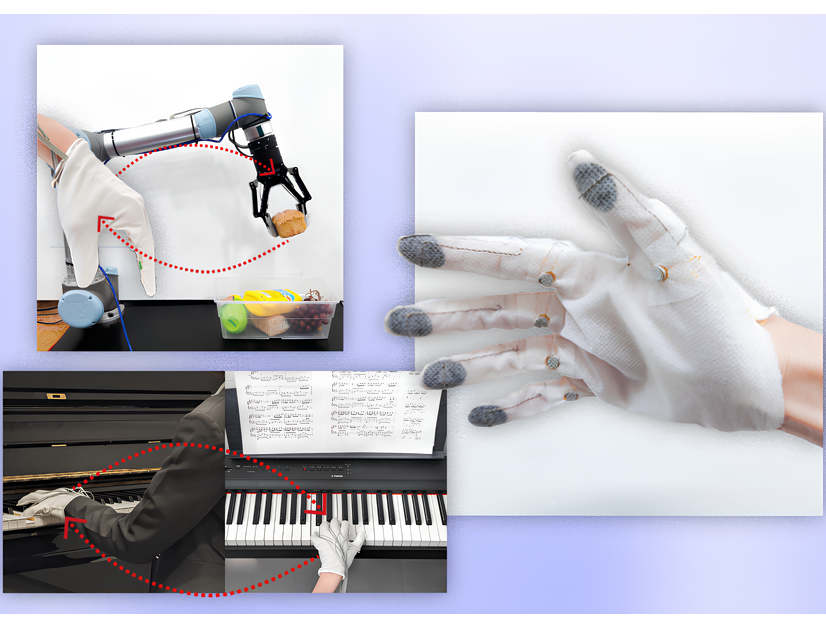
A pioneering development in the human-machine interface sector is a new smart glove designed to transfer manual movements into the virtual realm and potentially even provide tactile feedback. This cutting-edge technology has been developed by a research team and features personalized manufacturing. A specialized printing process allows the glove to be tailored for individuals in roughly 10 minutes.
Post-production setup involves machine learning to ensure the glove can accurately transfer the intricacies of human movement and haptic feedback through sensors. This process accommodates different hands and varying degrees of sensitivity.
Demonstrations of the technology’s capabilities have shown its playful side, such as enabling a novice piano player to perform complex pieces by transferring the motions from a seasoned musician through the glove. Similarly, the device has allowed individuals without gaming experience to control games effectively.
Beyond entertainment, the smart glove’s capabilities are far-reaching. One of its most awe-inspiring features is its ability to remotely control a robotic arm connected only by video. The glove user’s movements are mirrored by the robot, with feedback on resistance allowing for precise and realistic operation.
The potential applications are vast and impactful, with the glove potentially revolutionizing training for pilots or surgeons by simulating the motions and tactile sensations associated with machinery or human tissues. Robots equipped with the glove’s technology could be deployed in dangerous environments, from dismantling nuclear reactors to working near blast furnaces.
A particularly revolutionary application is in remote medical procedures, where a surgeon, using the glove, could operate with a robotic arm on a patient from a distant location, provided a stable network connection supports the sensitive, feedback-dependent operation.
While there are still improvements to be made and more applications to explore, the smart glove has already demonstrated impressive capabilities. For instance, a robotic hand equipped with the glove was able to distinguish different types of bread solely by touch, showcasing this new invention’s intricate sensitivity and practical potential. The convergence of customizable design, advanced sensor technology, and artificial intelligence is propelling this innovative glove beyond its successful initial trials and into a future of enhanced virtual and physical interaction.