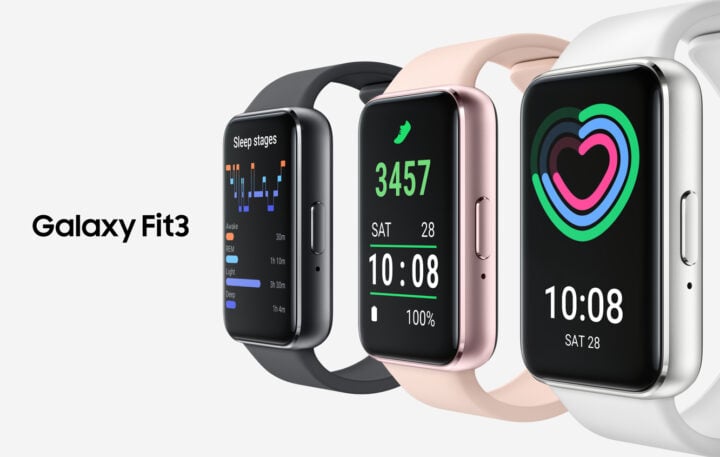
The latest addition to Samsung’s fitness tracker lineup is the Galaxy Fit 3, which was unveiled with minimal fanfare earlier this week. As the successor to Galaxy Fit 2 from September 2020, the new model boasts several enhancements including a 45% larger display.
One of the key features of the Galaxy Fit 3 is its heart-rate sensor situated on the rear, crucial for its range of health-tracking functionalities. The sensor is supplied by Goodix, the same company known for providing optical fingerprint sensors for Samsung’s mid-range smartphones.
The Goodix Health Sensor GH3026 incorporated into the Fit 3 delivers heart-rate tracking, SpO2 monitoring (oxygen saturation), and wear detection capabilities. Its low power consumption is a standout attribute, aiding the device to achieve up to 13 days of battery life on a single charge. Although this doesn’t quite match the longevity of the previous Fit 2’s battery, the Fit 3 compensates with more advanced software features and a larger display.
In terms of specifications, the Galaxy Fit 3 is equipped with a 1.6-inch full-color OLED screen and boasts durability with an IP68 rating and 5ATM water resistance. Its functionality spans sleep tracking, over 100 workout modes, and stress level monitoring. Additionally, safety is a priority with the addition of fall detection and an emergency SOS feature.
Despite not operating on Wear OS, the Galaxy Fit 3 does offer a selection of basic applications, including Calendar, Weather, and World Clock. Users can also personalize their tracker with over 100 watch faces or their customized photos for the home screen background. Notifications from a connected phone are displayed on the tracker, and it can synchronize settings like Do Not Disturb with the paired device.
The Galaxy Fit 3 is set to be made available for consumers starting from February 23 across various regions including Asia, Central America, Europe, and South America. While specific pricing is yet to be disclosed for every market, it is expected to be priced at or under the $70 mark globally.
(Image credit: Samsung)


