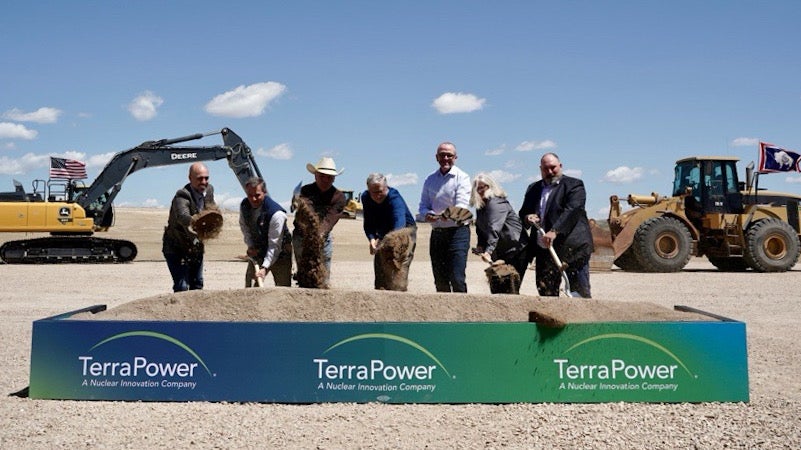
Kemmerer, a historical town in Wyoming, is on the brink of integrating modern prowess with its rich cultural heritage as it becomes the host for one of the most advanced nuclear facilities—the Natrium nuclear power plant. Embraced by the local community, this groundbreaking event marks a critical step towards addressing the surge in electricity demands propelled by developments in artificial intelligence (AI), electric vehicles (EV), and cryptocurrency mining.
With its roots deep in the heart of America, the construction of the Natrium plant spearheads not just an industrial revolution but also the reimagining of safer, more efficient nuclear technology. The introduction of this sodium-cooled nuclear reactor heralds a transformative era for the local economy, national energy independence, and global efforts in environmental protection.
The changing landscape of Kemmerer, once known for its historic opera house, signals the dawn of economic growth. With the skyline now dominated by construction cranes, the promise of new job opportunities for coal plant workers and a skillful local workforce is no longer on the horizon—it’s underway.
Conceived by TerraPower, a company founded in 2007, the Natrium reactor’s design promises safety guided by the immutable laws of physics, affordability through reduced operational costs, and uninterrupted power supply, day and night. This innovative reworking of nuclear power aims to navigate and overcome the territories previously rendered impassable for nuclear technology, presenting a revolution in power generation for both the United States and the vast world beyond.
Transformation, however, is not confined to the laboratories or the drawing boards. The action has now shifted to the terrains of Wyoming, where the very foundations of the sodium test facility are about to be laid. This component is pivotal to the technology, as it will validate the mechanism that employs liquid sodium to cool the reactor—a concept shunning the reliance on active cooling systems.
Partnerships have been catalytic in propelling the project forward. Public leaders, local government bodies, and the Department of Energy’s Advanced Reactor Demonstration Program, with its record-setting federal funding commitment, have all converged to turn this vision into reality. The collaboration amplifies the significance of synergy between the state and industry in overcoming the challenges of climate change.
While the official nod from the U.S. Nuclear Regulatory Commission is eagerly awaited to commence the construction of the nuclear components, effort and time will be invested in setting up the infrastructure surrounding the energy generation—affectionately termed the “energy island.” Anticipated to be operational by 2030, this pioneering plant illustrates audacious strides towards a safe, plentiful, and carbon-neutral energy future.
As Kemmerer tiptoes into a new age, it is indeed a substantial leap for the country. The construction of the Natrium plant is more than an industrial milestone—it is a commitment to future generations. This is where clean energy becomes more than a distant dream; instead, it embodies the sheer determination to satisfy soaring energy demands while simultaneously nurturing the health of our planet.
Today, the ground breaking of the Natrium nuclear power plant reflects more than just the physical act—it underlines an enduring legacy of conscientious innovation. Bridging mankind’s insatiable need for energy with its custodial responsibility towards Earth, the steps taken in Kemmerer are indeed giant leaps for broader global sustainability.