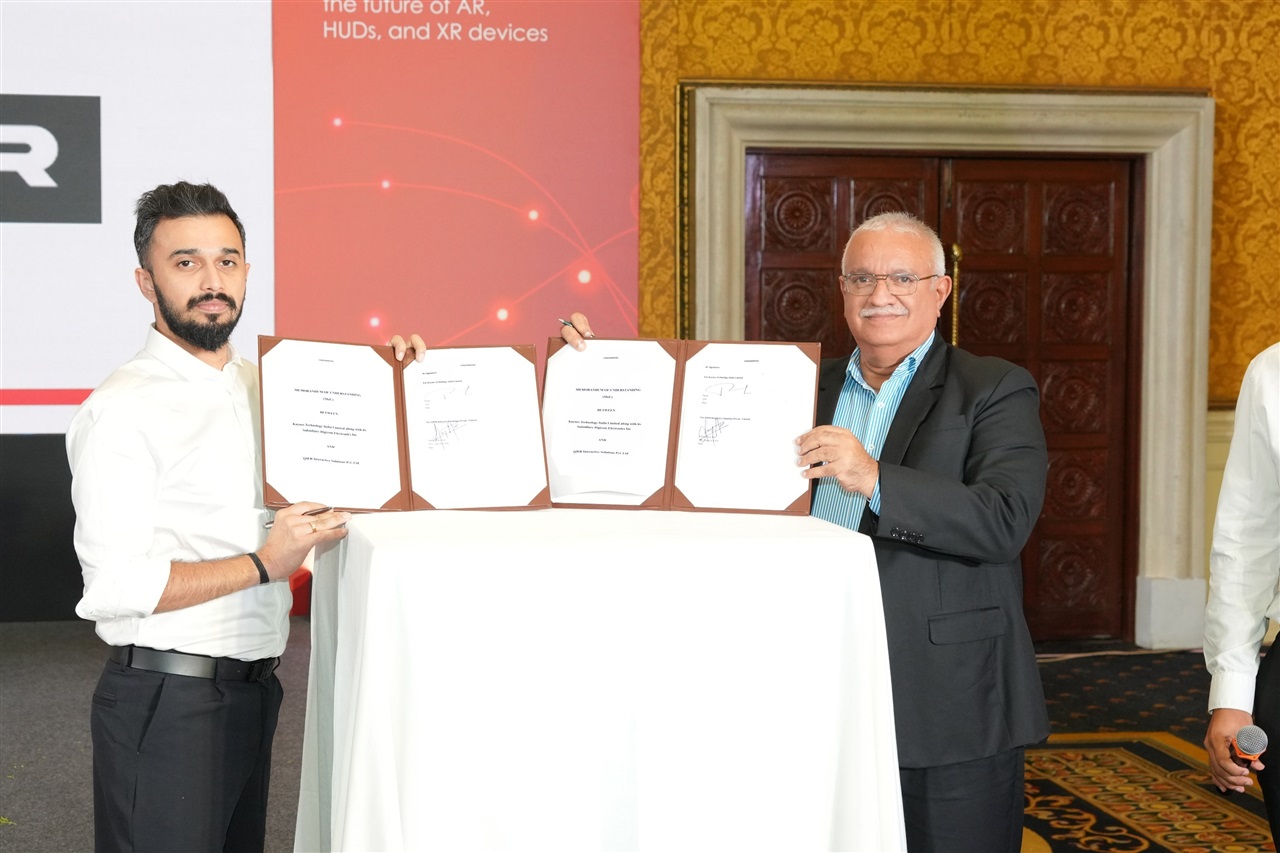
India is accelerating its push into next‑generation electronics with a move from component-level XR optics to full‑stack manufacturing. QWR Interactive Solutions and Kaynes Technology have announced plans for what they describe as the country’s first integrated waveguide-and‑XR device initiative, a milestone that could reshape the local ecosystem for augmented and extended reality hardware.
Why this matters goes beyond a single product. Waveguides are the optical engines that make lightweight AR glasses possible, guiding and projecting images into a user’s field of view. They are notoriously difficult to design and manufacture at scale, requiring precision materials, advanced coatings, tight tolerances, and rigorous testing. By targeting an integrated model that spans waveguide optics through to finished XR devices, the partnership signals a shift from assembling parts to building complete, high‑value systems within India.
Full‑stack manufacturing in this context means bringing together the entire pipeline under one roof or within a tightly coordinated supply chain: optics design and fabrication, electronics, sensors and compute, system integration, firmware and software tuning, assembly, calibration, and quality assurance. For India’s electronics sector, this kind of vertical integration can shorten development cycles, lower costs, improve performance consistency, and strengthen control over intellectual property.
The timing is strategic. Global demand for AR and XR solutions is rising across enterprise, industrial, medical, education, and defense applications. As companies worldwide look to diversify supply chains and localize critical technologies, India’s bid to become a hub for spatial computing hardware aligns with national priorities to boost advanced manufacturing and reduce import dependence. If executed at scale, an integrated waveguide‑to‑device capability could attract component vendors, design houses, and software partners, forming a broader XR ecosystem around domestic production.
Potential benefits include:
– Stronger supply chain resilience by localizing high‑precision optics and assembly.
– Faster prototyping and iteration from co‑located design, manufacturing, and testing.
– Better cost control and pricing flexibility for domestic and export markets.
– Job creation across optical engineering, electronics, embedded systems, and quality assurance.
– A foundation for homegrown XR products tailored to regional needs and languages.
For enterprises and developers, local manufacturing can translate to improved availability, reduced lead times, and closer collaboration on custom hardware configurations. Sectors like field service, logistics, training, remote assistance, and healthcare could see more practical adoption as devices become lighter, more efficient, and suitably rugged for real‑world workflows. Educational and research institutions may also gain easier access to cutting‑edge optics and reference designs, helping cultivate specialized talent in XR and photonics.
The long‑term impact will depend on execution details that typically determine success in XR hardware: waveguide efficiency and uniformity, optical clarity, eye box size, brightness management, thermal design, battery life, ergonomic fit, and compatibility with software platforms. Repeatable, high‑yield manufacturing of waveguides is particularly critical, as even minor variances can affect visual quality and user comfort. Partnerships with materials suppliers, metrology providers, and optical testing experts will be essential to reach reliable volume production.
While the companies have outlined their intention to pioneer an integrated waveguide‑and‑XR device pathway in India, the next indicators to watch include facility ramp‑up, talent hiring, R&D milestones, and early device showcases aimed at enterprise pilots. Collaboration with local and global developers could accelerate a feedback loop that improves software‑hardware alignment, a key factor for delivering compelling AR experiences.
In simple terms, this announcement suggests India is ready to move up the XR value chain—from assembling components to building the core optics and complete systems that define the user experience. If QWR Interactive Solutions and Kaynes Technology can deliver on their plans, India could emerge as a credible player in the global market for AR and XR hardware, helping anchor a sustainable, innovation‑driven manufacturing base for the decade ahead.