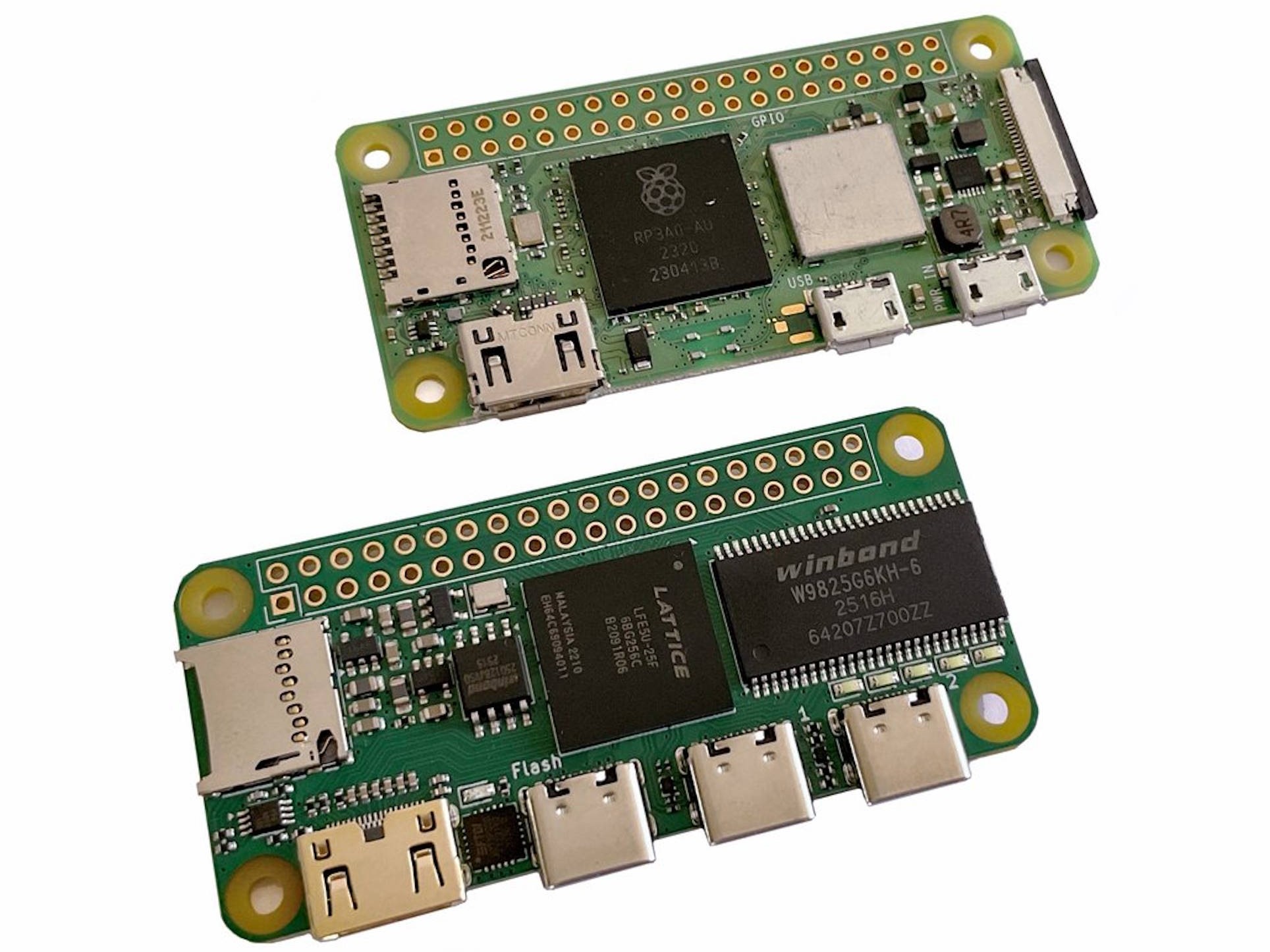
If you love small, versatile boards but want to go beyond the usual ARM-based setups, the Icepi Zero is worth a look. This ultra-compact single-board computer adopts an FPGA at its core, positioning itself as an alternative to Raspberry Pi Zero-sized boards while taking a very different approach to computing.
Instead of a traditional CPU, the Icepi Zero runs on a Lattice ECP5U FPGA. That makes it ideal for custom logic designs, low-level experimentation, and retro-computing projects. Think emulating classics like the Apple I or Commodore 64, building bespoke controllers, or teaching digital design. The trade-off is important: modern operating systems aren’t supported, so this isn’t a drop-in replacement for a Linux-based Raspberry Pi setup. It’s a maker-focused platform that leans into openness and flexibility for people who want to craft their own hardware-software pipelines.
The board keeps things extremely compact at 2.6 by 1.2 inches, matching the Raspberry Pi Zero footprint. According to the maker, some accessories are cross-compatible, which should ease integration into existing projects and enclosures. Despite its size, it brings practical I/O and quality-of-life features, including three USB Type-C ports for peripherals, a microSD card slot for storage, GPIO for sensors and actuators, two programmable buttons, and five customizable status LEDs. Power is supplied via 5 volts over USB Type-C.
Who is it for? Developers, educators, and hobbyists who:
– Want an open, FPGA-based platform instead of a standard ARM SBC
– Build retro-computing demos, custom interfaces, or real-time controllers
– Prefer fine-grained control over hardware rather than running a full desktop OS
– Need a Pi Zero-sized board with cross-compatible accessories
Key details at a glance:
– Core: Lattice ECP5U FPGA
– Form factor: 2.6 x 1.2 inches (similar to Raspberry Pi Zero)
– Storage: microSD card slot
– I/O: three USB Type-C ports, GPIO for sensors/actuators
– Controls/indicators: two programmable buttons, five customizable LEDs
– Power: 5V via USB Type-C
– Software angle: open, maker-friendly approach; not intended for modern OSes
– Use cases: retro systems, embedded control, educational FPGA projects
Availability and pricing:
The Icepi Zero is currently being crowdfunded with prices starting at $69, excluding shipping and any import fees. Deliveries are estimated for late February 2026. As with any crowdfunding campaign, backers should consider the usual risks and timelines before pledging.
Bottom line: If your project needs a traditional Linux-capable SBC, a Raspberry Pi remains the straightforward choice. If you’re chasing ultra-compact, open, and reconfigurable logic with an active maker angle, the Icepi Zero’s FPGA foundation could be the more exciting option.