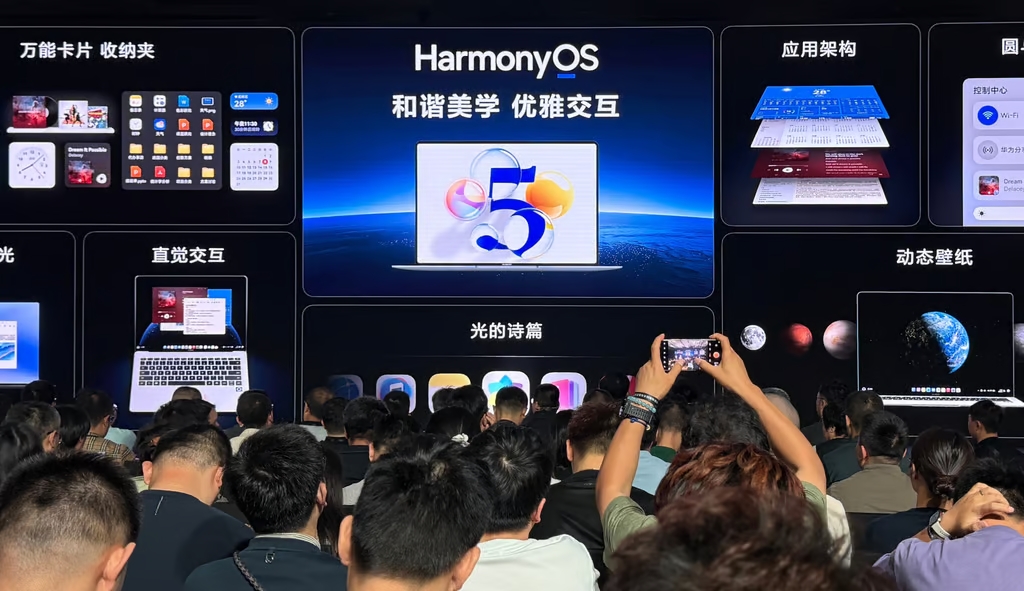
Huawei has just unveiled its much-anticipated HarmonyOS Next for laptops, stepping up its game in the tech world. This new operating system, launched as a direct contender to Windows 11, showcases impressive features but has one notable limitation: it does not support sideloading applications.
With this launch, Huawei continues to expand its ecosystem, offering a cohesive experience akin to Apple’s renowned product integration. HarmonyOS Next is designed to deliver seamless cross-platform computing, a crucial move for Huawei’s strategic growth. However, it’s important to note that this OS is exclusive to Huawei’s modern laptops, with no backward compatibility for older devices.
HarmonyOS Next is packed with AI-driven enhancements, such as the AI assistant Celia, which can perform tasks like creating presentations. It also comes with pre-installed applications, including WPS Office, making it a robust platform for productivity.
Interestingly, the OS design draws inspiration from macOS, featuring a familiar shortcut bar at the bottom. However, users cannot sideload apps and must rely on Huawei’s “App Gallery” for downloads. This restriction mirrors the approach used in Huawei’s mobile devices, possibly encouraging Chinese users to move away from Western software dependence.
While this lack of sideloading might challenge power users accustomed to more open environments, Huawei aims to cater specifically to the preferences and needs of its domestic market. This strategy ensures that its core audience remains aligned with the company’s offerings, even if it means sacrificing some traditional desktop freedoms.