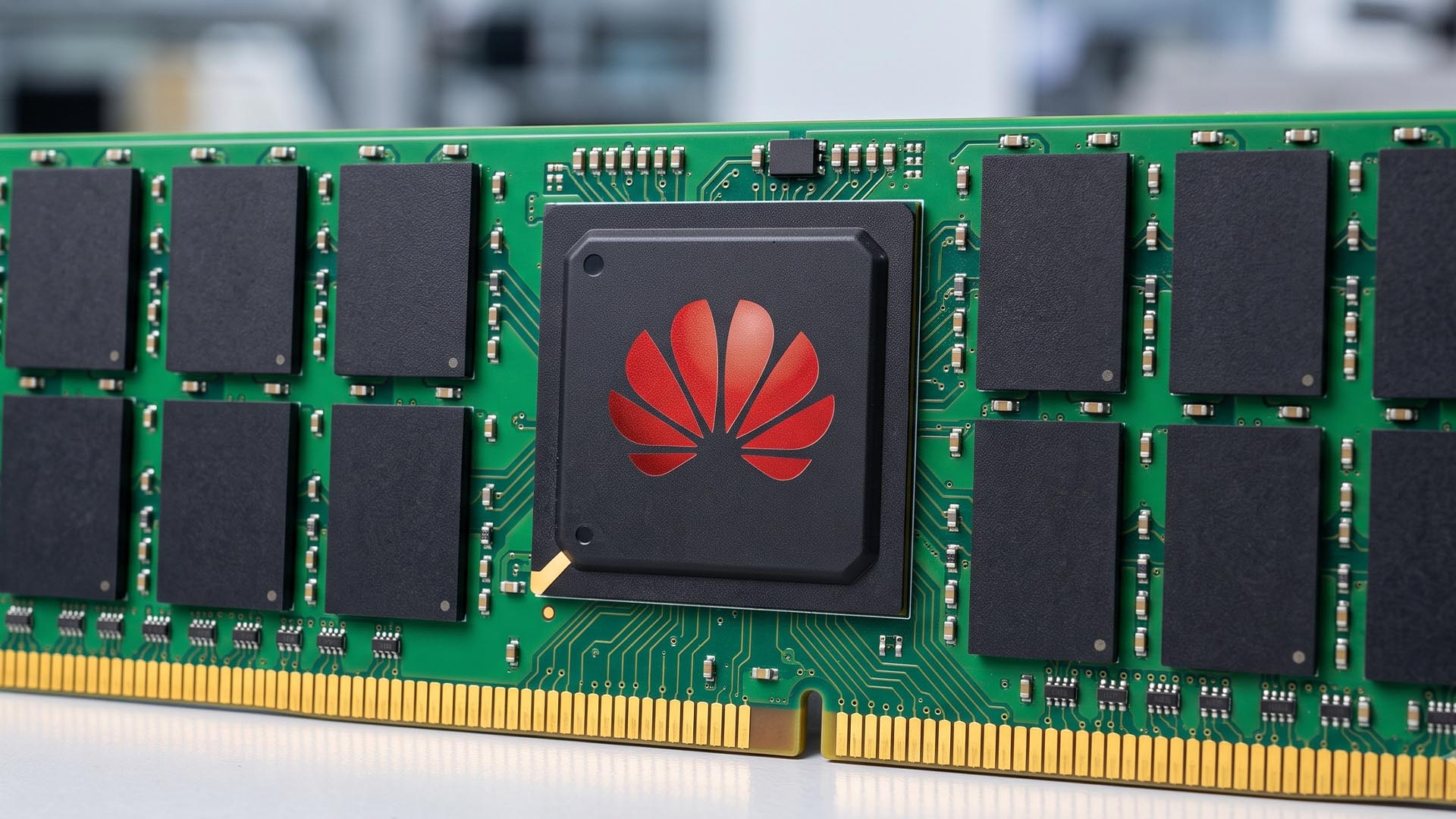
Huawei is reportedly exploring a major step toward memory chip independence as the global DRAM market faces rising pressure from AI demand, supply constraints, and geopolitical uncertainty.
While some technology companies are trying to reduce risk by qualifying memory chips from multiple suppliers, Huawei appears to be taking a more aggressive path. Instead of relying mainly on outside DRAM providers, the company is said to be working with the Chinese government and domestic memory firm Swaysure to establish its own 12-inch DRAM production facility.
The reported plan could help Huawei reduce exposure to supply disruptions and trade restrictions, especially as the global memory market remains heavily concentrated. Samsung, SK hynix, and Micron currently dominate DRAM supply, together accounting for the overwhelming majority of worldwide output. For a company like Huawei, that dependency creates a serious vulnerability, particularly as U.S. sanctions continue to limit access to advanced semiconductor technology.
According to details circulating within the semiconductor industry, the proposed facility may begin with 28nm DRAM production and target a monthly capacity of around 140,000 wafers. That would be a significant move for Huawei, especially as memory prices remain sensitive to demand from artificial intelligence servers, smartphones, PCs, and data centers.
Huawei has extensive experience designing chips through its fabless semiconductor operations, but DRAM manufacturing is a different challenge. Memory production requires deep process expertise, high yields, advanced equipment coordination, and long-term manufacturing discipline. This is likely why Swaysure’s involvement is important. The company could provide technical support and manufacturing knowledge that Huawei does not yet fully possess in the DRAM space.
The project is also said to involve experienced leadership from the semiconductor industry. Reports claim that a former TSMC director has been brought in as CEO, while an ex-Elpida executive has joined as a strategist. If accurate, these appointments suggest that the group is trying to build the project with people who understand large-scale chip production and the complexities of memory manufacturing.
Government support may be another key advantage. With backing from Chinese authorities, the project could move faster through site approvals, funding channels, and regulatory requirements. State capital could also help reduce the financial burden of building a memory fab, which typically requires billions of dollars in investment before meaningful production begins.
For Huawei, the timing is critical. A prolonged DRAM shortage or sharp price increase could affect its smartphone business, consumer electronics division, and broader hardware ambitions. Higher memory prices can raise production costs, making devices more expensive and potentially less competitive in the market. Securing a stable internal DRAM supply could help Huawei protect margins and maintain shipment momentum.
The bigger strategic goal is clear: Huawei wants more control over its semiconductor supply chain. After years of dealing with trade restrictions, the company has been working to reduce reliance on foreign suppliers wherever possible. A domestic DRAM plant would not solve every challenge, especially for cutting-edge memory nodes, but it could provide a vital fallback option and strengthen China’s broader push for semiconductor self-sufficiency.
If the facility reaches mass production as planned and avoids major yield or equipment bottlenecks, Huawei could gain access to DRAM at more predictable costs. That would give the company an important advantage at a time when AI-driven demand is reshaping the global memory industry.
The plan still carries major risks. DRAM manufacturing is difficult, capital-intensive, and dominated by companies with decades of experience. However, with government backing, outside expertise, and a strong need to secure supply, Huawei’s reported memory production push could become one of its most important semiconductor moves yet.