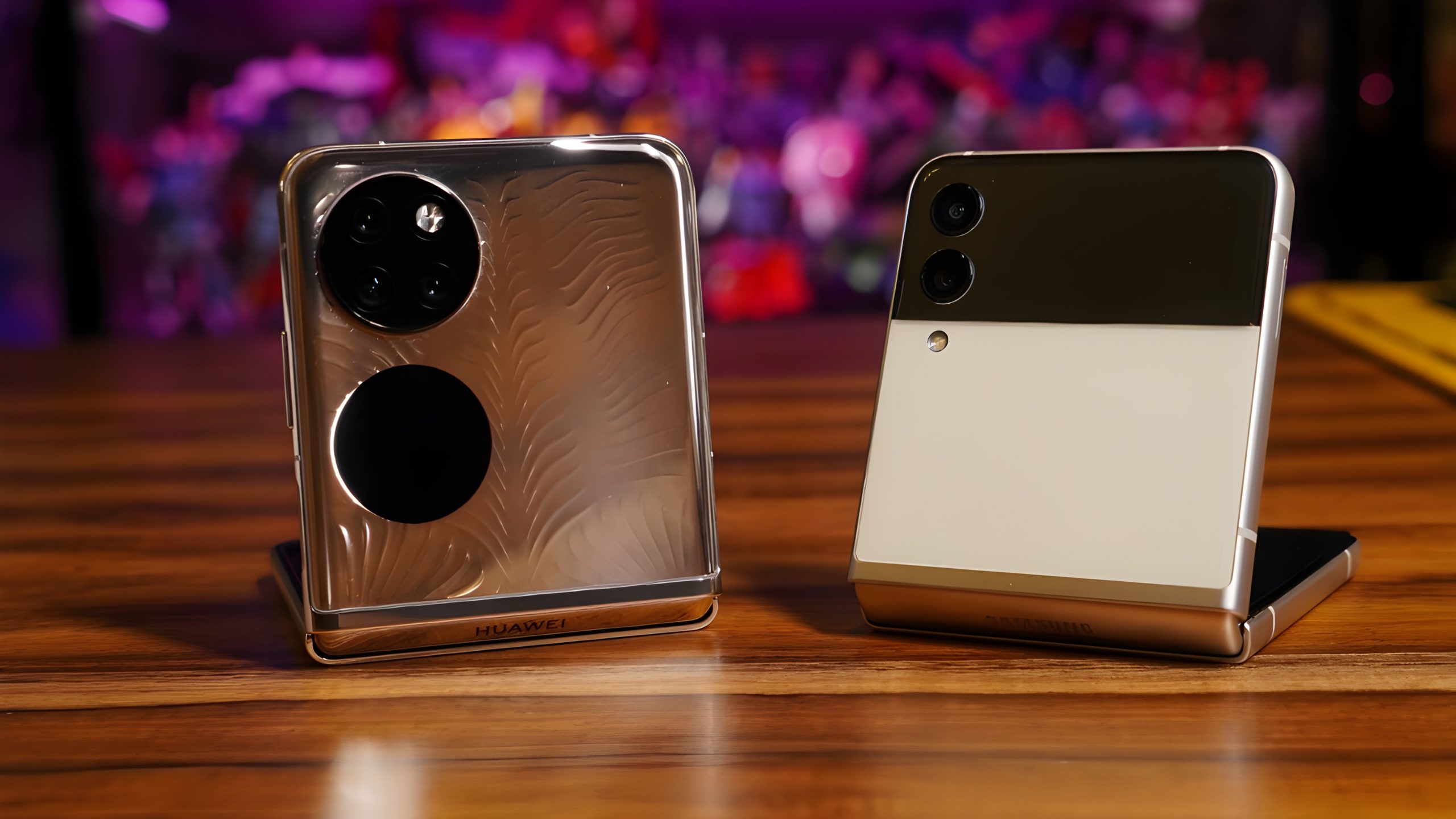
Foldable smartphones still account for only about 1 to 1.5 percent of global shipments, but their impact is far greater than their share suggests. They lift average selling prices, help brands premiumize and differentiate, and can significantly improve long-term profitability for OEMs. In this high-stakes category, the momentum has shifted: Huawei now leads the global foldable market, with Samsung trailing in second place.
Huawei’s foldable lineup spans the full spectrum from ultra-premium to budget-friendly, giving the brand coverage across multiple price tiers and use cases:
– Mate XT Ultimate: a triple-folding flagship priced at over $4,000 (1TB + 16GB RAM).
– Mate X6: a horizontal, book-style foldable starting around $1,800.
– Pura X: a vertical foldable priced around $1,000.
– Nova Flip: a more affordable clamshell option around $750.
Samsung’s strategy is currently more streamlined, focused on two core designs with a lower-cost variant:
– Galaxy Z Fold 7: a book-style foldable starting around $2,000.
– Galaxy Z Flip 7: a clamshell foldable priced around $1,200.
– Galaxy Z Flip 7 FE: a budget-oriented model starting around $900.
According to Canalys, Huawei captured 48 percent of global foldable smartphone shipments in the first half of 2025, while Samsung held 20 percent. That’s a dramatic reversal from 2024, when Samsung led with 45 percent and Huawei had 24 percent. Regional dynamics underscore this shift: Greater China now has the highest foldable penetration worldwide at 3.2 percent, with North America at 1.2 percent.
Pricing appears to be a key driver of Huawei’s surge. The Nova Flip, positioned as a more accessible entry point into foldables, has broadened the brand’s reach and helped cement its leadership. Meanwhile, the halo effect of devices like the triple-folding Mate XT Ultimate reinforces Huawei’s innovation credentials and supports higher ASPs across the portfolio.
What this means for the market is clear. As foldables evolve from niche luxury to mainstream consideration, breadth of offerings matters. Covering multiple price bands and form factors can accelerate adoption, strengthen brand perception, and drive profitability. For consumers, the result is more choice—from cutting-edge triple-fold designs for power users to stylish, budget-friendly clamshells that make foldables more attainable.
All eyes now turn to how quickly competitors can expand their portfolios, sharpen pricing, and push the envelope on design. With Huawei in the lead and Samsung regrouping, the next phase of the foldable phone race is set to be its most competitive yet.