Huawei Cloud Pushes Deeper Into Agentic AI With New Infrastructure Strategy
Huawei Cloud is placing Agentic AI at the center of its next major growth push, signaling a stronger focus on intelligent cloud services, domestic computing power, and real-world industry adoption.
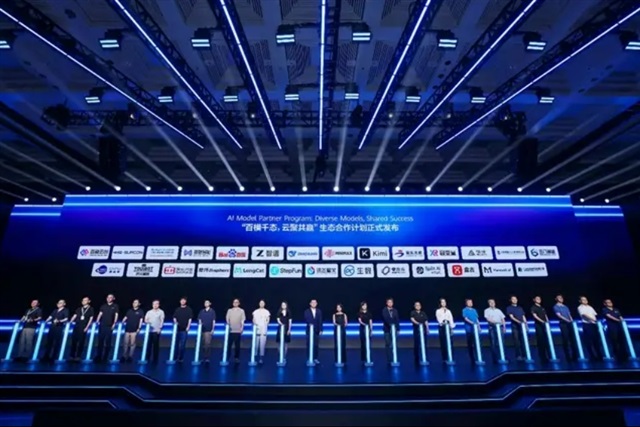
At the 2026 Huawei Cloud Inspire conference in Shanghai, the company introduced a new infrastructure framework designed to support the rapid rise of Agentic AI. This approach reflects Huawei Cloud’s ambition to become a more influential player in the next stage of enterprise cloud computing, where AI systems are expected to move beyond basic automation and take on more advanced decision-making and task execution roles.
Agentic AI has become one of the most important trends in the technology sector. Unlike traditional AI tools that mainly respond to user prompts, Agentic AI systems are built to plan, reason, act, and complete complex workflows with greater independence. For cloud providers, this creates a major opportunity to deliver the computing power, storage, data services, and development platforms needed to run these advanced AI applications at scale.
Huawei Cloud’s latest strategy appears to focus on three key areas: AI-native cloud infrastructure, locally developed computing resources, and specialized solutions for different industries. By combining these elements, the company aims to help businesses deploy AI more efficiently in sectors such as manufacturing, finance, healthcare, transportation, energy, and public services.
A major part of this direction is Huawei’s emphasis on domestic computing power. As demand for AI processing continues to surge, companies need reliable and scalable infrastructure capable of handling large models, intelligent agents, and high-volume data workloads. Huawei Cloud is positioning its ecosystem as a foundation for enterprises that want to build and run AI applications with strong performance and tighter integration across hardware, software, and cloud services.
The company’s focus on industry-specific deployment is also significant. Many businesses are no longer looking for general-purpose AI tools alone. Instead, they want solutions that can fit directly into their operations, improve productivity, reduce costs, and support smarter decision-making. Huawei Cloud’s new framework is expected to make it easier for organizations to adopt AI in practical scenarios rather than treating it as an experimental technology.
The move comes as competition in cloud computing and artificial intelligence continues to intensify. Cloud platforms are racing to offer better AI development environments, faster computing capabilities, and more complete enterprise solutions. By highlighting Agentic AI, Huawei Cloud is aligning itself with one of the fastest-growing areas of the market and aiming to capture demand from companies preparing for the next wave of digital transformation.
The 2026 Huawei Cloud Inspire event in Shanghai served as a clear signal that the company wants its cloud business to play a larger role in the AI era. With its renewed focus on intelligent agents, domestic infrastructure, and tailored industry applications, Huawei Cloud is presenting itself as a key platform for businesses looking to move from basic cloud adoption to AI-driven operations.
As Agentic AI becomes more important across global industries, Huawei Cloud’s strategy could help shape how enterprises build, deploy, and scale the next generation of intelligent applications.