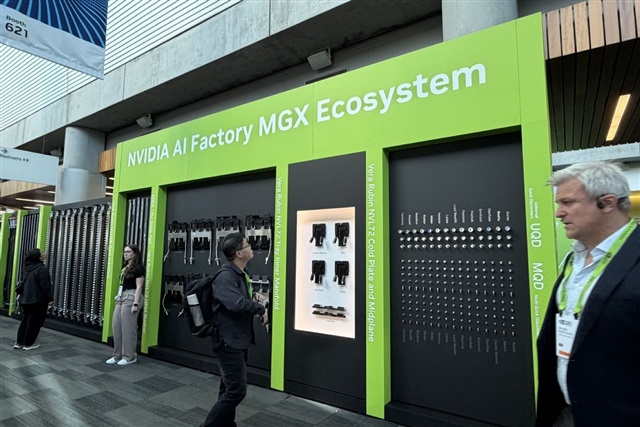
At GTC 2026, Nvidia signaled a major shift in the AI hardware race by announcing a high-stakes partnership with AI chip startup Groq valued at $20 billion. The deal centers on licensing Groq’s LPU (Language Processing Unit) technology and bringing in key talent to help fold Groq’s inference strengths into Nvidia’s next-generation Vera Rubin server stack.
The goal is clear: make Nvidia’s platform even more dominant in AI inference, the fast-growing side of AI workloads focused on running models efficiently at scale. While Nvidia has long been synonymous with AI training via its GPUs, the market is rapidly expanding for high-throughput, low-latency inference across data centers, enterprise deployments, and increasingly, edge and on-prem setups. By aligning with Groq’s architecture and expertise, Nvidia is tightening its grip on this critical next phase of AI computing.
Groq has built its reputation around specialized inference hardware designed to deliver consistent, predictable performance. LPUs are positioned as purpose-built silicon aimed at accelerating language model execution, which has become one of the most in-demand workloads in modern computing. Nvidia’s decision to license this technology and integrate it into the Vera Rubin stack suggests a strategy of combining best-in-class inference capabilities with its already massive ecosystem of hardware, software, and developer tooling.
Just as important as the technology is the talent. Nvidia’s move to hire key members of Groq’s team underscores how competitive AI chip design has become. In a market where architectural advantages can translate into billions of dollars in platform lock-in, acquiring experienced engineers and architects can be as valuable as the silicon itself. Integrating that know-how into Vera Rubin could speed up product timelines and help Nvidia deliver inference performance improvements that are difficult for rivals to match.
Industry watchers see this as more than a partnership—it’s also a defensive play. As AI demand surges, more companies have been exploring custom ASICs and alternative accelerators to reduce dependence on GPUs and lower total cost of ownership. By absorbing Groq’s inference approach into its own roadmap, Nvidia can make it harder for competing ASIC vendors to break into large-scale deployments. If customers can get training and inference performance under one Nvidia umbrella, the incentive to experiment with outside platforms may shrink.
For enterprises and cloud providers, this could translate into a more tightly integrated AI stack, potentially simplifying deployment choices: one ecosystem for model development, training, and production inference. For the broader AI hardware industry, it raises the competitive bar yet again—especially for startups betting that dedicated inference chips will carve out large niches away from GPU-centric platforms.
With Vera Rubin positioned as the backbone of Nvidia’s next server generation, the inclusion of Groq’s LPU technology highlights how central inference has become to the future of AI infrastructure. Nvidia’s GTC 2026 announcement makes one thing unmistakable: the battle is no longer just about who trains the biggest models fastest, but who can run them most efficiently, at the largest scale, with the lowest latency—and keep customers inside a single, optimized platform.