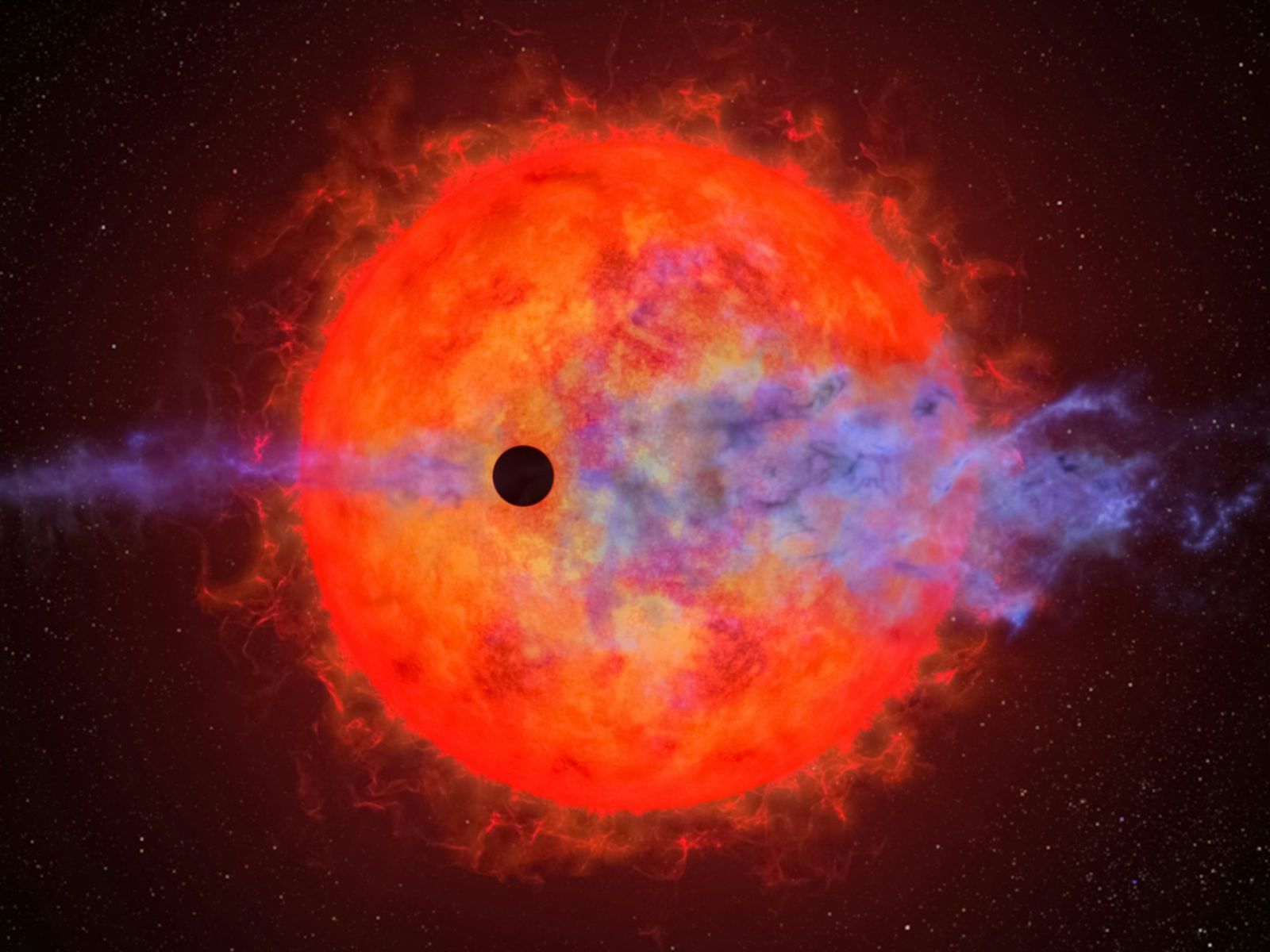
Astronomers have pinned down the age of a brown dwarf about 57 light-years from Earth, marking a significant step forward in the effort to understand these elusive “failed stars.” Because brown dwarfs sit in the gray area between planets and full-fledged stars, accurately dating them has long been one of the biggest challenges in brown dwarf research. Knowing their age is essential for testing how they form, cool, and evolve over time.
The breakthrough comes from a close look at HR 7672, a nearby system made up of a Sun-like star and its brown dwarf companion, known as HR 7672B. A team from the University of Hawaii’s Institute for Astronomy used observations from the W. M. Keck Observatory along with the Keck Planet Finder instrument to refine the system’s timeline.
Earlier work suggested the brown dwarf and the star formed at the same time. To turn that clue into a solid age estimate, researchers studied subtle pulsations in the star. Those stellar vibrations act like a natural timekeeper, allowing scientists to infer how old the star is—and, by extension, how old its brown dwarf companion must be. Using this approach, the team estimated the HR 7672 system is about 2.3 billion years old.
What makes this result especially valuable is the improved precision. Researcher Yaguang Li noted that the roughly 18% uncertainty in the age is good enough to turn HR 7672 into a long-term benchmark system—essentially a reliable “clock” that can be used to put brown dwarf evolutionary models through tougher, more realistic tests. With a dependable age in hand, astronomers can better judge which assumptions in their models are correct and which physical details still need revision.
HR 7672B also holds a special place in astronomy history. Scientists have been tracking the system for more than two decades, and HR 7672B was the first brown dwarf observed orbiting a star similar to the Sun. That long observational record, combined with a stronger age estimate, makes the system a powerful reference point for studying other brown dwarfs across the galaxy.
By turning a once-mysterious companion into a well-dated object, this research helps lay the groundwork for deeper insights into how brown dwarfs form and how their properties change over billions of years—bringing astronomers closer to understanding some of the most enigmatic objects in our cosmic neighborhood.