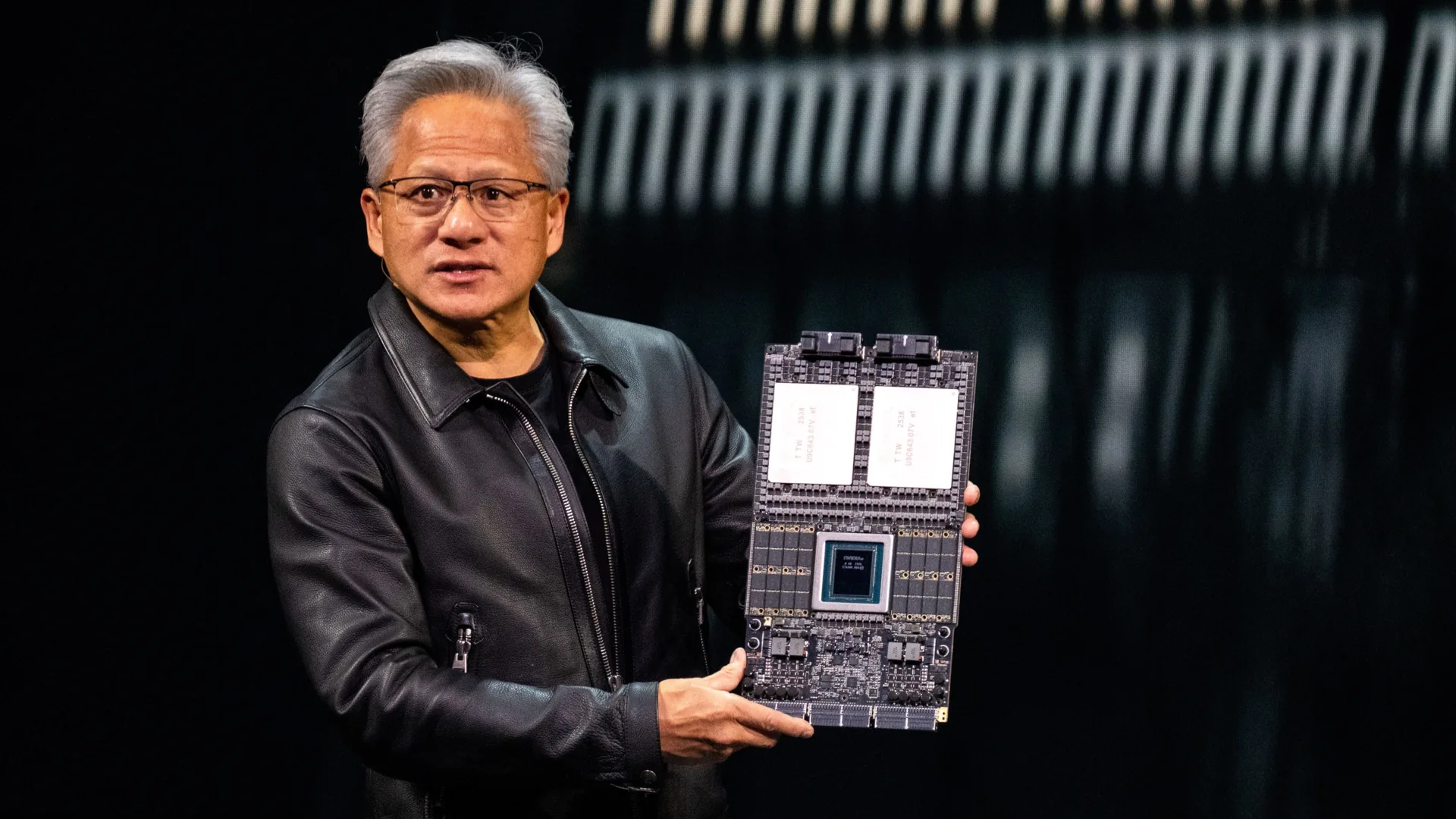
The high-bandwidth memory (HBM) market is entering a new phase as HBM4 moves from validation into production, and that transition is starting to reshuffle expectations about who wins the next wave of AI accelerator deployments. With next-generation platforms like NVIDIA’s Vera Rubin and AMD’s Instinct MI400 series pushing hard for HBM4 integration, momentum is increasingly tilting toward the Korean memory heavyweights rather than the only major U.S.-based DRAM maker.
The biggest talking point right now is Micron’s position in the HBM4 race. Industry chatter suggests Micron could be shut out of HBM4 supply for key upcoming AI GPU programs, with some analysts even projecting its share could fall to effectively zero for certain flagship deployments. While that’s still a developing situation and not a finalized outcome, the concerns behind the claim are specific and worth understanding.
Micron is reportedly dealing with hurdles around customer validation for its HBM4 approach. The issues being discussed include achieving required pin speeds and meeting precision targets tied to the logic portion of the stack. In HBM4, the relationship between the memory and the underlying logic becomes even more critical, and any shortfall in signal integrity, power delivery, or thermal characteristics can complicate qualification—especially when customers are already ramping platforms into full production.
A key factor is Micron’s strategy for the HBM4 “base die.” Micron is said to internally design both the DRAM and the base die to keep costs down and maintain tighter control over its supply chain. That sounds attractive on paper, but it also increases execution risk when compared with manufacturers that have either an in-house logic foundry or well-established external partnerships.
Samsung, for example, has the advantage of its own logic manufacturing capabilities. SK hynix, meanwhile, benefits from working with leading foundry partners to execute the logic side of the package. Micron’s more self-reliant route is reportedly creating friction—particularly because it has been reluctant to move the base die to more advanced nodes. That choice can introduce thermal constraints and make it harder to reach the pin speeds customers want, which is exactly where next-gen AI accelerators are most demanding.
To address these challenges, Micron is rumored to be targeting a Q2 2026 window for qualification testing with NVIDIA after redesign work. Reports suggest the company is revising the base die and tuning elements such as the power delivery network (PDN) and PHY to improve performance and compliance. The problem is timing: if Vera Rubin is already in full production mode, suppliers that are already validated and shipping at spec have a major advantage in winning the bulk of initial deployments.
That’s where Samsung and SK hynix come into the spotlight. Expectations are that SK hynix will be the largest beneficiary of HBM4 ramps tied to major AI platforms, potentially securing more than half of the share in this generation. Samsung is also positioned to grow, helped by reports that it was first to meet the required HBM4 pin speeds for NVIDIA. Depending on how Micron progresses through validation, Samsung’s HBM4 share is commonly estimated in the 20% to 30% range.
This makes the shift especially notable because Samsung previously faced delays with HBM3, which limited its momentum in earlier cycles. HBM4 could mark a clearer return to the center of the AI memory market for Samsung—while Micron, at least for this generation and these flagship programs, risks arriving late to a party that’s already well underway.
It’s also important to keep the broader picture in mind. A potential decline in Micron’s HBM share doesn’t automatically mean weakening demand for Micron overall. General-purpose DRAM remains in strong demand, and Micron is positioned to benefit from emerging memory form factors and adoption trends such as SOCAMM, even if HBM4 ramps prove more challenging in the near term.
Bottom line: as HBM4 transitions into production for next-gen AI accelerators, supply is expected to consolidate around the vendors that can meet strict speed, thermal, and validation requirements right now. If current reports hold, SK hynix and Samsung stand to gain the most, while Micron works through redesign and qualification to re-enter the HBM4 conversation on a later timeline.