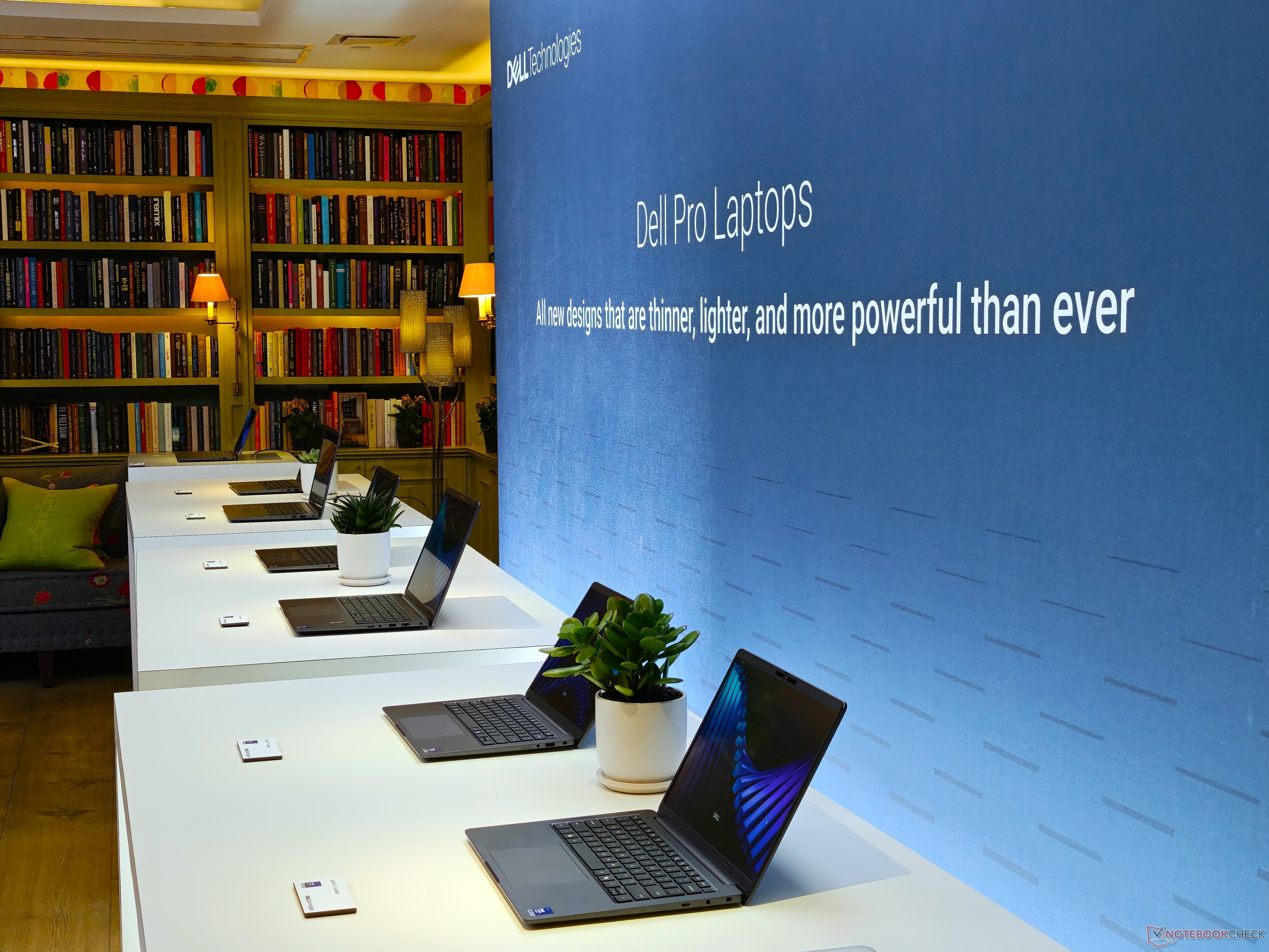
Dell is making a serious statement in 2026: the Dell Pro lineup is getting a meaningful redesign, and the changes go well beyond a routine yearly update. The new Dell Pro 5, positioned as the follow-up to the Dell Pro Plus, arrives with a sleeker, more modern approach that should appeal to professionals who want a lighter laptop without giving up configuration flexibility.
One of the first things you’ll notice is the new look. Dell is moving away from the familiar silver finish and adopting a darker grey color, paired with a noticeably thinner chassis. It’s a small shift on paper, but it signals a broader refresh aimed at making the Pro series feel more contemporary and competitive in the premium business laptop space.
Dell is also expanding the hardware menu in a way that matters for buyers comparing specs. Display options now include OLED WUXGA panels at 1,920 x 1,200, a welcome upgrade for anyone who spends long hours staring at spreadsheets, documents, creative apps, or presentation decks and wants deeper contrast and richer colors. On the performance side, the Dell Pro 5 can be configured with Intel Panther Lake processors and Intel Arc B390 graphics, which positions it to handle everyday productivity and heavier multitasking more comfortably. Memory options are also getting more interesting, with support for LPCAMM2, a newer memory format that’s becoming a talking point in modern laptop design thanks to its balance of performance and serviceability potential.
Behind the scenes, Dell is making a strategic move that could have a real impact on availability, pricing, and customization long-term: a unified motherboard approach across the Dell Pro series. In simple terms, Dell plans to use the same mainboard design throughout the Pro family, then adjust the layout depending on what customers need—whether that means soldered RAM, LPCAMM2 configurations, or traditional SO-DIMM options. For Dell, this kind of shared platform can reduce manufacturing complexity and lower costs. For buyers, it can translate into broader configuration choices and potentially smoother rollouts across multiple models.
If you prefer AMD-powered business laptops, Dell isn’t abandoning that audience. AMD options will continue across the Dell Pro lineup, with one key exception: the Dell Pro Premium, which won’t be offered with AMD configurations.
On the workstation side, Dell is also making news by bringing back a familiar name. Precision is returning. The company’s mobile workstation branding is shifting from the 2025 “Dell Pro Max” naming to the updated 2026 Dell Pro Precision lineup. In the new naming structure, the Dell Pro Precision 5 steps in to replace the previous Dell Pro Max, while the former Dell Pro Max Premium is now positioned as the Dell Pro Precision 7. There’s also a longer-term roadmap: the Dell Pro Max Plus is expected to be replaced by the Dell Pro Precision 9 in 2027.
As for what’s new in these 2026 mobile workstations, expectations should be set appropriately. Dell’s update is described as more of a light refresh overall, largely because there aren’t new mobile Nvidia GPUs arriving to drive a bigger leap this cycle. That said, Dell is introducing new slimmer variants called the Dell Pro Precision 14s and Dell Pro Precision 16s. These models focus on thin-and-light workstation styling, but with an important trade-off: there’s no dedicated GPU. Instead, they rely on Intel Panther Lake’s Arc B390 integrated graphics, which should be notably stronger than older integrated solutions and may be a practical fit for professionals who want workstation-grade build and features without the bulk and power draw of a discrete GPU.
Taken together, Dell’s 2026 updates show a clear direction: slimmer designs, more modern display and memory options, a smarter internal platform strategy, and a cleaner workstation branding structure. For business users and creators watching the next wave of professional laptops, the Dell Pro and Dell Pro Precision families are shaping up to be worth a close look.