Google’s TPU (Tensor Processing Unit) is quickly becoming one of the most in-demand AI chips in the industry, and that momentum is now reshaping Google’s manufacturing strategy. With interest surging from both inside Google and from major outside customers, the company is ramping up production plans and leaning on multiple partners to keep up.
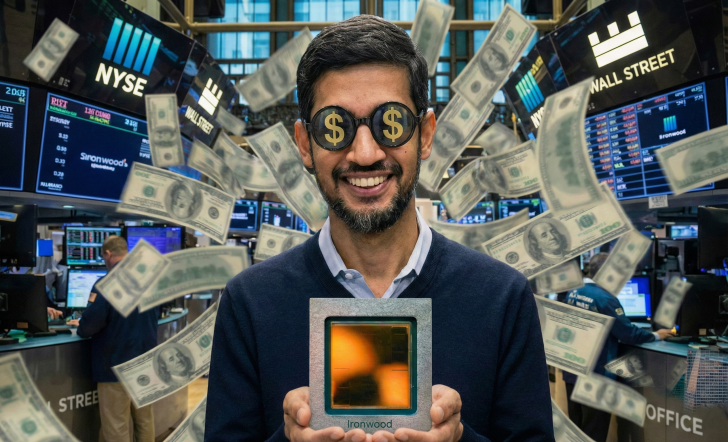
Much of the recent excitement ties back to Google’s newest TPU generation, Ironwood, which is positioned as a strong fit for inference workloads. As AI services scale, inference performance and efficiency are becoming increasingly important, and that focus is helping Google’s TPUs stand out in the competitive ASIC market.
To meet rising demand, Google is expanding and diversifying its supply chain. Alongside Broadcom, MediaTek is now playing a larger role in helping bring upcoming TPU designs to market. According to a report from Taiwan Economic Daily, Google has placed an order at MediaTek that is reportedly twice the size of its original order for the next TPU v7e chips. That’s a notable signal that TPU supply is being prioritized, and that Google expects demand to remain strong.
Splitting production work between multiple partners can help Google ramp faster and reduce bottlenecks, especially as advanced packaging capacity becomes a key limiting factor across the AI chip industry. One of the most critical resources here is TSMC’s CoWoS advanced packaging, which is widely used for high-performance AI silicon. By distributing orders between MediaTek and Broadcom, Google can improve access to CoWoS allocation and shorten the time it takes to deliver new TPU hardware at scale. MediaTek’s close working relationship with TSMC is also expected to help it secure the packaging and process capacity needed for TPU v7e production.
This rising TPU output isn’t just about Google’s internal needs. External adoption is becoming a major growth driver. One of the highest-profile TPU customers is Anthropic, which previously agreed to secure rack-scale TPU infrastructure valued at up to $10 billion, a detail shared by Broadcom CEO Hock Tan during an earnings call. There’s also growing interest from other major tech companies, including reports that Meta has been exploring TPU adoption as it evaluates alternatives that can improve total cost of ownership in large-scale AI deployments.
Whether Google’s TPUs can directly challenge NVIDIA’s long-running dominance in AI compute is still an open question. But what’s becoming harder to ignore is Google’s rapid progress in the ASIC segment. With new TPU generations optimized for modern AI workloads, increasing orders, and a supply chain strategy designed to accelerate production, Google is clearly positioning TPUs as a serious force in the AI hardware market.