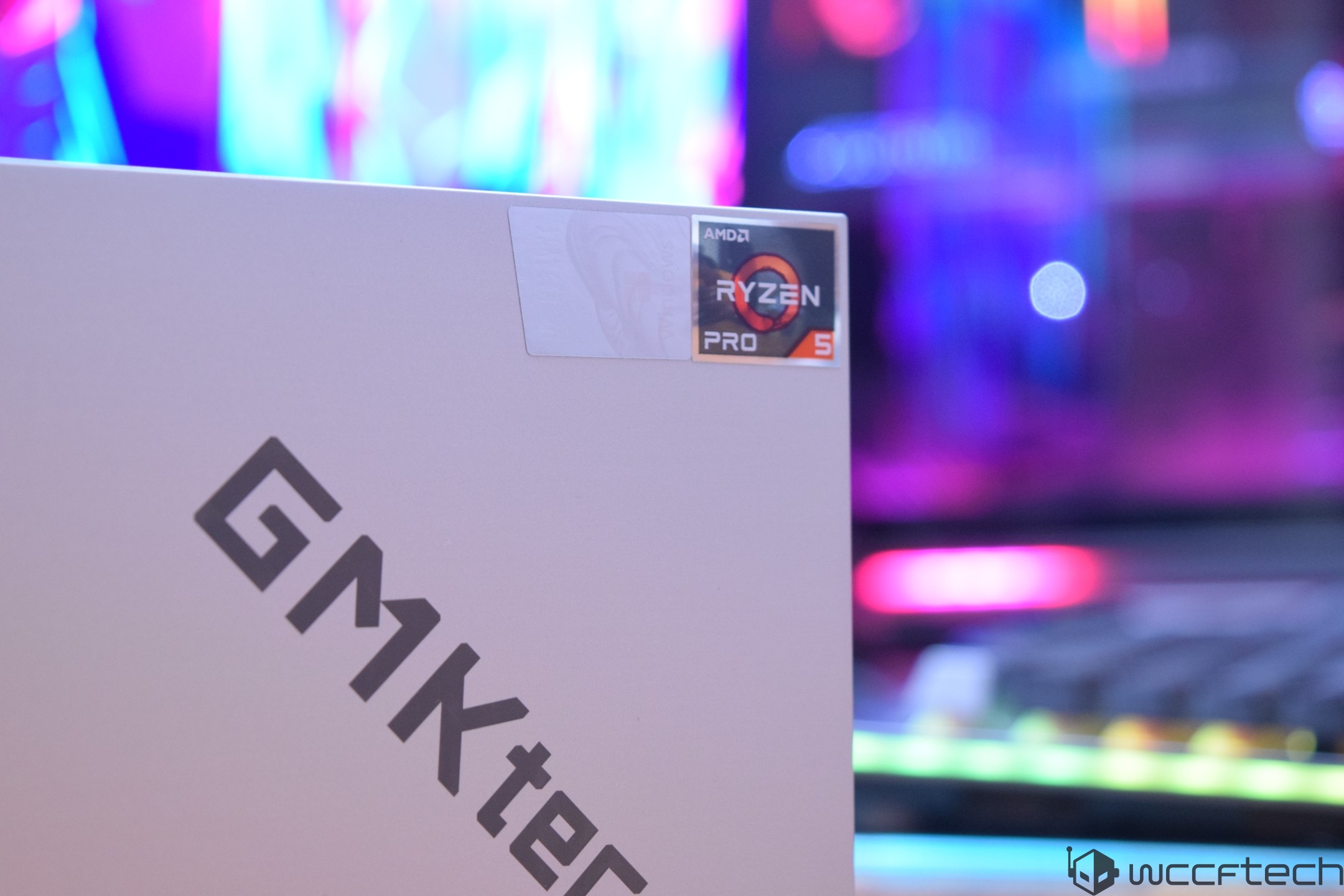
GMKtec has spent years carving out a name in the mini PC space, building compact desktops from its base in Shenzhen, China while keeping close ties with major platform partners. Its lineup spans everything from budget-friendly everyday systems to higher-end small-form-factor machines built around mobile AMD and Intel chips. One of the newest additions worth paying attention to is the GMKtec M8 (also known as the NuxBox M8), a compact mini PC positioned as a strong value option at around $359.99.
At the heart of the GMKtec M8 is the AMD Ryzen 5 PRO 6650H, a 6-core, 12-thread processor based on AMD’s Zen 3+ architecture. It comes with 16MB of L3 cache, boosts up to 4.50GHz, and runs at a 45W base TDP, which is a common sweet spot for mini PCs that aim to balance performance with manageable noise and temperatures. In day-to-day use, this class of chip is well suited for productivity, multitasking, office work, light content creation, and even casual gaming—especially in a compact PC that doesn’t take over your desk.
Graphics are handled by the integrated Radeon 660M iGPU (built on RDNA 2), featuring 6 compute units and up to 1.9GHz clocks. While RDNA 2 isn’t AMD’s newest graphics architecture, it remains capable for a wide range of tasks, including smooth desktop use across multiple displays and respectable performance in esports and lighter titles. It also supports modern features such as DirectX 12 Ultimate compatibility and AMD technologies like FSR 3 and Fluid Motion Frames, which can help improve perceived performance in supported games and workloads.
The reviewed configuration ships with 16GB of LPDDR5-6400 dual-channel memory in a soldered setup. That means you can’t upgrade the RAM later, and 16GB is the maximum configuration offered here—something buyers should consider if they expect heavier workloads down the line. Storage is more flexible: the M8 includes two M.2 2280 SSD slots, and while the included drive is a 512GB PCIe Gen 3.0 x4 SSD, both slots are rated up to PCIe 4.0 capabilities. GMKtec also notes high capacity support, with up to 8TB per slot, allowing a potential total of 16TB if you decide to expand.
Connectivity is a major selling point for this mini PC, especially for users who want a compact machine that still behaves like a “real desktop.” On the front, you’ll find an OCuLink port (useful for high-speed expansion such as external GPU setups in the right circumstances), two USB 3.2 Type-A ports running at 10Gbps, a USB4 Type-C port, a 3.5mm audio jack, a CMOS reset button, and the power button. Around back, the M8 adds a USB 2.0 port, another USB 3.2 10Gbps Type-A port, dual 2.5GbE LAN ports for fast wired networking, plus HDMI and DisplayPort 1.4 outputs for flexible multi-monitor setups. It also includes the DC power input and a security lock slot for more secure deployments in offices or shared spaces.
Out of the box, GMKtec keeps things straightforward. The M8 arrives in a simple silver package with the branding up front and configuration details printed on the back. Inside, you get the usual paperwork along with the essentials you’ll need to get running quickly: a power cord, HDMI cable, and the power adapter. The included 120W power brick is comfortably sized for a 45W-class mini PC, leaving overhead for sustained performance and connected peripherals.
Design-wise, GMKtec continues to lean into a clean, modern look. The M8 uses a stylish dual-tone finish, combining a matte grey front with a silver outer shroud. Venting is clearly a priority, with exhaust vents along the sides to maintain airflow and help the system stay cool under load. If you ever need to get inside, access is simple: remove the four screws on the bottom (which also has rubber feet), and you can reach the parts that matter most. Since the memory is soldered, storage is the primary upgrade path, and the dual M.2 layout makes expanding capacity far easier than on many similarly sized mini PCs.
For performance testing, the system was run using a 45W power profile. In real-world terms, that’s the configuration most buyers will care about, since it reflects how the Ryzen 5 PRO 6650H is intended to operate in compact designs like this—delivering solid CPU performance for its class while keeping the footprint small and power draw reasonable.
For anyone shopping for a mini PC that fits neatly into a home office, media setup, dorm room, or even a small business environment, the GMKtec M8 stands out with a strong mix of Ryzen performance, modern ports like USB4, fast wired networking with dual 2.5GbE, and storage expandability that’s uncommon at this size and price.If you’re shopping for a small, power-efficient mini PC that can still handle real 1080p gaming, the GMKtec M8 is one of the more interesting options in today’s crowded compact PC market. Integrated graphics have improved quickly over the last few generations, and the latest testing shows just how wide the performance gap can be between modern AMD Radeon iGPUs, older Vega-based solutions, and Intel’s Iris Xe lineup.
To get a clearer picture of what the GMKtec M8 can do, 1080p gaming performance was measured across a mix of popular esports games and several demanding AAA titles. The goal wasn’t to highlight one specific game, but to show how each integrated GPU class stacks up when you’re playing at a resolution most people actually use on affordable monitors and TVs.
In these 1080p benchmarks, the GMKtec M8 is positioned among a broad range of mini PCs and iGPU configurations, including AMD’s newer RDNA-based integrated graphics, older AMD Vega iGPUs, and multiple generations of Intel Iris Xe and Iris Xe-LP. That includes high-end integrated solutions like Radeon 890M configurations (including overclocked memory setups and frame generation scenarios), along with the widely used Radeon 780M and 760M chips found in many newer Ryzen mini PCs. It also includes the Radeon 680M and 660M from RDNA 2 systems, which remain popular in compact desktops thanks to their strong balance of efficiency and gaming capability.
For additional context, the comparison pool also covered older AMD Vega 8, Vega 7, and Vega 6 graphics, plus Intel Iris Xe iGPUs seen in a range of 12th-gen and 13th-gen Intel-based mini PCs, and Iris Xe-LP in more entry-level compact machines. A classic midrange dedicated card, the NVIDIA GeForce GTX 1060 6 GB, also appears in the lineup, giving readers a familiar reference point for how far integrated graphics have come.
Where does the GMKtec M8 land in all of this? It uses AMD Radeon 660M RDNA 2 integrated graphics, putting it in a sweet spot for buyers who want better-than-basic gaming without paying extra for the very fastest iGPU tiers. In practical terms, that means it’s generally a step above older Vega-based mini PCs and many basic Intel iGPU setups for gaming workloads, while still sitting below the newest, top-performing integrated solutions like Radeon 780M/890M-class hardware that often appears in higher-priced mini PC models.
Another key detail in these comparisons is power tuning. Many of the systems listed run at different wattage targets (for example, 45W, 54W, 60W, and 65W configurations), and that matters because integrated graphics performance can swing noticeably depending on how much sustained power and cooling headroom a mini PC has. In other words, two machines with similar-looking specs can deliver very different 1080p results depending on how aggressively the manufacturer allows the CPU and iGPU to boost.
The takeaway is simple: the GMKtec M8 is part of a competitive 1080p mini PC gaming tier where RDNA 2 integrated graphics still hold up well, especially for esports titles and lighter AAA gaming with sensible settings. Meanwhile, newer RDNA 3 and next-gen integrated solutions continue to raise the ceiling for what “no graphics card” gaming can look like, particularly when paired with fast memory configurations and higher power limits.
If you’re comparing mini PCs for 1080p gaming, this kind of iGPU-to-iGPU benchmarking is exactly what you want to look at—because the name on the box doesn’t matter nearly as much as the graphics architecture, memory performance, and wattage limits working together.If you’re shopping for a small, affordable mini PC that can handle everyday work without turning your desk into a tangle of cables and noise, the GMKtec M8 is a strong option worth a closer look. Built around the AMD Ryzen 5 PRO 6650H, this tiny system is designed to deliver solid all-around performance at an entry-level price, while staying efficient and easy to live with.
One of the biggest appeals of the GMKtec M8 is its size. It’s genuinely compact, making it a practical choice for anyone who wants a portable desktop they can slip into a backpack and take between home, office, or school. Despite the small footprint, it still offers a well-balanced configuration for day-to-day tasks like web browsing, office apps, communication, light photo work, and streaming.
Performance is backed by AMD’s Ryzen 5 PRO 6650H, which provides dependable CPU power for productivity and responsive multitasking. On the graphics side, the integrated Radeon 660M (RDNA 2) gives the M8 enough GPU capability for casual and lightweight gaming, especially compared with older entry-level integrated solutions like AMD Vega graphics or many Intel Iris Xe configurations found in similarly sized mini PCs. For buyers who want one machine to cover work and play without paying for a dedicated GPU, that balance matters.
Power efficiency is another area where the GMKtec M8 stands out. Using its default 45W profile, it keeps power consumption in check, which directly helps with thermals. Lower power draw generally means lower heat output, and that translates into a quieter experience during typical use. For a mini PC, that combination—reasonable temperatures and quiet operation—can be just as important as raw speed, especially if you’re working in a small room, sharing a workspace, or simply don’t want fan noise in the background during calls.
At around $359, the GMKtec M8 lands in a sweet spot for value-focused buyers who still want modern AMD performance in a compact chassis. It’s a good fit for students, home office setups, and anyone looking for a small desktop that can handle everyday computing smoothly while also supporting some light gaming on the side.
Bottom line: the GMKtec M8 is tiny, efficient, and surprisingly capable for the money. If your priority is an affordable mini PC that stays cool and quiet while handling daily workloads—and you’d like the option for casual gaming—this one checks the right boxes without overcomplicating things.