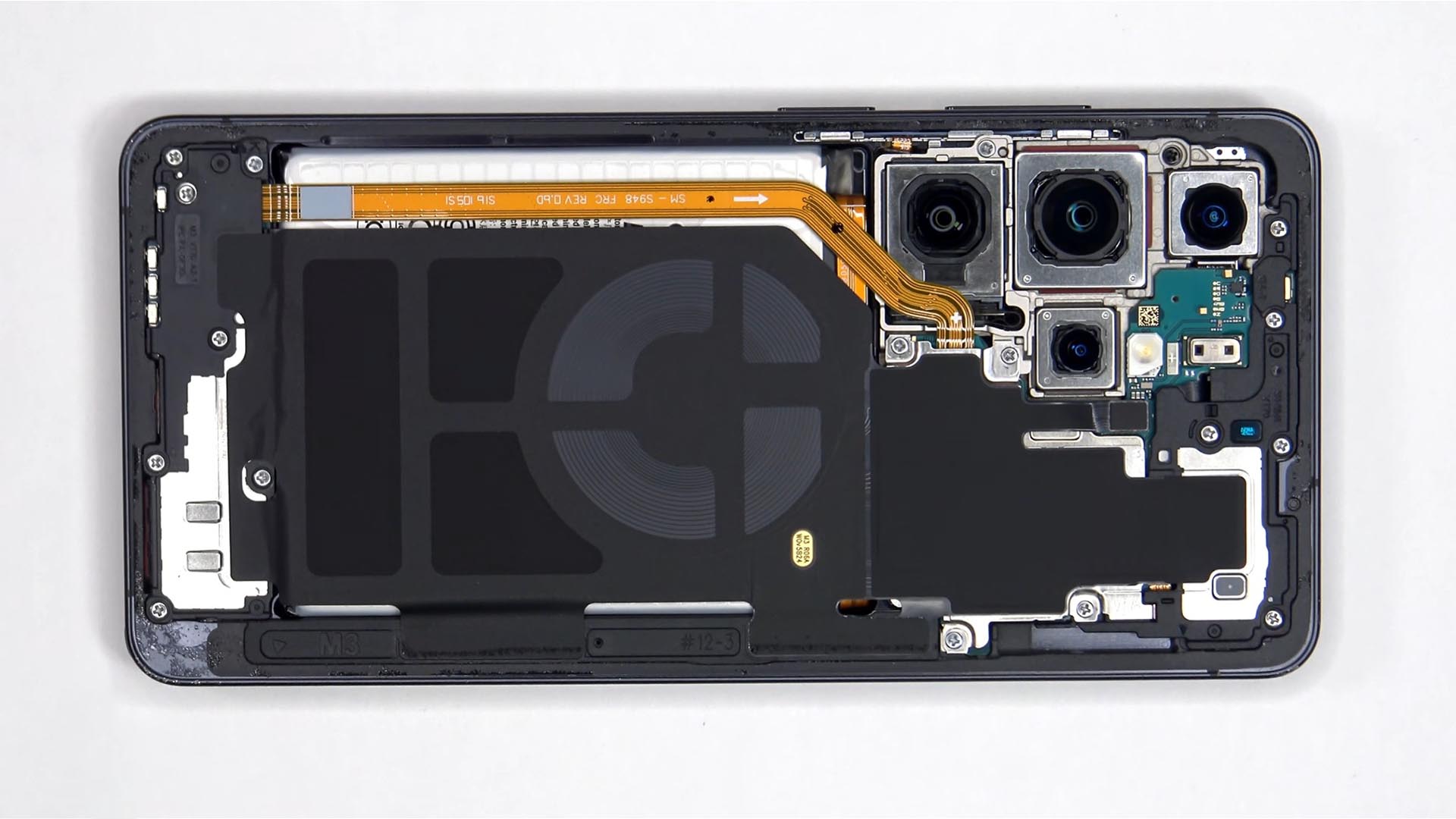
Samsung’s Galaxy S26 Ultra is shaping up to be one of the more user-friendly flagship phones to come from the company in years, and a recent teardown shows why. Instead of chasing gimmicks or going overboard with flashy hardware choices, Samsung appears to have focused on two areas people complain about the most: heat management and battery replacement. The end result is a premium smartphone that feels thoughtfully engineered, with several design choices that other manufacturers could easily learn from.
Getting into the Galaxy S26 Ultra is relatively straightforward with basic pry tools, which is already a good sign for repairability. Once inside, the teardown highlights how seriously Samsung is taking thermals this generation. One of the first notable additions is a graphite film applied to the wireless charging coil, helping reduce heat buildup during charging. That’s a smart move, since wireless charging is often a major source of warmth in modern phones.
Samsung also appears to have upgraded its approach to transferring heat away from internal components. According to the teardown, previous Galaxy S Ultra models didn’t use thermal paste between the back of the motherboard and the phone’s frame. The Galaxy S26 Ultra changes that, adding thermal paste in that area to improve heat transfer into the chassis.
Beyond that, there’s more graphite film placed on the logic board, and the most surprising thermal change is how Samsung treats the memory and storage. Thermal paste is applied not only around the main chipset, but also on the storage and the DRAM. The memory chip is positioned on top of the Snapdragon 8 Elite Gen 5, and cooling support here can make a real difference for sustained performance—especially when recording high-resolution video, gaming for longer sessions, or dealing with heavy multitasking where internal temperatures can climb quickly.
The teardown also points out that this particular Galaxy S26 Ultra unit is not the Exynos 2600 version. That matters because the Exynos model would reportedly use a Heat Pass Block (HPB), described as a copper heatsink placed on top of the chipset and seated next to the DRAM. In other words, Samsung seems to be using different cooling solutions depending on the processor variant, and this Snapdragon-powered model relies heavily on graphite and thermal paste across more components.
Battery replacement is another area where the Galaxy S26 Ultra makes a strong impression. Samsung includes an “easy to remove” pull pouch designed for quick battery removal, with all four sides clearly labeled. This kind of pull-tab style removal can make battery swaps significantly less stressful for technicians and skilled DIY repairers, and it reduces the risk of damaging the battery during removal. If more phones adopted this approach, battery replacements could become far more accessible and safer across the industry.
The teardown also provides a look at the vapor chamber cooling system. While Samsung may have promoted it as the largest vapor chamber used in its flagship smartphones, the teardown suggests the size is unchanged compared to the vapor chamber found in the Galaxy S25 Ultra. Even if it’s not physically larger, the additional thermal materials—graphite films and expanded thermal paste usage—could still improve real-world temperature control and sustained performance.
Overall, the teardown experience was notably positive. The device earned a 9 out of 10 repairability score in the video, with points deducted due to repair length and extra difficulty when replacing the display. Still, for a modern flagship packed with high-end hardware, that score signals meaningful progress toward easier servicing.