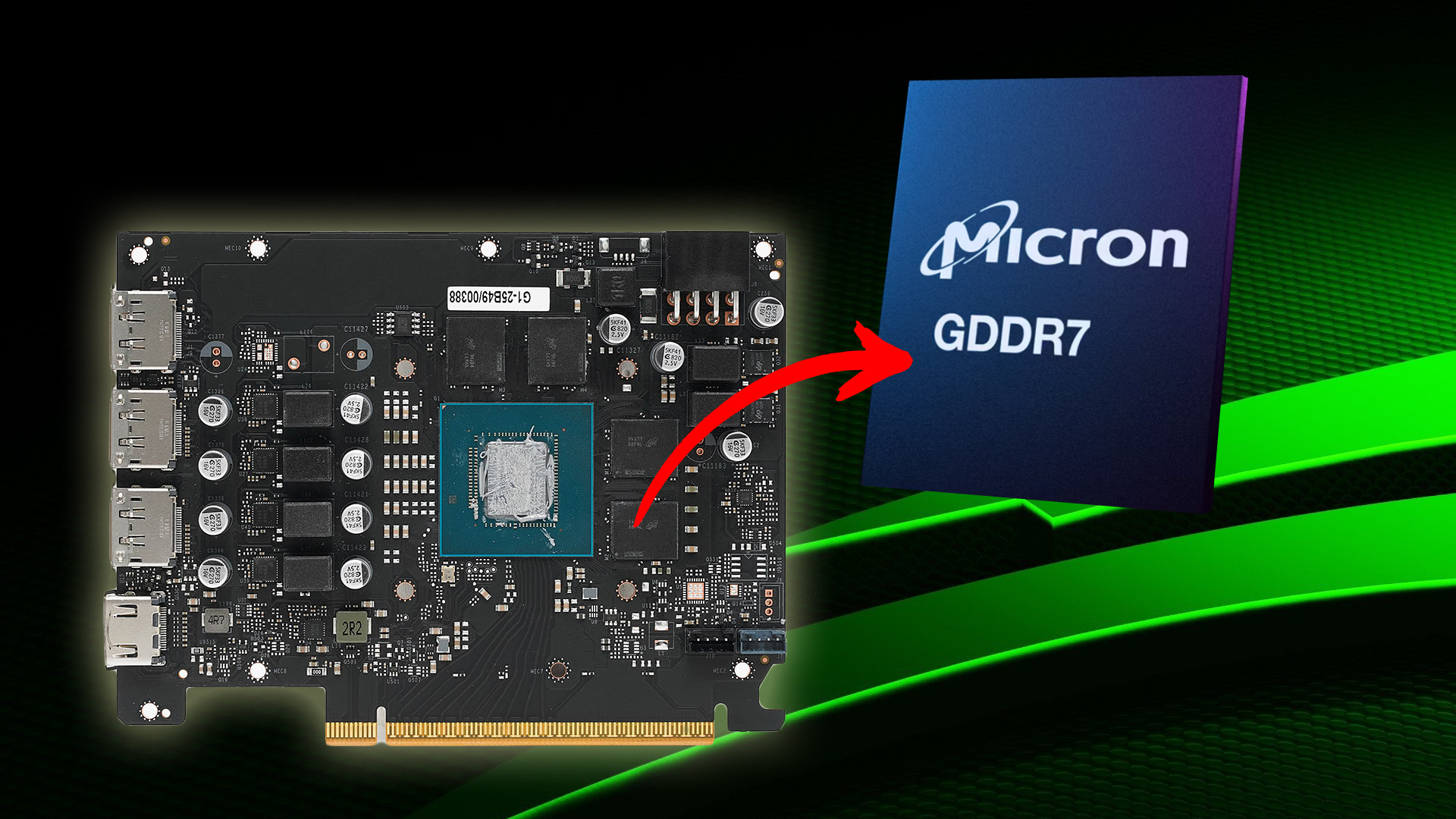
NVIDIA’s push to keep RTX 50 series graphics cards flowing to stores is running into a familiar roadblock: memory supply. With the DRAM market tightening and GDDR7 availability still strained, NVIDIA is reportedly expanding its supplier list and now turning to Micron for GDDR7 memory chips to support the RTX 50 lineup.
Until now, most RTX 50 series cards have been seen using GDDR7 modules from Samsung and SK Hynix. While NVIDIA has worked with Micron on memory for past generations, Micron-branded GDDR7 on RTX 50 hardware has been uncommon. That’s starting to change.
A recent teardown of a Galaxy GALAX GeForce RTX 5060 Black OC V2 revealed something new for the series: GDDR7 chips manufactured by Micron. The board shows four 2GB GDDR7 memory packages placed around the GPU, marking one of the first public sightings of Micron GDDR7 on an RTX 50 series graphics card.
The specific memory identified is Micron’s MT68A512M32DF, a 16Gb (2GB) GDDR7 module rated for 28Gbps. That 28Gbps speed aligns with what NVIDIA is already using across much of the RTX 50 family, including the RTX 5060, via Samsung and SK Hynix modules. One notable exception remains the GeForce RTX 5080, which is associated with faster 30Gbps memory.
Bringing Micron into the RTX 50 series supply chain strongly suggests NVIDIA is working around ongoing constraints in the GDDR7 market. In theory, adding a third major supplier should help NVIDIA stabilize production and improve overall availability for gamers and PC builders. In practice, the broader shortage still appears severe, with limited signs of meaningful relief so far.
Pricing reflects those continued pressures. NVIDIA GPU prices have reportedly climbed by at least 15% since October 2025, and the market still hasn’t found a stable floor. Even if Micron’s GDDR7 helps ease a portion of the bottleneck, memory supply remains just one piece of a larger availability and pricing puzzle affecting current-generation graphics cards.
Meanwhile, Micron is also ramping up its next wave of GDDR7 technology. The company has confirmed 24Gb GDDR7 memory modules capable of reaching 36Gbps, signaling where high-end memory speeds are headed next. These faster, higher-density modules aren’t expected to appear broadly across the RTX 50 desktop lineup, though one notable product using 24Gb modules is said to be the RTX 5090 Laptop GPU. Looking further ahead, those advanced Micron modules could be better suited to a future GPU generation rather than current RTX 50 series cards.
For now, the key takeaway is simple: NVIDIA is widening its GDDR7 sourcing to include Micron, a move that could help keep RTX 50 series inventory moving—but it won’t immediately end the shortages or the price creep gamers have been dealing with.