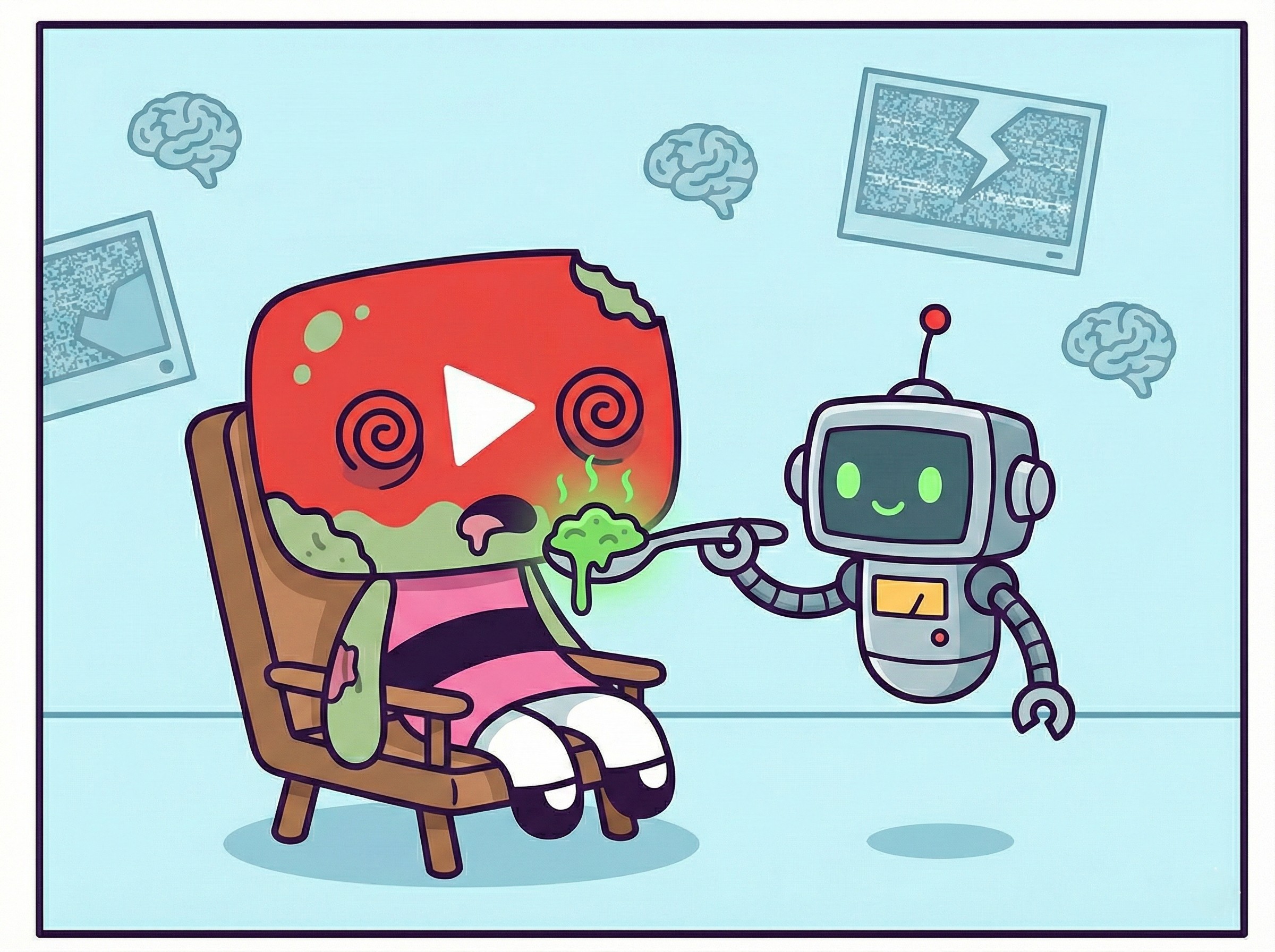
New YouTube accounts are getting hit with an immediate wave of AI-generated “slop” and so-called brainrot content, especially in Shorts. Instead of thoughtful uploads built around a concept, editing, and storytelling, many of these videos are bizarre automated clips engineered to grab attention with nonstop, absurd stimulation. And according to an analysis from the video editing platform Kapwing, this isn’t just a weird internet side effect—it’s a fast-growing business that’s pulling in serious money.
Kapwing’s findings suggest that as soon as someone joins YouTube and starts watching Shorts, as much as 33% of what they see can be AI slop. The key issue isn’t that the videos use AI tools. It’s that they’re typically mass-produced “digital junk” designed to overwhelm the feed through quantity, not quality. Where human creators often spend days or weeks planning, filming, researching, and polishing videos, this new wave can pump out endless variations every second, all tuned to ride the algorithm.
How Kapwing measured AI slop in YouTube Shorts
To understand what a brand-new viewer experiences, Kapwing simulated the behavior of a completely fresh YouTube user. The team manually reviewed the first 500 Shorts suggested to that account, noting which ones appeared to be AI slop or brainrot-style content. They also examined the top 100 trending channels in multiple countries and used third-party analytics tools to estimate subscriber growth and revenue patterns.
This approach paints a clear picture of a growing ecosystem: automated channels scaling at speed, feeding the algorithm, and getting rewarded with massive reach.
The money behind AI-generated “digital trash”
What’s most shocking is how profitable low-effort, auto-generated content can be when it catches traction in Shorts.
In India, a channel called “Bandar Apna Dost” (Monkey Friend) reportedly leads with over 2.4 billion views. Kapwing estimates it may generate around $4.25 million per year, largely from surreal AI-generated monkey clips.
In the United States, a channel called “Cuentos Fascinantes” has grown into what Kapwing describes as the most-subscribed slop channel in the world, closing in on 6 million followers. Across the US, trending AI slop channels have already collected more than 3.39 billion views.
That’s the heart of the problem for many traditional creators: the system increasingly rewards volume and retention tricks over originality and craft. “Sloppers” can dominate feeds by flooding the platform, gradually pushing handmade videos out of the most visible spaces.
YouTube’s growing dilemma: innovation vs. trust
YouTube is in a tight spot. On one hand, the company promotes generative AI as part of the future of creation and innovation. On the other, advertisers don’t want their brands appearing next to content that feels mindless, spammy, or outright unsettling. If the feed becomes packed with low-quality filler, YouTube risks damaging user trust and making it harder for viewers to find content that’s genuinely useful, entertaining, or authentic.
There’s also a bigger cultural impact: when the algorithm becomes overwhelmed by automated clutter, the value of the platform’s recommendations drops. Discovery becomes noise. Creativity becomes harder to spot. And the entire ecosystem starts to feel less human.
AI doesn’t have to mean low-effort
Kapwing’s broader point isn’t that AI tools are inherently bad. The real issue is how they’re being used. Some creators use AI to enhance real ideas—speeding up production, improving edits, or helping build ambitious videos that still require human direction and taste. When AI supports creativity instead of replacing it, the end result can still be high quality and worth watching.
The concern is where the trend is heading: a world where automated, attention-hijacking Shorts are easier to produce than meaningful stories, and where the algorithm rewards the fastest flood over the best work. If that keeps accelerating, YouTube may have to decide what it wants Shorts to become: a playground for creative video—or a factory line for endless brainrot.