A new hardware mod for the original Super Nintendo Entertainment System (SNES) is quickly turning heads in the retro gaming scene, and it’s easy to see why. A working prototype called the Super Switch HD pulls video straight from the SNES’s internal digital video bus and outputs a clean, native 1080p signal in pure digital form. That means no analog RGB chain, no external upscalers, and no extra conversion steps that can add noise, softness, or delay when playing classic SNES games on modern displays.
The project comes from modder Stanislav Parhomovich, who previously built a similar solution for the Sega Genesis. That earlier work tapped into the Genesis’ internal digital pipeline to produce crisp, lag-free 1080p output while leaving the rest of the console’s original hardware behavior intact. Now, Parhomovich is applying the same idea to Nintendo’s 16-bit legend, describing the Super Switch HD as conceptually similar to his earlier Genesis approach—specifically emphasizing that it avoids analog RGB entirely.
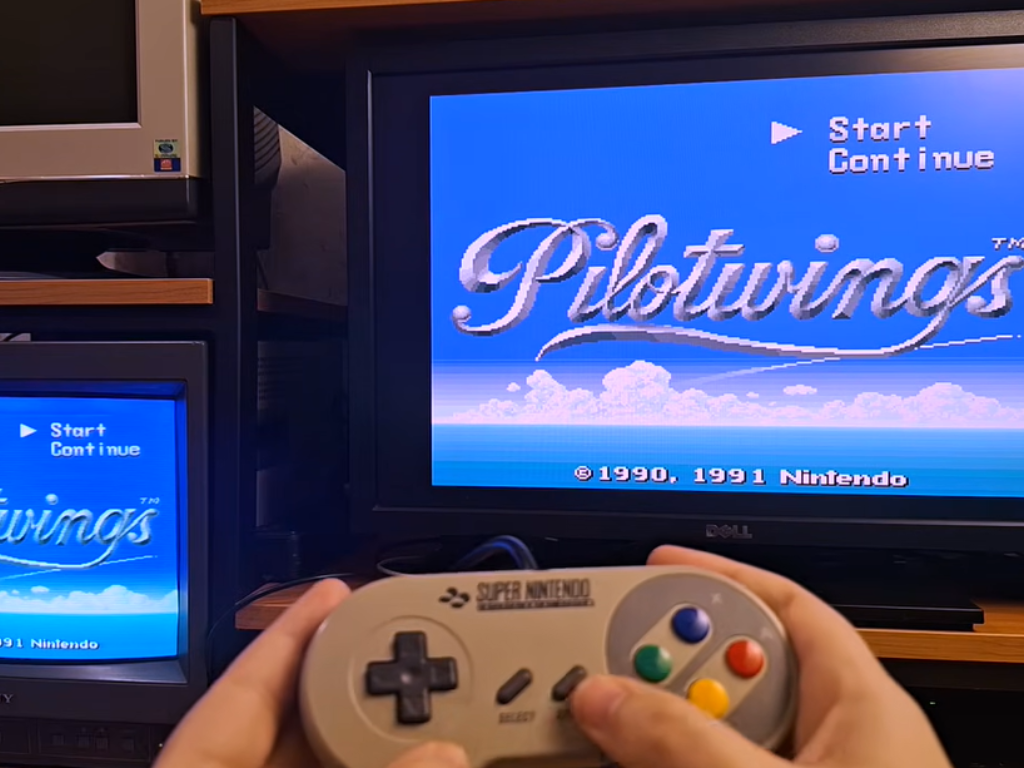
In a demonstration, Parhomovich shows the Super Switch HD running Pilotwings (1991) on a 1080p PC monitor, with the picture looking notably clean and stable. The mod also includes an on-screen interface for fine-tuning how the image is presented. With a quick controller shortcut (pressing Start and Up on the D-pad at the same time), the settings menu appears and allows adjustments such as resolution, screen size, aspect ratio, and buffer-based post-processing options.
According to Parhomovich’s explanation of the project, the mod is an internal SNES modification that upscales the console’s output to 1080p using data sourced directly from a dedicated digital bus inside the video processor. It supports both 4:3 and 16:9 aspect ratios, giving players options depending on whether they prefer the classic look or a wider fit on modern screens.
This direct-from-the-source approach is what makes the Super Switch HD especially interesting for collectors and purists. Many existing SNES video solutions rely on improving analog output (through internal mods, specialty cables, or converters). Those can look great, but they still begin with an analog signal path and can introduce minor artifacts, noise, or added latency depending on the setup. By going straight to the SNES’s internal digital video bus and keeping the signal digital, the Super Switch HD aims to deliver a sharper image with minimal delay.
For now, the Super Switch HD remains a functional prototype. There’s no confirmed release date, pricing, or purchase availability yet. Still, the early results suggest a promising future for anyone who wants true 1080p SNES output on modern TVs and monitors—without sacrificing the feel of playing on original hardware.