AI Moves From the Cloud to the Factory Floor, Pushing Semiconductor Design in a New Direction
Artificial intelligence is no longer confined to massive cloud data centers. It is increasingly moving into factories, robots, production lines, vehicles, and other physical systems where decisions must be made instantly and reliably. This shift is changing what the semiconductor industry needs to build next.
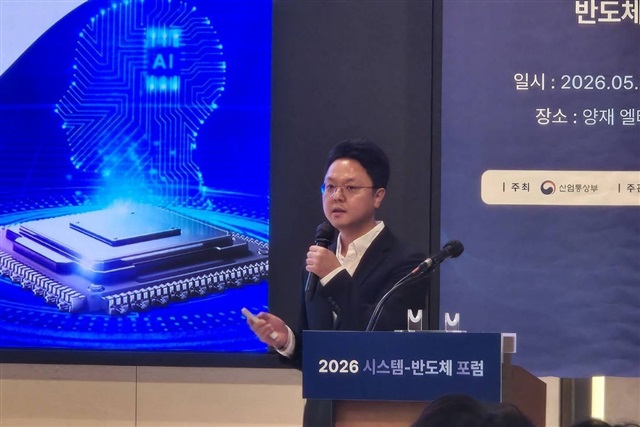
At a recent system-semiconductor seminar in South Korea, Seong-jun Jang, research center director at the Korea Electronics Technology Institute, highlighted how the rise of industrial AI is creating new priorities for chip design. As AI becomes part of real-world equipment and manufacturing environments, chips must do more than deliver raw computing power. They must be fast, efficient, adaptive, and capable of working close to where data is created.
One of the biggest changes is the move from centralized AI processing to edge AI. In traditional AI systems, large amounts of data are often sent to the cloud for analysis. That approach works for many online services, but it is not always suitable for factories or physical infrastructure. Industrial systems often need immediate responses, and even a short delay can affect safety, productivity, or product quality.
This is why on-device AI processing is becoming more important. When AI chips are placed directly inside machines, sensors, robots, and inspection equipment, they can analyze data locally without waiting for a cloud connection. This reduces latency, lowers network traffic, improves privacy, and allows systems to keep operating even when connectivity is limited.
Energy efficiency is another major priority. AI workloads can consume significant power, especially when handling image recognition, predictive maintenance, machine vision, and real-time control. In factory environments, AI hardware may need to run continuously for long periods. That makes power-efficient semiconductor design essential.
Future AI chips will need to balance high performance with lower energy consumption. This could involve specialized AI accelerators, optimized memory structures, and architectures designed for specific industrial workloads. Instead of relying only on general-purpose processors, companies are expected to focus more on purpose-built semiconductors that can handle AI tasks with greater efficiency.
A third direction is on-site learning. Many AI systems today are trained in the cloud using large datasets and then deployed to devices. However, industrial environments are constantly changing. Machines wear down, production conditions shift, and new patterns appear over time. AI systems that can learn or adapt locally may become much more valuable.
On-site learning would allow equipment to improve its performance based on real operational data. For example, a factory inspection system could adjust to new defect patterns, or a predictive maintenance system could refine its models as machinery ages. This would make AI more flexible and better suited to real-world conditions.
The fourth key direction is stronger integration between AI chips and physical systems. In manufacturing, AI does not operate in isolation. It must work with sensors, controllers, actuators, cameras, and industrial networks. Semiconductor design therefore needs to consider not only computing performance but also system-level reliability, safety, and compatibility.
As AI becomes embedded into production environments, chips must support stable operation under demanding conditions. They may need to handle heat, vibration, long operating hours, and strict safety requirements. This creates opportunities for semiconductor companies that can design chips specifically for industrial AI rather than consumer or cloud-focused applications.
The broader message is clear: the next stage of AI growth will not be limited to bigger cloud models. A major part of the future will involve bringing AI closer to machines, devices, and real-world decision-making. This transition is expected to reshape the system semiconductor market and create demand for new chip architectures.
For manufacturers, edge AI could improve productivity, reduce downtime, and enable smarter automation. For chip designers, it opens a new competitive landscape where energy efficiency, low latency, adaptability, and system integration are just as important as peak performance.
As industries adopt more intelligent equipment, the semiconductor sector will play a central role in determining how quickly AI can move from data centers into everyday operations. The factory floor may become one of the most important testing grounds for the next generation of AI chips.