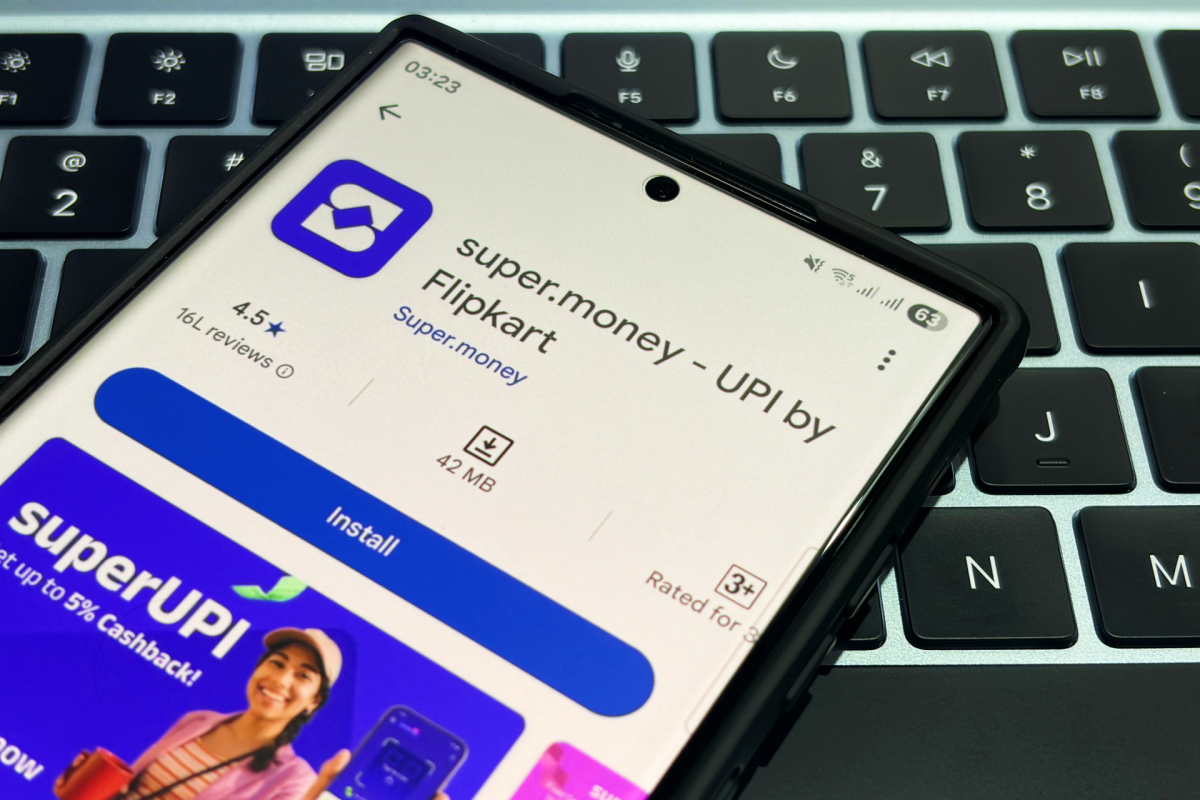
Flipkart’s Super.money and Kotak811 are betting on a new playbook for India’s zero-fee payments era: turn UPI usage into a gateway for savings and credit, and make incentives sustainable again. Their joint “3-in-1 Super Account” bundles UPI payments, a savings account, and a fixed-deposit-backed secured credit card designed to unlock credit access for first-time borrowers while creating real monetization for the platform.
The goal is ambitious. The partnership targets issuing about 2 million secured credit cards over the next 12 months—around 60 percent to new-to-credit users—and 5 million within two years. Super.money already serves roughly 10 million active users and expects the Kotak tie-up to contribute around 10 percent of its revenue next year as it charts a path to profitability by 2026.
For years, India’s UPI has been the world’s fastest-growing real-time payments network, now crossing 19 billion monthly transactions. But a core challenge remains: zero merchant fees leave fintechs little room to fund rewards, build loyalty, or offer credit at scale. Super.money’s strategy is to weave incentives back into the experience by pairing payments with secured credit and savings—creating a flywheel that can actually pay for itself.
Launched in June 2024 after Flipkart spun off PhonePe in late 2022, Super.money is already generating about 3 million dollars in monthly revenue, or roughly 36 million dollars on an annualized basis. It has emerged as one of India’s top UPI apps in recent months, processing more than 200 million transactions a month for four straight months through August, according to the National Payments Corporation of India. The company says it retains about 85 percent of users, with 60 to 70 percent of transactions coming from customers under 30.
Here’s how the 3-in-1 Super Account works. Users open a savings account and place a fixed deposit starting at just ₹1,000 (about 11 dollars). That deposit backs a secured credit card, earns interest, enables UPI-on-credit for purchases, and unlocks cashback on every transaction—without requiring income proof. By anchoring credit to a fixed deposit, the model brings incentives and responsible lending into a UPI-first experience, particularly for first-time borrowers who struggle to access traditional credit.
Under the hood, the economics are designed to be durable. The secured card generates merchant discount revenue on transactions, which funds the cashback. Super.money also earns a standard acquisition fee from the partner bank. The company plans to issue around 200,000 secured cards a month with Kotak811 before expanding to additional banking partners. This collaboration follows an earlier partnership with Utkarsh Small Finance Bank focused specifically on secured cards, signaling a move deeper into mainstream retail banking.
Super.money’s business model runs on two engines. The first is financial services—personal loans, cards, deposits, and related products. The second is commerce. The company plans to bring a pay-in-three, buy-now-pay-later style option on top of shopping, building a financial layer that helps customers split payments directly within the Super.money ecosystem. Complementing that, Super.money recently rolled out a one-click checkout for online merchants with a payment infrastructure partner, already live with about 1,000 brands and aiming to scale across more D2C players and Flipkart group companies.
Today, about 80 percent of Super.money’s revenue comes from personal loans, 10 percent from credit cards, and the remaining 10 percent from payments like bill pay and recharges. The company is deliberately prioritizing India’s top 10 to 30 million digital-savvy users, rather than chasing the mass market dominated by general-purpose payment apps.
Flipkart has invested roughly 50 million dollars to kickstart operations. While keeping cash burn to a low single-digit million dollars per month, Super.money plans to raise additional capital as it scales and is seeing strong inbound investor interest.
The payoff, if the model works, is big: a profitable secured card franchise that benefits the platform, the partner bank, and customers—while showing how fintechs can build sustainable businesses on top of a no-fee UPI system.