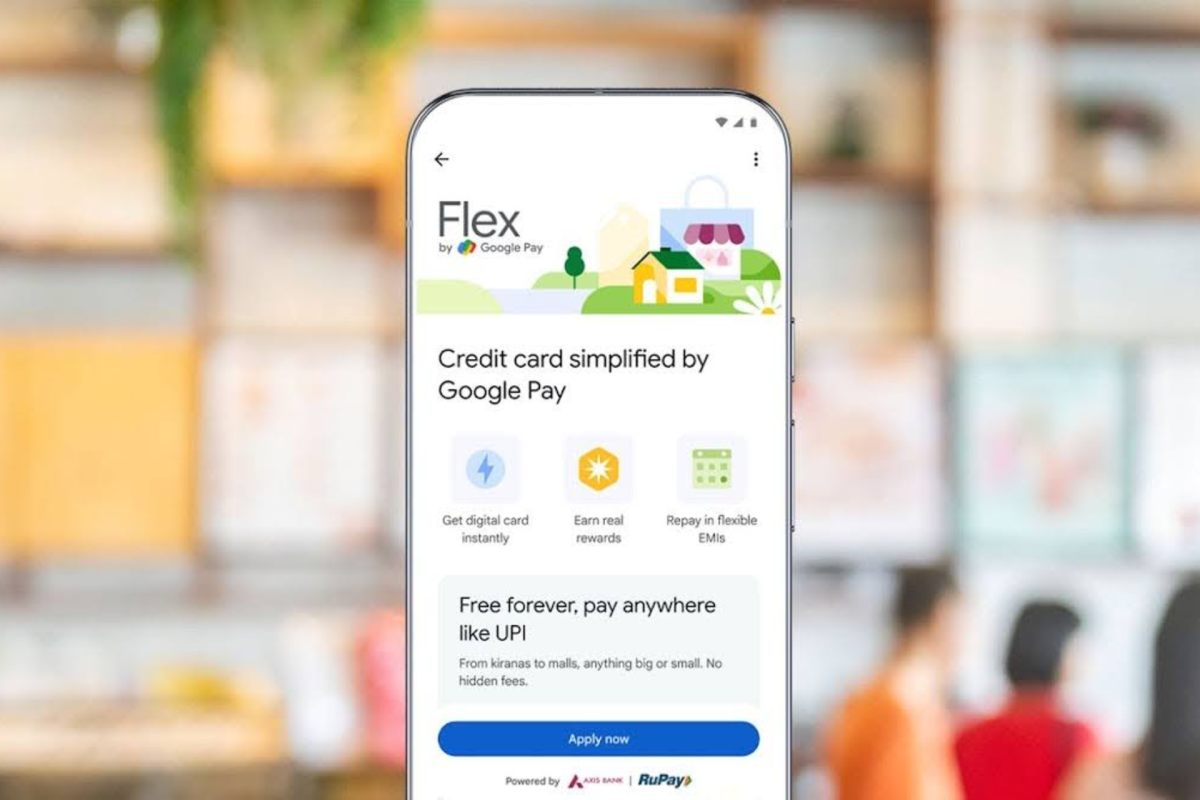
Google is stepping up its consumer finance ambitions in India with a new UPI-linked credit card, targeting a market where digital payments are mainstream but credit card ownership is still relatively low. While India has more than 1.4 billion people, fewer than 50 million currently hold a credit card—creating a major opening for products that make credit feel simpler and more accessible.
To tap into that opportunity, Google has launched Flex by Google Pay in partnership with Axis Bank. The move places the company in India’s fast-growing co-branded credit card segment and aims to bring credit closer to where Indians already spend: inside the UPI-powered payments ecosystem.
A credit card designed for a UPI-first India
India’s Unified Payments Interface (UPI) has reshaped everyday transactions, making instant bank-to-bank payments common at local shops, online checkouts, and bill payments. But the surge in digital payments hasn’t been matched by a similar expansion in credit access. That gap—high comfort with digital payments, limited access to credit—is exactly what Flex by Google Pay is designed to address.
Flex by Google Pay is issued digitally through the Google Pay app and can be used for online purchases and at physical merchants. It runs on the government-backed RuPay network and comes with an in-app experience centered on visibility and control, including spending and bill tracking, repayment choices, and security settings like blocking the card or resetting a PIN.
Rewards come in the form of virtual “Stars” credited for transactions, with each Star valued at ₹1, adding a simple, easy-to-understand benefit for routine spending.
Flexible repayments built for first-time credit users
One of the biggest barriers for new credit card users is discomfort with traditional billing cycles and repayment structures. Flex by Google Pay leans into flexibility: users can choose to repay in full or convert balances into installments (EMIs) directly in the app. Google says repayment-related charges are shown upfront, and pricing—such as interest and other applicable charges—will vary depending on the user and credit profile.
There is no application fee. However, processing fees apply when converting purchases into EMIs, and late payment charges follow the issuing bank’s policy.
This launch also builds on Google Pay’s existing credit efforts in India, where the app already offers access to personal loans and gold-backed loans through partnerships with banks and non-bank lenders. For Axis Bank, the partnership offers a direct channel to a large base of digitally active users at a time when lenders are increasingly using technology platforms to distribute credit beyond physical branches. Google has also indicated it plans to add more issuer partners over time.
A booming card market—but not enough new cardholders
India’s credit card market is growing quickly. Outstanding cards have risen to around 110 million after expanding at roughly 14% annually over the past three years. Spending is also climbing: transaction volumes and values have increased at close to 30%, and average annual spend per card has jumped from about ₹132,000 to roughly ₹192,000—signaling that cards are increasingly used for everyday payments, not just occasional large purchases.
Yet much of that growth is coming from existing cardholders spending more, rather than a major increase in the number of people entering the credit system. Google’s bet is that a UPI-linked, app-native credit card with clearer controls and flexible repayment options can help bring in new users who have been hesitant to adopt traditional credit cards.
Competition is heating up in co-branded credit cards
Google is entering a crowded and rapidly expanding category. India’s co-branded credit card space already includes major consumer internet and commerce players, and more platforms—from food delivery to online travel—have also partnered with banks to launch similar products.
Co-branded cards made up an estimated 12–15% of India’s total credit cards in the financial year ending 2024 and are projected to exceed a quarter of the market by volume by 2028, driven by strong annual growth expectations.
“Pocket Money” brings supervised payments to kids via UPI Circle
Alongside Flex, Google is also rolling out a family-focused feature called Pocket Money in the Google Pay app. Built on UPI Circle functionality, it allows parents to give children limited access to digital payments while keeping control in the parent’s hands.
Parents can set a monthly spending limit of up to ₹15,000 or require approval for each transaction. They receive notifications for every payment, can review spending history, and can pause access at any time from their own Google Pay app.
Unlike prepaid models that require loading funds first, this approach keeps money in the parent’s account until a payment is actually made—making it easier for families already using UPI to introduce children to digital payments with guardrails.
New tools for small businesses: ratings and AI-powered ads
Google is also enhancing the experience for merchants on Google Pay. Customers will be able to rate merchants after a transaction, and those reviews will sync to the merchant’s Google Maps listing—potentially helping small businesses build credibility and discoverability.
In addition, an AI-powered advertising feature is being introduced in the Google Pay for Business app to help merchants create and launch ads more easily.
With more than 530 million unique users having made at least one payment on Google Pay and over 23 million small merchants onboarded over the years, Google is using its scale in everyday payments to introduce new financial products—credit for individuals, supervised payments for families, and growth tools for businesses—all within the same familiar app experience.