Elon Musk recently shed light on the ambitious timeline for mankind’s journey to Mars, hinting that the first manned Starship flight could occur as soon as 2028. This revelation followed his comments on the reusable spaceship milestone and the necessity of drastically reducing the cost per ton for a trip to Mars.
Before this groundbreaking mission, SpaceX plans to capitalize on the next available Mars flight window in 2026 by sending an unmanned Starship. This mission will serve as a critical test of the landing techniques and technologies SpaceX has been refining over the years. Success in this venture will pave the way for subsequent missions, ultimately leading Musk’s vision of a self-sustainable city on Mars within approximately 20 years.
Though Musk’s proclamations may seem overly ambitious, he simplifies interplanetary travel to a “cost per ton to Mars problem.” The current cost with SpaceX’s Starship stands at a staggering $1 billion per ton, a figure that needs to plummet to $100,000 per ton to achieve commercial viability.
Musk argues that becoming a multiplanetary species will significantly extend the lifespan of human consciousness, preventing humanity from placing all its survival hopes on a single planet. This perspective dates back to 2001, as documented in Walter Isaacson’s biography on Musk, when Musk found out NASA had no concrete plans for Mars exploration.
SpaceX’s decision to target Mars for its first interplanetary habitation stems from several factors: the planet’s CO2-laden atmosphere that could support plants, a day length similar to Earth’s, and half the gravitational force, which would let humans lift heavy objects and move more freely.
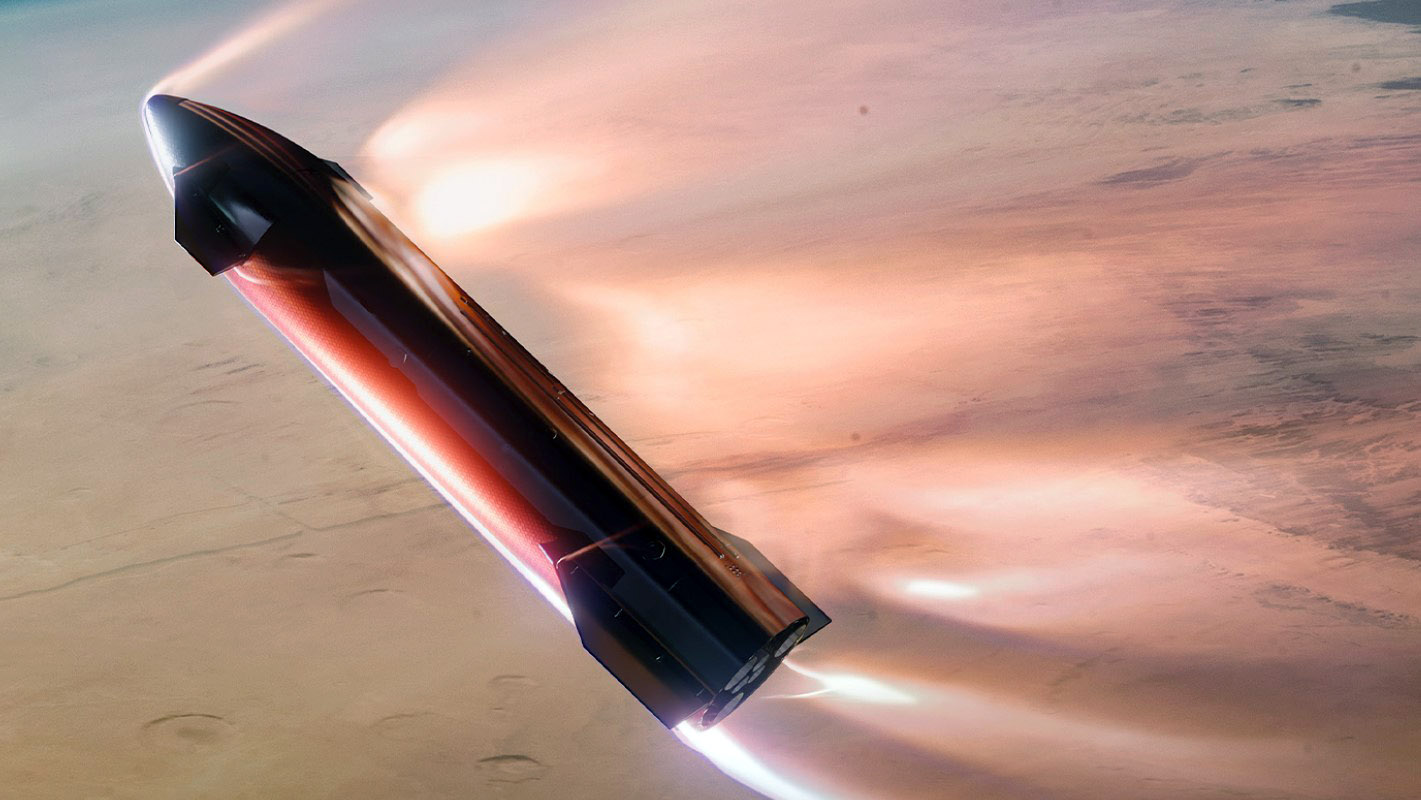
Starship’s innovative design includes reusable tanks that can be refilled with fuel in Earth’s orbit, allowing it to transport up to 100 tons of equipment to Mars. Its heat shield is engineered for multiple reentries at speeds of 7.5 km/s with aerodynamic deceleration.
As the 2026 deadline for the Starship’s maiden Mars voyage approaches, all that remains is Musk’s announcement on whether Optimus robots will also make the journey.