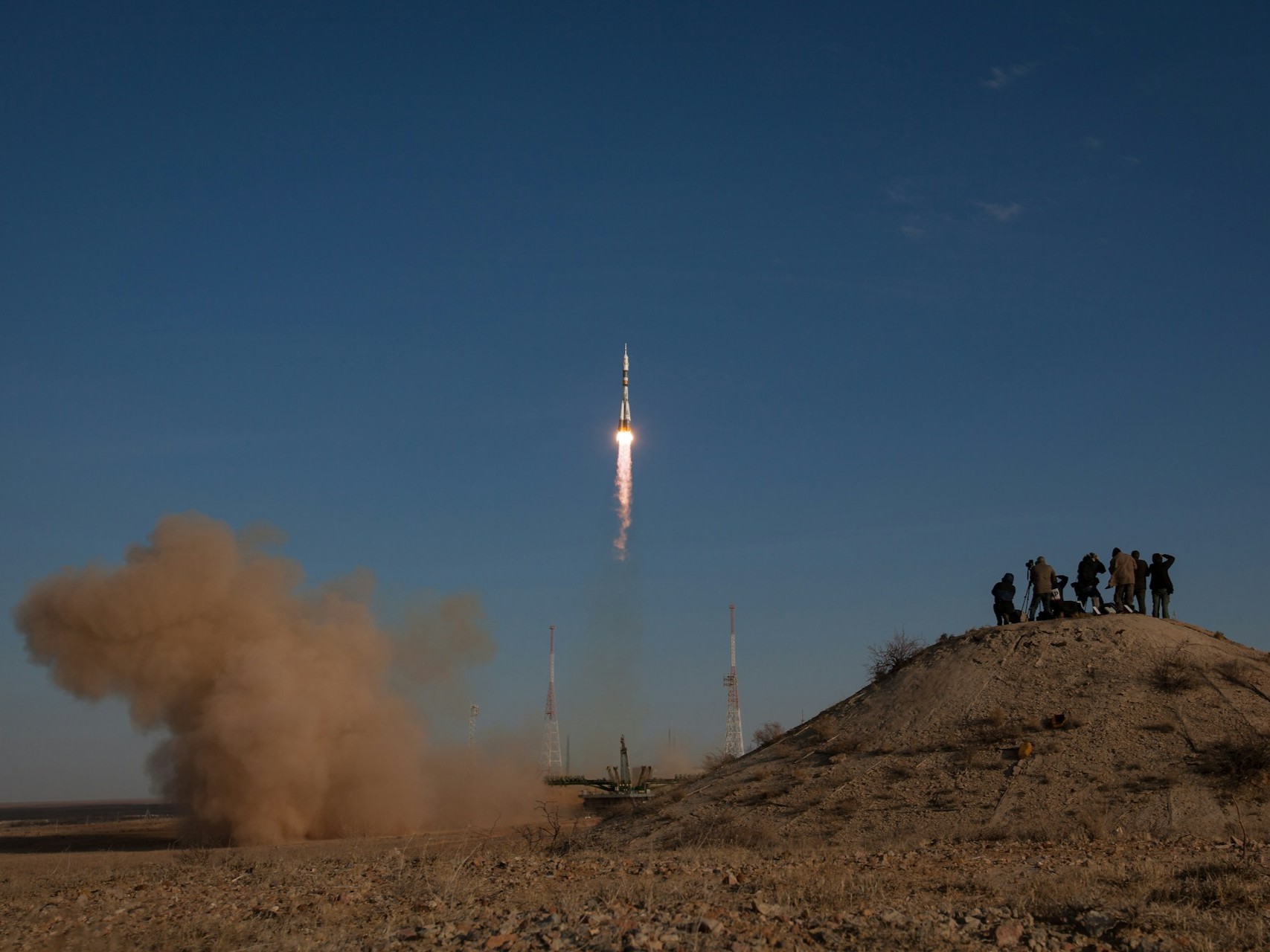
China has completed the fourth launch of its highly secretive reusable experimental spacecraft, marking another major step in a program widely viewed as a direct competitor to the United States’ reusable military spaceplane efforts.
The classified vehicle lifted off Saturday from the Jiuquan Satellite Launch Center in northwest China, riding a Long March-2F rocket. As with previous missions, official details were kept to a minimum. State media described the flight as a “technology verification” mission intended to support the peaceful use of outer space, but did not release images of the spacecraft, provide a specific launch time, or share information about its orbital path, mission duration, or onboard systems.
Despite the lack of public information, the craft has developed a popular nickname among Chinese space watchers: “Shenlong,” meaning “Divine Dragon.” The label reflects how many observers interpret the project—an answer to the U.S. Space Force’s X-37B, the most well-known reusable spaceplane currently in operation.
What’s especially notable is how quickly China’s reusable spacecraft program appears to be maturing. The first flight, launched in September 2020, lasted only two days. But the next two missions showed a dramatic leap in endurance and operational confidence, staying in orbit for 276 days in 2022 and 268 days in 2023. That trend suggests China isn’t just experimenting with reusable launch-and-landing concepts—it’s also working toward long-duration missions that can perform extended technology tests in orbit.
Today, only China and the United States are actively flying reusable spaceplanes, a rare capability since the end of the U.S. Space Shuttle program in 2011. The U.S. X-37B remains the most established platform in this category, with its latest mission launching last August to test advanced technologies such as quantum inertial sensors and high-bandwidth laser communications.
With each new launch, China’s reusable spaceplane program draws increasing attention from space analysts worldwide. Even without official mission details, the fourth flight reinforces one clear message: reusable spacecraft technology—especially long-endurance, maneuverable orbital vehicles—is becoming a more prominent part of the global space competition.