AMD’s RDNA 4 graphics architecture was built with gamers in mind, bringing major upgrades such as improved ray tracing, stronger AI-focused hardware, refreshed compute units, and broader efficiency improvements. That same RDNA 4 foundation now stretches beyond desktop graphics cards into mobile silicon, thanks to Samsung’s newly announced Exynos 2600.
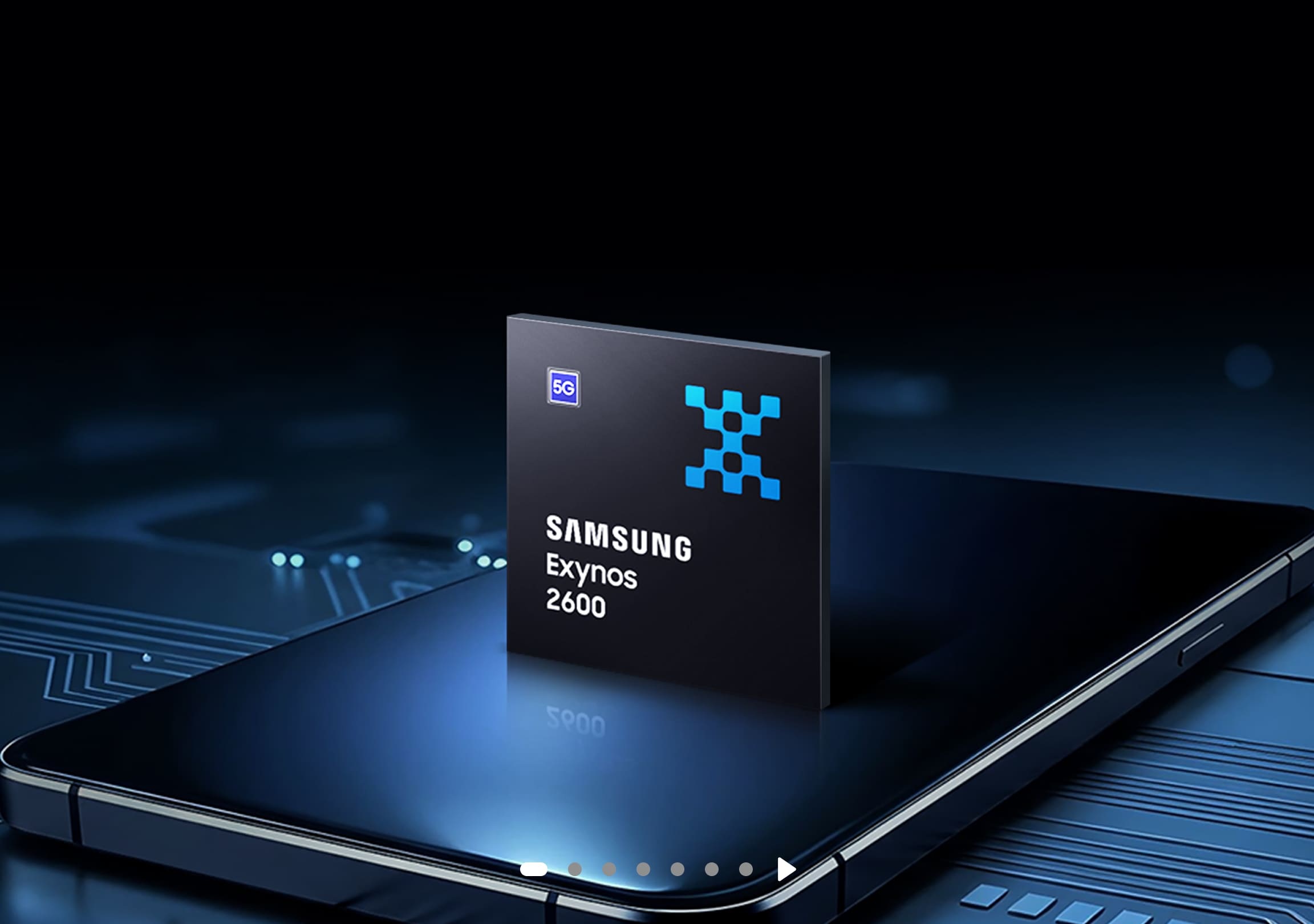
At the center of the Exynos 2600 is the Xclipse 960 GPU, which uses a customized version of RDNA 4 designed specifically for Samsung. This tailored graphics design is paired with what’s being described as the world’s first 2nm GAA chipset, and Samsung says it delivers meaningful leaps over the prior Exynos 2500 generation.
Samsung’s custom RDNA 4-based graphics architecture is called MGFX4. The previous Exynos 2500 relied on MGFX3, a customized RDNA 3 design. According to reports, the graphics IP has been scaled down and modified to fit the Xclipse 960, and the jump to MGFX4 helps unlock both higher performance and new features.
Samsung claims the Exynos 2600 delivers twice the overall performance of the Exynos 2500, with ray tracing performance improving by 50 percent. Those are notable gains for mobile gaming, especially as ray tracing continues to appear in more flagship-level Android titles and advanced mobile game engines.
One of the biggest practical additions tied to MGFX4 is a new upscaling feature called ENSS, short for Exynos Neural Super Sampling. ENSS is designed to boost frame rates by rendering at a lower resolution and intelligently upscaling the image, aiming for sharper visuals without the same performance cost. In concept, it mirrors the approach used by popular upscaling solutions in the PC world, which have become key tools for balancing image quality and smooth gameplay.
On the hardware side, the Exynos 2600 GPU is listed with 8 Work Group Processors (WGPs). These computational blocks are designed to reduce latency and improve instructions-per-clock efficiency. In typical configurations, 1 WGP contains 2 Compute Units (CUs). The Xclipse 960 is also said to reach a maximum clock speed of 980MHz.
Interestingly, Samsung appears to have slightly lowered GPU frequency compared to the Exynos 2500. The earlier Xclipse 950 reportedly ran at up to 999MHz, while the newer Xclipse 960 tops out at 980MHz, despite keeping the WGP count at 8. Even so, architectural improvements and better efficiency can still translate into real-world gains, especially when paired with stronger cooling.
In head-to-head comparisons on paper, Qualcomm’s Snapdragon 8 Elite Gen 5 looks more aggressive, with 12 CUs and a quoted maximum GPU clock of 1,200MHz. Benchmarks also suggest the Xclipse 960 trails the Snapdragon’s Adreno 840 GPU by roughly 10 to 20 percent in Geekbench 6 graphics tests.
Of course, performance on a chart isn’t the full story for flagship phones. Sustained gaming performance depends heavily on thermals, power limits, and how long a device can maintain boost clocks without throttling. That’s why attention is already shifting to how Samsung will handle cooling in phones expected to use the Exynos 2600.
The Exynos 2600 is rumored to power the Galaxy S26 and Galaxy S26+. If that happens, Samsung’s cooling solution could be a key factor in whether the chip can turn its architectural upgrades into consistent real-world performance. Samsung has also highlighted a new approach to heat management called Heat Pass Block technology, which is claimed to improve heat flow and reduce thermal resistance by 16 percent—an important step if the company wants smoother frame rates during longer gaming sessions.
With the next flagship launch window rumored for March 2026, more concrete details should arrive closer to release, including how ENSS performs in actual games, how ray tracing holds up under sustained load, and whether Samsung’s thermal upgrades help the Xclipse 960 stay competitive where it matters most: stable, high-FPS mobile gaming.