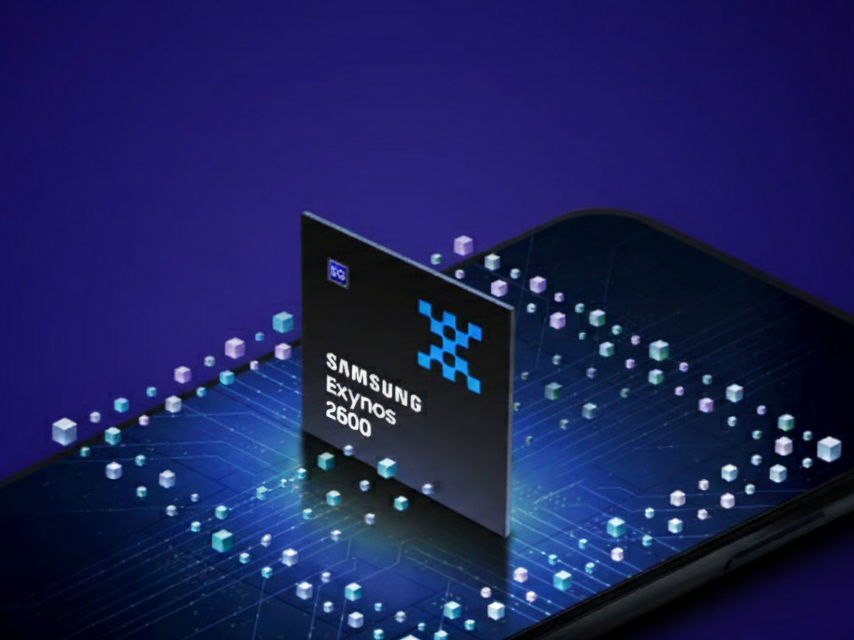
Fresh leaks are shedding more light on Samsung’s upcoming Galaxy S26 lineup, and the spotlight is once again on the Exynos 2600 chipset expected to power at least two of the three models. With launch timing said to be just weeks away, new benchmark results are giving early clues about what the Exynos 2600’s GPU can deliver—especially in ray tracing workloads, a feature that’s becoming increasingly important for next-gen mobile gaming.
This time, the Exynos 2600 appears in Basemark’s In Vitro test, a benchmark designed to evaluate mobile GPU ray tracing performance. A listing tied to the base Galaxy S26 shows a score of 8,262 points. The device is identified by model number SM-S942B, and the benchmark details also point to the S5E9965 board paired with the Xclipse 960 GPU, reinforcing that this is a real Galaxy S26 configuration rather than an unknown prototype.
Interestingly, the only result that ranks above the base Galaxy S26 in this benchmark is another Exynos 2600 entry, but one running on a dedicated test board instead of a retail-ready smartphone. While this higher-scoring listing doesn’t share full specifications, earlier performance data associated with the chip suggests the Xclipse 960 configuration features 4 WGPs and 8 compute units, giving a clearer idea of the GPU’s potential layout.
In terms of raw performance, the Xclipse 960 is reportedly around 10% faster than the Snapdragon 8 Elite Gen 5’s Adreno 840 GPU in this specific ray tracing benchmark. That sounds like a meaningful advantage on paper, but there’s an important caveat: the benchmark suite used here has historically leaned in favor of Exynos graphics compared to Snapdragon. In other words, the real-world gap in games and everyday use could end up being smaller than the benchmark suggests.
There’s also some uncertainty about what’s under the hood architecturally. One report claims Samsung developed the Xclipse 960 in-house, while another suggests it may be based on AMD RDNA 4 graphics IP. If the final chip truly leans on modern RDNA technology, expectations around ray tracing efficiency and sustained performance immediately rise—especially for mobile titles that push lighting, reflections, and shadows harder than before.
On the CPU side, earlier benchmark sightings have hinted that the Exynos 2600 could land close to the Snapdragon 8 Elite Gen 5 in overall processing performance. If those CPU expectations hold true in retail devices, the main question becomes whether the Xclipse 960 can consistently keep pace—or beat—its Snapdragon rival in GPU-heavy tasks like gaming, high-refresh gameplay, and advanced visual effects.
For many fans, this matters beyond simple numbers. In recent years, Exynos chips have faced criticism for falling behind similarly positioned competitors, particularly when it comes to sustained graphics performance and efficiency. Strong early ray tracing results for the Galaxy S26’s Exynos 2600 could be a sign that Samsung is narrowing that gap, delivering a more competitive flagship experience for users who care about gaming and graphics horsepower.
With the Galaxy S26 series expected soon, more benchmarks and real-world testing should provide a clearer picture of how the Exynos 2600 and Xclipse 960 perform outside controlled runs. For now, the latest leak suggests Samsung’s next flagship GPU may finally be in a better position to compete at the top end—especially where modern mobile graphics features like ray tracing are concerned.