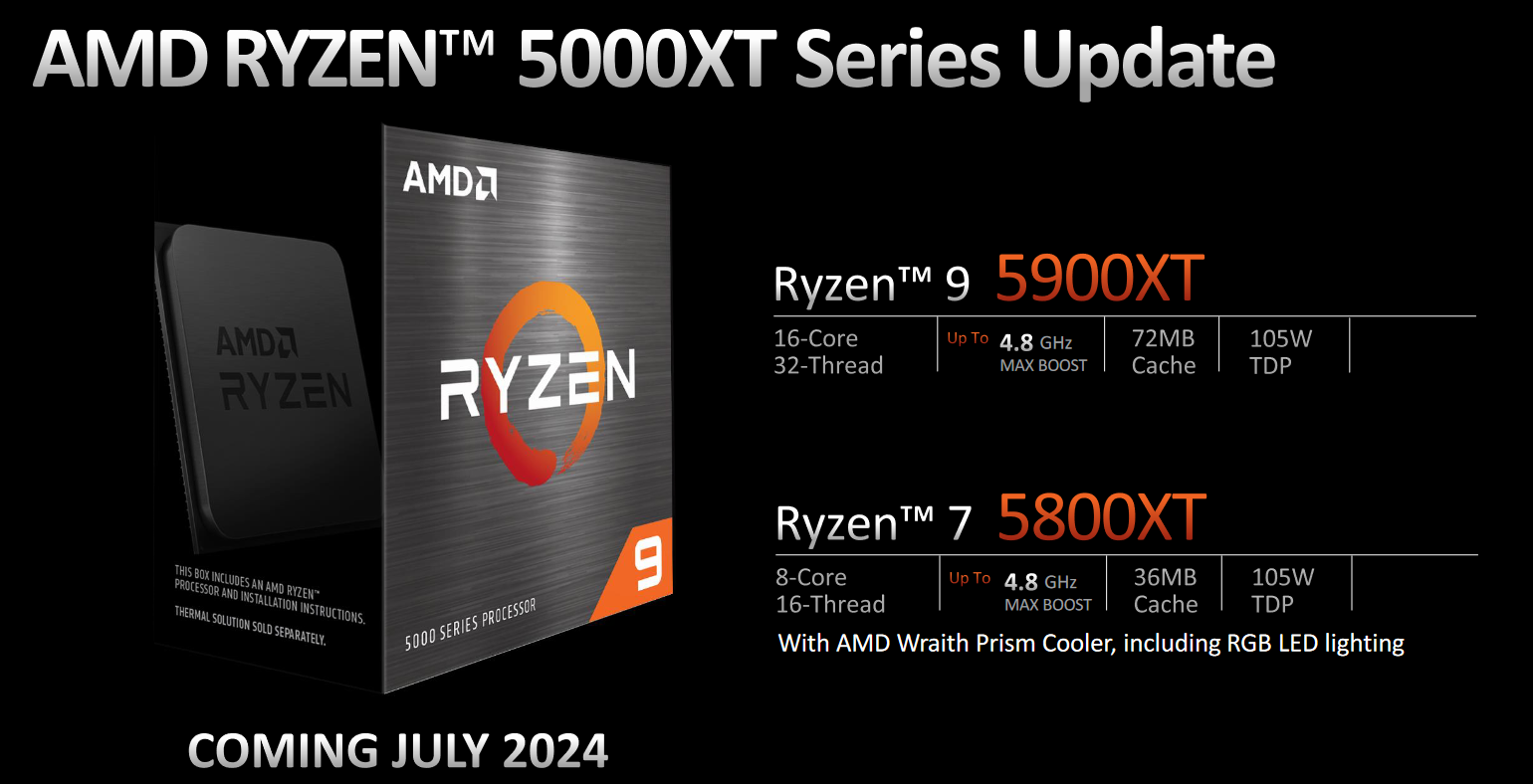
In a notable move for PC enthusiasts and those invested in the established AM4 platform, AMD has introduced two exciting additions to its processor lineup, the Ryzen 9 5900XT and Ryzen 7 5800XT. These CPUs integrate the efficient Zen 3 architecture, marking a continued commitment to performance and versatility.
The release of these CPUs has sparked conversations as AMD simultaneously announced them with its next-generation Ryzen 9000 series for the AM5 platform. The Ryzen 9 5900XT emerges as a formidable contender in the market, boasting 16 cores and 32 threads, reaching a boost clock of up to 4.8 GHz, and equipped with a generous 72 MB cache while maintaining a 105-Watt TDP. In contrast, the Ryzen 7 5800XT presents an alternative with half the core and thread count as well as cache size but matches the TDP and boost clock of its more powerful sibling. Notably, the Ryzen 7 5800XT also comes with a colorful touch, including a RGB-enabled Wraith Prism cooler in the package.
AMD has kept the finer details of manufacturing nodes under wraps for now. However, the anticipated performance benchmarks reveal that the Ryzen 9 5900XT offers only a slight edge, approximately 4%, in gaming performance over its competitor, the Intel Core i7-13700K. On the other hand, the Ryzen 7 5800XT shows a modest 12% increase in performance compared to the Intel Core i5-13600KF. The test bench utilized to gauge these comparisons featured an X570M motherboard for the AMD CPUs, while the Intel counterparts were paired respectively with Z690 and B660 motherboards, along with 32 GB of DDR4 3200 memory and a Radeon RX 6600 graphics card.
Such advancements and incremental improvements in performance are of interest to gamers and professionals alike, who may be seeking to make informed decisions for their next PC build or upgrade. While the boost in performance may appear marginal, these new offerings from AMD could be the perfect fit for users who wish to extend the life of their current AM4-based systems.
As we await further details about pricing and availability from AMD, tech enthusiasts can look forward to scrutinizing these processors more closely upon release. By providing these updated options for the AM4 platform, AMD ensures that users can enjoy the benefits of refreshed hardware without necessarily committing to an entirely new system architecture.
For those contemplating upgrades or new builds, keeping an eye on these CPU developments is advisable, as the choice between staying with the tried-and-true AM4 or shifting to the newer AM5 platform will be an important decision to navigate. When considering such hardware investments, always factor in your current system configuration, performance requirements, and long-term computing goals to ensure you make the most out of your computer’s capabilities.