AMD’s AM5 Platform Enters a New Era With X870E, X870, B850, and B840 Motherboards
AMD’s AM5 platform has now been on the market for around three years, and it has already supported several major processor families, including Ryzen 7000, Ryzen 8000, and Ryzen 9000. While existing 600-series AM5 motherboards still offer strong features and support for newer Zen 5 processors, AMD is now pushing the platform forward with its newer 800-series chipset family.
The new AMD 800-series motherboards are designed to give PC builders better connectivity, stronger memory support, more modern I/O, and improved overclocking features. For gamers, creators, and long-time AM4 users considering an upgrade, the new AM5 motherboard lineup is clearly aimed at making the platform more attractive for the next generation of Ryzen systems.
At the top of the stack are the X870E and X870 chipsets, built for enthusiasts and high-end desktop users. AMD is also preparing B850 and B840 chipsets for more mainstream and entry-level builds, giving users a wider range of options depending on budget and performance needs.
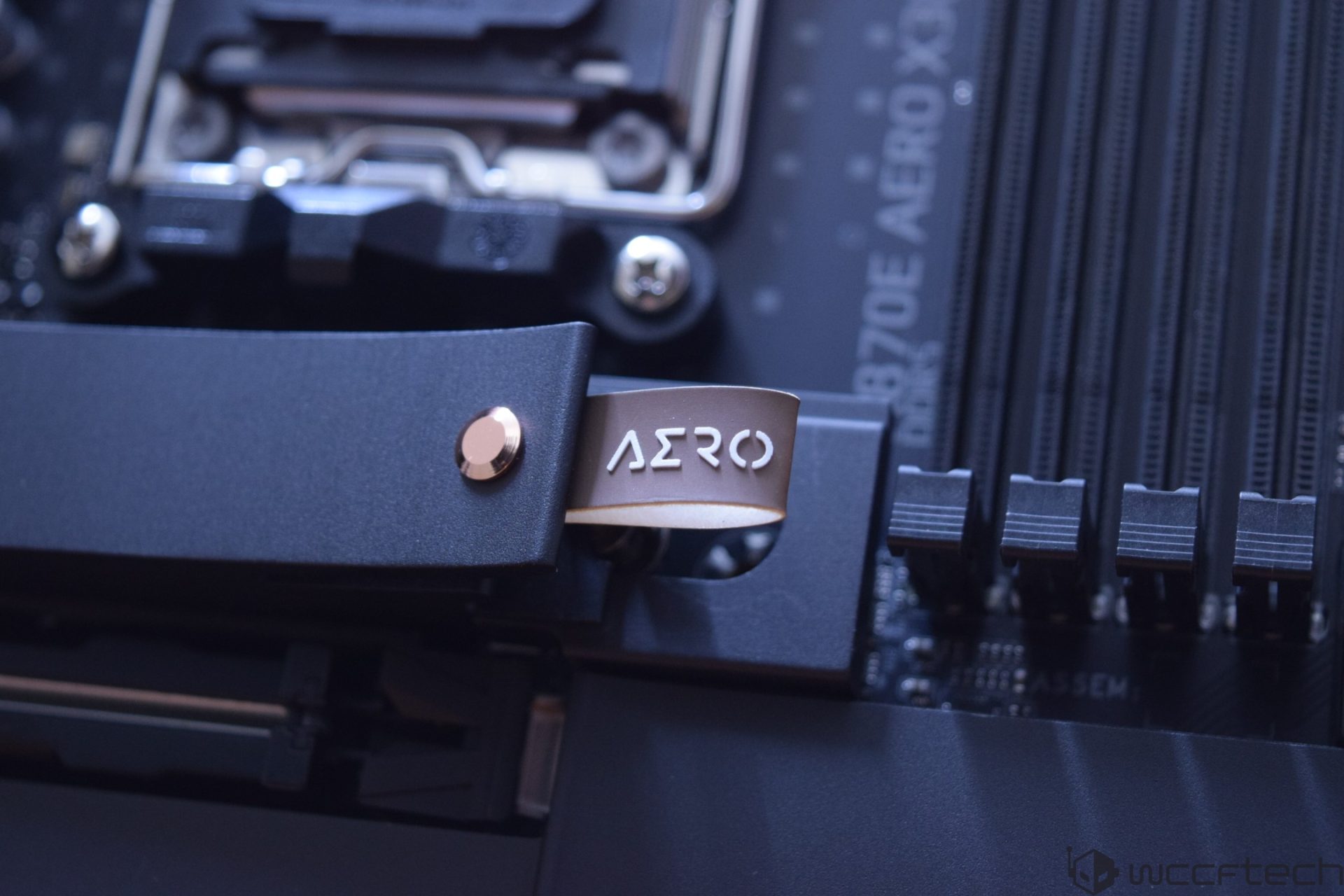
One of the standout boards in this new wave is Gigabyte’s X870E AERO X3D DARK WOOD motherboard. This model brings a unique visual design with wood-inspired textures, premium styling, and features aimed at users who want to get the most from AMD’s Ryzen X3D processors. It is positioned as a high-end AM5 motherboard with a launch price of around $499, making it a premium option for builders who want performance, aesthetics, and next-generation connectivity in one package.
The AMD AM5 Platform Continues the Legacy of AM4
AMD’s AM4 platform became one of the longest-lasting consumer desktop platforms in modern PC history. First introduced in 2017, AM4 remained active for years and continued receiving new processors even after AM5 arrived. That long-term support helped AMD build strong trust among PC enthusiasts, especially those who value upgrade paths and platform longevity.
AM5 is now AMD’s main forward-looking platform, and the company has committed to supporting it into 2029 and beyond. That is a major point for anyone planning a new gaming PC or workstation, because it means an AM5 motherboard bought today could potentially support multiple future Ryzen CPU generations.
The 800-series chipset family represents the second major phase of AM5. Instead of replacing the platform, AMD is expanding it with newer motherboard designs that better match the needs of current and future Ryzen processors, especially Ryzen 9000 “Granite Ridge” CPUs based on the Zen 5 architecture.
What’s New With AMD X870E and X870 Motherboards?
The biggest upgrades on AMD X870E and X870 motherboards focus on connectivity, PCIe bandwidth, USB support, memory tuning, and overclocking features.
All X870E and X870 motherboards are expected to include USB4 as a standard feature. This is an important improvement for users who rely on fast external storage, high-speed peripherals, docking stations, and modern creator-focused workflows.
PCIe 5.0 support is also a major highlight. Both X870E and X870 platforms support PCIe Gen 5 for graphics and NVMe storage, giving users access to the fastest SSDs and future-ready GPU connectivity. While most current graphics cards do not fully saturate PCIe 4.0, PCIe 5.0 support helps extend the useful life of a motherboard and prepares the system for future hardware.
Memory support is another major area of improvement. AMD’s newer AM5 motherboards are designed for DDR5 memory, with native support around DDR5-5600 and much higher speeds available through AMD EXPO profiles. On higher-end boards, memory speeds above 8000 MT/s may be achievable depending on the motherboard, processor memory controller, and RAM kit.
AMD has also introduced newer Precision Boost Overdrive and Curve Optimizer improvements for Ryzen 9000 processors. These features allow users to fine-tune power, voltage, and boosting behavior for better performance or improved efficiency. The new 800-series boards are built to support these capabilities out of the box.
X870E vs X870: What’s the Difference?
The X870E chipset is the more premium option. It uses two Promontory 21 chipset dies, giving motherboard manufacturers more flexibility for expansion, connectivity, and I/O options. X870E boards are expected to offer the richest feature sets, making them ideal for high-end gaming PCs, enthusiast builds, heavy multitasking systems, and creator workstations.
The standard X870 chipset uses a single Promontory 21 die. It still supports important next-generation features such as USB4 and PCIe 5.0 for both graphics and NVMe storage, but it has fewer chipset lanes than X870E. In practical terms, X870 boards should still be powerful and feature-rich, but X870E gives board makers more room for additional ports, slots, and premium components.
For most users, X870 will likely be more than enough. For enthusiasts who want maximum expansion, more storage options, stronger power delivery, and top-tier connectivity, X870E is the more complete choice.
B850 and B840 Bring 800-Series Features to Lower Price Points
AMD’s B850 chipset is aimed at mainstream users who want a modern AM5 motherboard without paying flagship prices. B850 boards use the Promontory 21 chipset but do not require native USB4 support. PCIe 5.0 support may vary depending on the specific motherboard design, particularly for graphics and M.2 storage.
This makes B850 an important option for gamers and everyday users who want Ryzen 7000, Ryzen 8000, or Ryzen 9000 support, DDR5 memory, overclocking, and a solid feature set at a more accessible price.
Below B850 sits B840, which is designed for entry-level AM5 systems. B840 uses the older Promontory 19 chipset and focuses on affordability. These motherboards are expected to support PCIe 4.0 rather than PCIe 5.0, and CPU overclocking is not expected to be available. Memory overclocking, however, remains supported.
B840 boards should appeal to budget-conscious buyers, office PC builders, and system integrators looking for lower-cost AM5 systems. AMD is also continuing its A620 and A620A motherboard lines for the most affordable segment.
AMD 800-Series Chipset Overview
The X870E chipset is the premium enthusiast option with PCIe 5.0 support for graphics and NVMe storage, standard USB4, CPU overclocking, memory overclocking, and strong multi-GPU lane configurations such as x16 or x8/x8 depending on the motherboard.
The X870 chipset keeps many of the same next-generation features, including USB4, PCIe 5.0 graphics support, PCIe 5.0 NVMe support, and CPU plus memory overclocking, but with fewer chipset lanes than X870E.
The B850 chipset targets mainstream builds. It supports CPU and memory overclocking and can include PCIe 5.0 support depending on board implementation, though USB4 is not a standard requirement.
The B840 chipset is designed for affordable AM5 systems. It focuses on basic platform support, PCIe 4.0-class connectivity, and memory overclocking, but does not include CPU overclocking.
The A620 series remains AMD’s entry-level AM5 platform, offering affordable motherboard options for simple Ryzen-based systems.
AM5 Uses the LGA 1718 Socket
One of the biggest changes AMD made when moving from AM4 to AM5 was the switch from a PGA socket to an LGA socket. AM4 processors had pins on the CPU, while AM5 uses an LGA 1718 design, placing the contact pins in the motherboard socket instead.
This design provides more contact points between the processor and motherboard, allowing improved power delivery, better signaling, and support for modern platform features such as DDR5 memory and PCIe 5.0.
The LGA 1718 socket is used across AM5-compatible Ryzen desktop processors, including Ryzen 7000, Ryzen 8000, and Ryzen 9000 chips. AMD’s commitment to AM5 through 2029 and beyond makes the socket one of the strongest options for users who care about long-term upgrade potential.
Cooler Compatibility Is a Big Win for Upgraders
Another important advantage of AM5 is cooler compatibility. Ryzen 7000, Ryzen 8000, and Ryzen 9000 desktop processors use a square package design measuring 45 x 45 mm. Although the integrated heat spreader is thicker and shaped differently from older Ryzen CPUs, AMD maintained compatibility with many existing AM4 coolers.
That means users upgrading from an older AM4 system may be able to reuse their current CPU cooler, depending on the mounting hardware. This helps reduce upgrade costs and makes the transition to AM5 easier.
The AM5 processor design is also sealed around the sides, helping prevent thermal paste from spilling into gaps around the heat spreader during installation.
Gigabyte X870E AERO X3D DARK WOOD: A Premium AM5 Motherboard With Style
Gigabyte’s X870E AERO X3D DARK WOOD is one of the more visually distinctive motherboards in the new AM5 lineup. Instead of the usual black, silver, or white-only styling, this board adds a dark wood-inspired design that gives it a more refined and unique look.
The board is part of Gigabyte’s refreshed lineup focused on Ryzen X3D processors, which are especially popular among gamers thanks to AMD’s 3D V-Cache technology. Ryzen X3D chips are known for strong gaming performance, and motherboard makers are increasingly tuning their designs and BIOS features to better support these CPUs.
At around $499, the X870E AERO X3D DARK WOOD is clearly not a budget motherboard. It is aimed at users who want premium build quality, next-gen connectivity, strong memory support, and an eye-catching design for a high-end gaming or creator PC.
Why the AMD 800-Series Matters for PC Builders
The AMD 800-series motherboard launch is important because it refreshes the AM5 ecosystem at a time when Ryzen 9000 processors are bringing Zen 5 performance to desktop users. While existing X670E, X670, B650E, and B650 motherboards remain relevant, the newer chipsets make advanced features more consistent across the high-end lineup.
Standard USB4 on X870E and X870 is a major quality-of-life improvement. PCIe 5.0 support for both GPU and NVMe storage improves future compatibility. Higher DDR5 and EXPO memory support gives enthusiasts more tuning flexibility. Updated overclocking support for Ryzen 9000 also makes these boards more appealing to users who like to fine-tune their systems.
For AM4 users who have been waiting for the right time to upgrade, the 800-series may be the push they needed. AM5 now has a stronger processor lineup, broader motherboard selection, better DDR5 pricing than at launch, and a long support window ahead.
Final Thoughts
AMD’s AM5 platform is maturing quickly, and the arrival of X870E, X870, B850, and B840 motherboards gives builders more choices than ever. Whether you are building a flagship Ryzen 9000 gaming PC, a content creation workstation, or a more affordable DDR5 system, the new 800-series lineup expands the platform in meaningful ways.
X870E and X870 bring the most exciting upgrades, including standard USB4, PCIe 5.0 support for graphics and storage, higher DDR5 memory speeds, and enhanced Ryzen overclocking support. B850 and B840 will help bring AM5 to more affordable builds, making the platform more accessible to mainstream users.
With AM5 support planned into 2029 and beyond, AMD’s latest platform is shaping up to be a strong long-term investment for PC gamers, creators, and enthusiasts who want performance today and upgrade flexibility tomorrow.