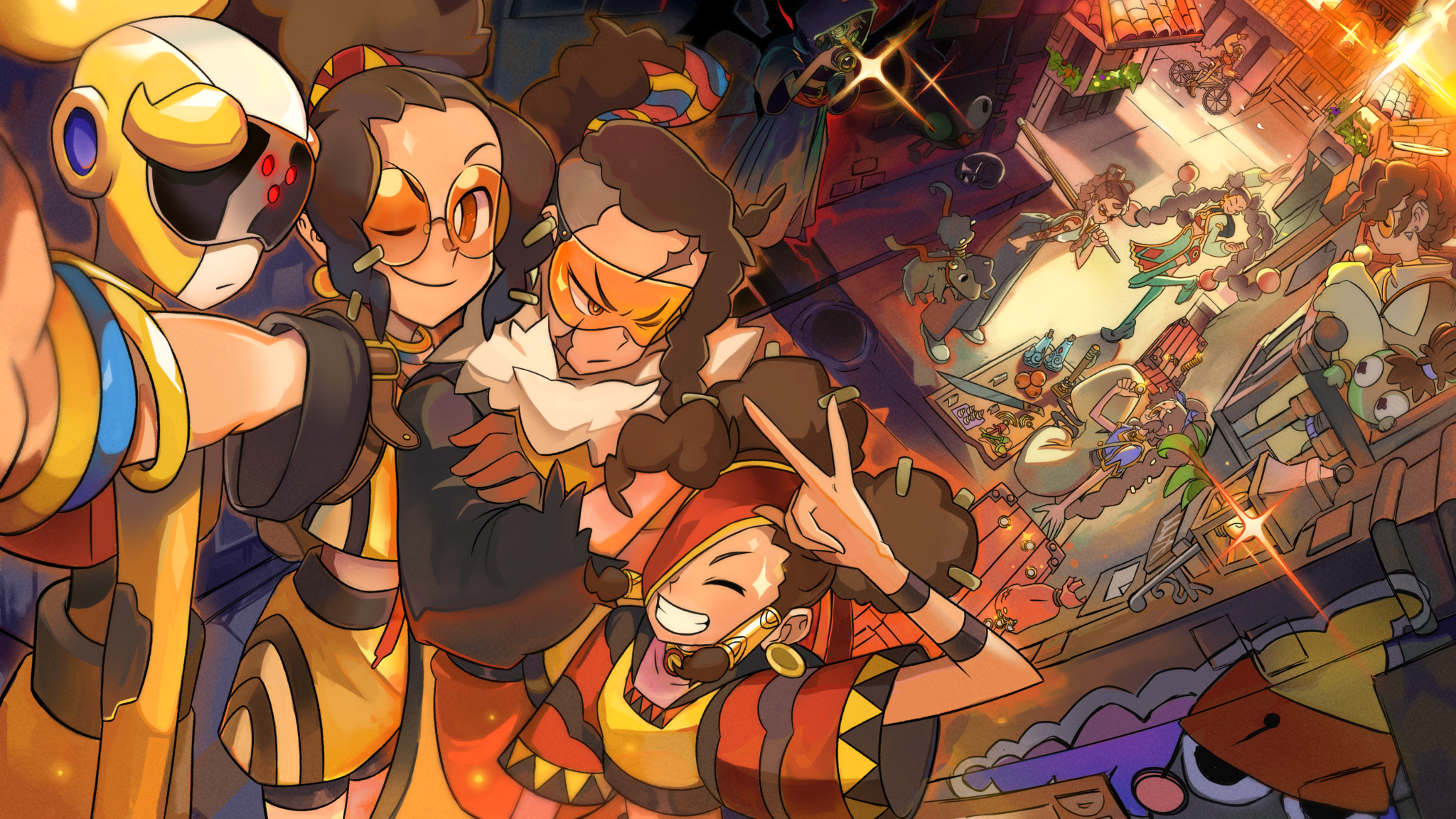
Photography often captures more than just an image; it immortalizes a moment filled with emotions, surroundings, and thoughts. This connection between imagery and memory is a powerful concept, offering a glimpse into alternate realities. Inspired by the theory of multiverses, where every choice creates a new path and a parallel universe, Dreams Uncorporated takes this idea to the next level with their upcoming game, Prisma.
Recently, we had a fascinating discussion with the creators, renowned for games like Cris Tales, about their innovative approach in Prisma. The team aims to bend space in their narrative, contrasting their previous focus on time manipulation. Imagine the different dimensions governed by Palkia and Dialga of Pokémon – that’s the kind of distinction Prisma brings to the table.
In Prisma, you journey alongside Alma, a protagonist with a magical old camera containing a Prism Shard, which reveals unseen truths in Domacon, a realm where magic weaves into daily life. Unlike typical action-adventure games, the storyline of Prisma is deeply personal, focusing solely on Alma. Each character she encounters represents an alternative version of herself, defined by the myriad choices they’ve made.
As players navigate through Domacon, their interactions shape Alma’s journey. Choices will alter her perspective and appearance, influencing her relationships with these alternate Almas. Each decision has its consequence, unlocking new quests, gaining allies, or perhaps making enemies. The game facilitates a deeply personal growth arc, allowing players to bond with up to four out of seven different Almas in each playthrough, each with unique motivations and backstories—all competing for the coveted Prism Shards.
Combat in Prisma employs a distinctive JRPG style, where strategy involves a dynamic menu and stamina-driven battles. As you reduce foes’ defenses, they become susceptible to more powerful strikes. Charging a battery gauge allows Alma to tweak her camera lens, shifting attack patterns to target multiple enemies, or using filters for status boosts. This strategic twist brings a fresh challenge to combat, as players manage their upgrades carefully—each choice might forego other potential abilities.
Latin American folklore heavily influences Prisma’s world, rendering enemies with a cultural flair that educates and captivates. The intriguing reflect system serves to challenge players further, testing their tactical skills as attacks boomerang back, demanding creative gameplay strategies.
While discussing Prisma, the Dreams Uncorporated team shared their ambitions for the game. By steering away from the traditional JRPG experience, they focused on creating compelling, strategic combat and meaningful character relationships, more reflective and linear in comparison to games like Baldur’s Gate. These connections echo the personal growth dynamics found in popular anime, drawing inspiration from series like Blue Lock, Rurouni Kenshin, and DanDaDan, all while embedding cultural richness from Colombian heritage, much in the style of how Japanese Yokai mythos are interwoven in anime.
With its rich narrative, character diversity, and cultural depth, Prisma invites players to explore different timelines and realities, much like viewing the world through a photographer’s lens, capturing what was always there, yet unseen. Expect to stumble upon delightful Easter Eggs from Dreams Uncorporated’s past titles and subtle nods to broader pop culture throughout the vibrant townscapes of Prisma. This game promises a thrilling and reflective journey, encouraging you to pause, explore, and see beyond the obvious.