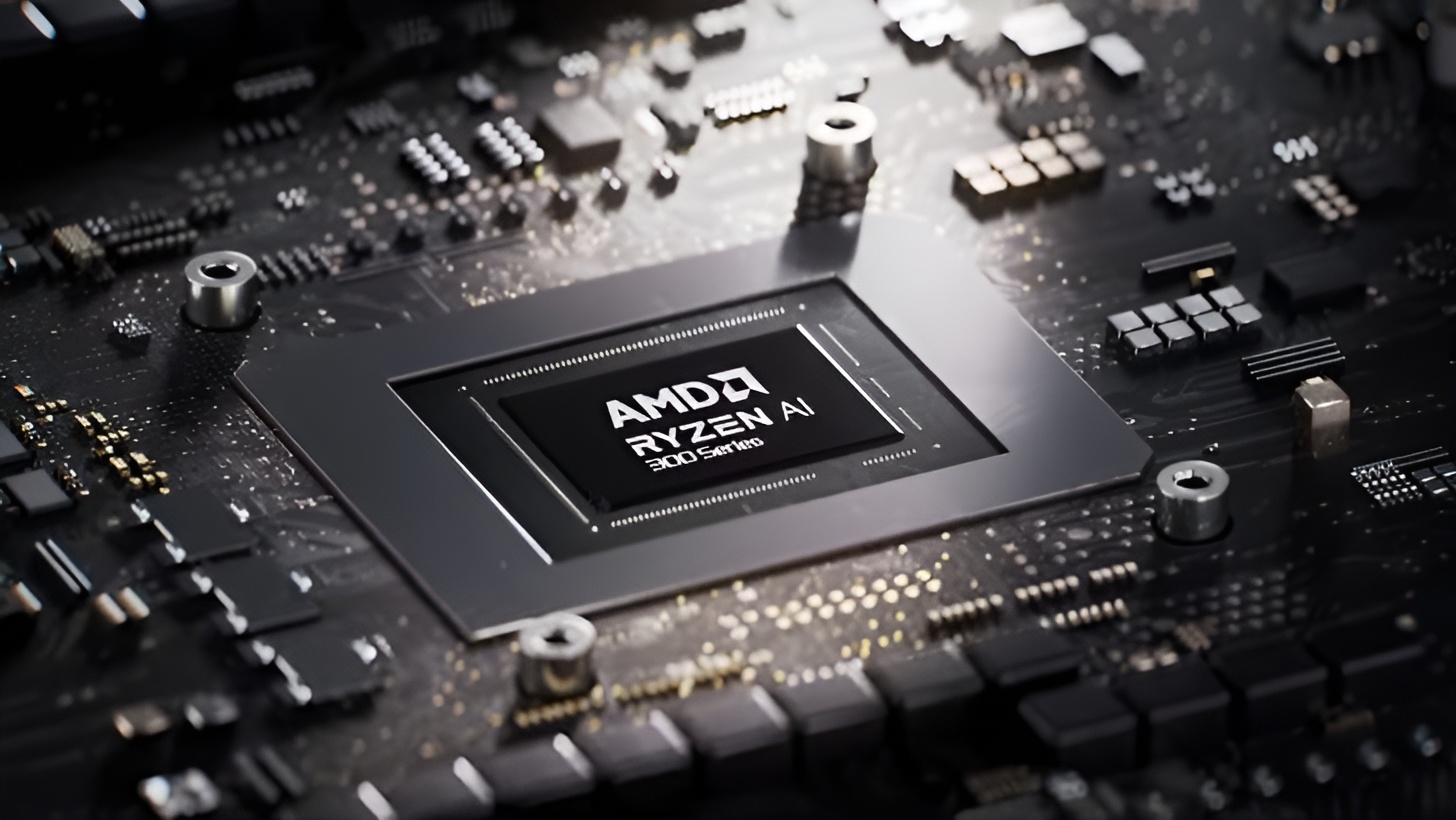
AMD is advancing the lineup of its Ryzen AI 300 APUs within the Strix Point and Krackan Point series, aiming to bring impressive performance across various market segments. The latest details reveal that the 8-core models will be reserved for mainstream or “PRO” variants, showcasing AMD’s strategic segmentation.
The Krackan Point APUs are designed to serve the mid-segment market, featuring configurations of up to 8 CPU cores and 8 GPU cores. On the other hand, the “Strix Pro” models distinguish themselves by integrating 12 GPU cores, with certain SKUs dedicated to the more powerful Ryzen AI 300 PRO APUs.
Recent leaks and benchmarks, particularly from Golden Pig Upgrade, highlight that AMD plans to position these APUs carefully, distinguishing non-PRO Ryzen AI 7 models under the Krackan series. The Ryzen AI 7 PRO 360 will boast a different GPU configuration with 12 compute units, predominantly seen in the “Strix Pro” SKUs. This differentiation is crucial as it also encompasses the top-tier Ryzen AI 9 HX Pro 375 APU, featuring a remarkable 55 TOPS NPU, making it one of the most robust processors in the market.
Speculations indicate AMD’s Krackan Point series aims at affordability and performance balance, targeting OEM machines and handhelds. This series will feature a combination of 4x Zen 5 and 4x Zen 5c cores, 8 RDNA 3.5 compute units, and up to 50 AI TOPS of compute power, ensuring substantial performance packed into more budget-friendly devices.
Here’s a snapshot of what to expect from AMD’s Krackan Point lineup:
– Zen 5 monolithic design
– Up to 8 cores (4x Zen 5 and 4x Zen 5C)
– 16 MB of shared L3 cache
– 8 RDNA 3.5 compute units
– LPDDR5X and DDR5 support
– Integrated XDNA 2 engine
– Up to 50 AI TOPS
– Expected launch in the first half of 2025
– FP8 platform (15W-45W TDP range)
AMD’s strategy to differentiate its APU ranges should allow for better consumer and manufacturer alignment, easing integration while delivering performance gains. As we look toward their release, AMD’s Krackan Point and Strix Halo APUs promise to bring robust capabilities to the mobile segment.
In terms of core architecture and processing nodes, the upcoming APUs show a commitment to innovation, with most models built on advanced 4nm and Zen 5 technologies. This positions AMD well against competitors, preparing for a strong showing in next-generation processors.
The detailed breakdown of AMD’s next-gen mobility CPUs spans various process nodes, core architectures, and maximum configurations, ensuring that from high-end to mainstream segments, there’s a tailored solution to fit every performance need.
Anticipation builds as we look forward to AMD’s official announcements, with the CES 2025 likely serving as a significant launch platform for these cutting-edge APUs. Whether it’s through improvements in AI performance or integration of latest-gen technology, AMD is set to reassert its dominance in the evolving landscape of mobile and industrial computing.