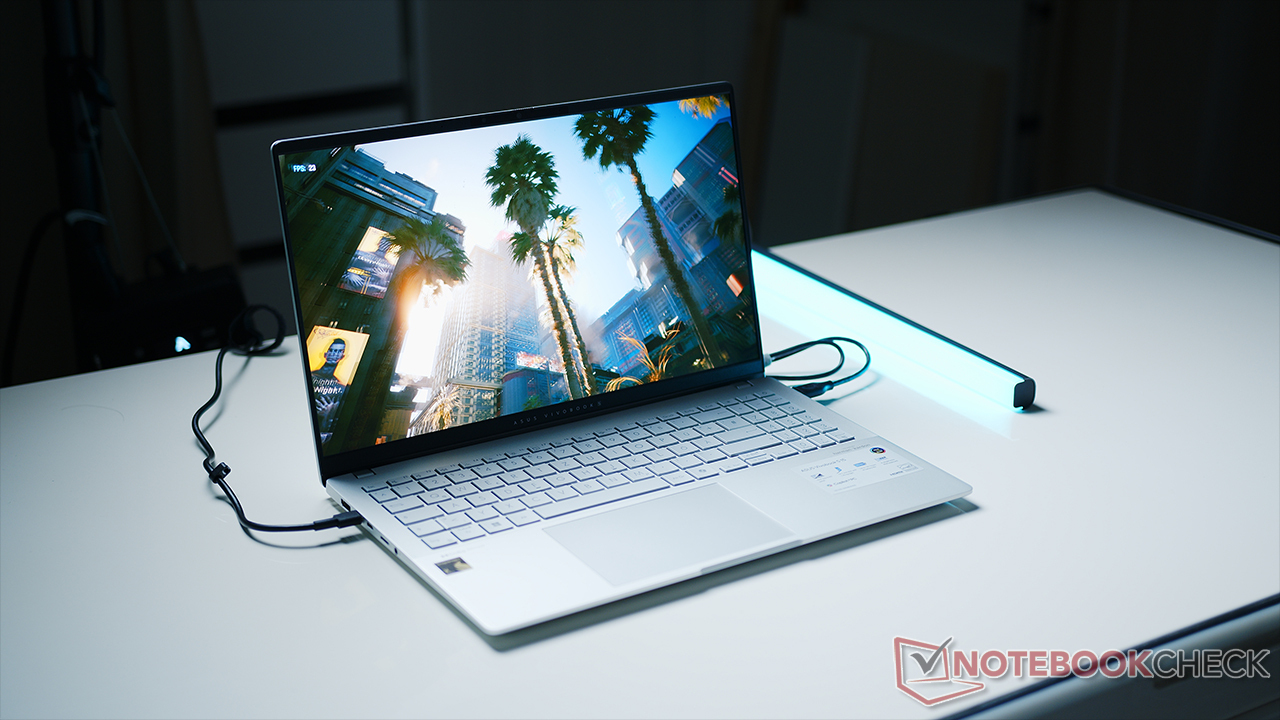
The arrival of the Qualcomm Snapdragon X-series processors in laptops was met with keen interest, particularly for their potential to redefine mobile computing. However, initial reviews of these devices, such as the Asus Vivobook S 15 OLED featuring the Snapdragon X Elite chipset, have surfaced some disappointing findings, especially in the arena of gaming performance.
The Snapdragon X-series, equipped with Oryon CPU cores and the Snapdragon X Elite chip boasting 12 cores with speeds of up to 4.3 GHz, promised to usher in a new era of ARM chipset capabilities. The industry’s attention was drawn to the practical implications of such technology on both gaming and productivity tasks.
However, practical gaming tests paint a picture that does not live up to the hype. Gaming trials with the Snapdragon X Elite X1E-78-100 chip revealed significant challenges. Several games failed to launch, while others experienced crashes shortly after starting. Issues were also observed with incompatibility in resolution settings when attempting to match the laptop’s screen.
When considering the frame rates achieved on popular games, the results were lackluster. For example, tests showed the following outcomes:
– “The Witcher 3” chugging at 19 FPS with ultra settings and HBAO+ at 1080p.
– “GTA V” limping along at 20.4 FPS with the highest graphical settings and maxed out anti-aliasing at 1080p.
– “Final Fantasy X” straining at just 15.6 FPS on high settings at 1080p.
– A somewhat smoother 37 FPS in “Strange Brigade” on ultra settings at 1080p.
– “Dota 2 Reborn” fared better with 51.1 FPS, albeit with room for improvement.
Overall, the Snapdragon X Elite X1E-78-100 earned a modest score of 39.8 points, reflecting shared sentiments across several reviews about the chipset’s underwhelming gaming performance.
On a brighter note, the productivity capabilities of these devices have received a positive nod. Notably, the Snapdragon X Elite demonstrates impressive performance on battery power, a characteristic that distinguishes it from many other laptops running Windows, offering users the prospect of efficient performance without being tethered to a power source.
Those interested in solid productivity performance might consider the Snapdragon X-series laptops, especially with their capability to sustain high performance on battery. While these devices still have a considerable road ahead to become gaming stalwarts, their pioneering steps into ARM processor technology for Windows devices display promising directions for future development and innovation.
For potential buyers with an eye towards gaming, it may be prudent to monitor upcoming iterations of the Snapdragon X-series chips, as engineers work to bolster their capabilities and address the current limitations.
For anyone seeking to apply this insight in their daily life or work, the key takeaway would be to assess your primary computing needs before investing in a Snapdragon X-series laptop. If gaming is a priority, it might be worth waiting for future chip improvements or considering alternative options that cater specifically to gaming demands. However, if productivity on the go, with the added benefit of sustained performance without mains power, is your main concern, a Snapdragon X-series laptop could well serve your needs.


