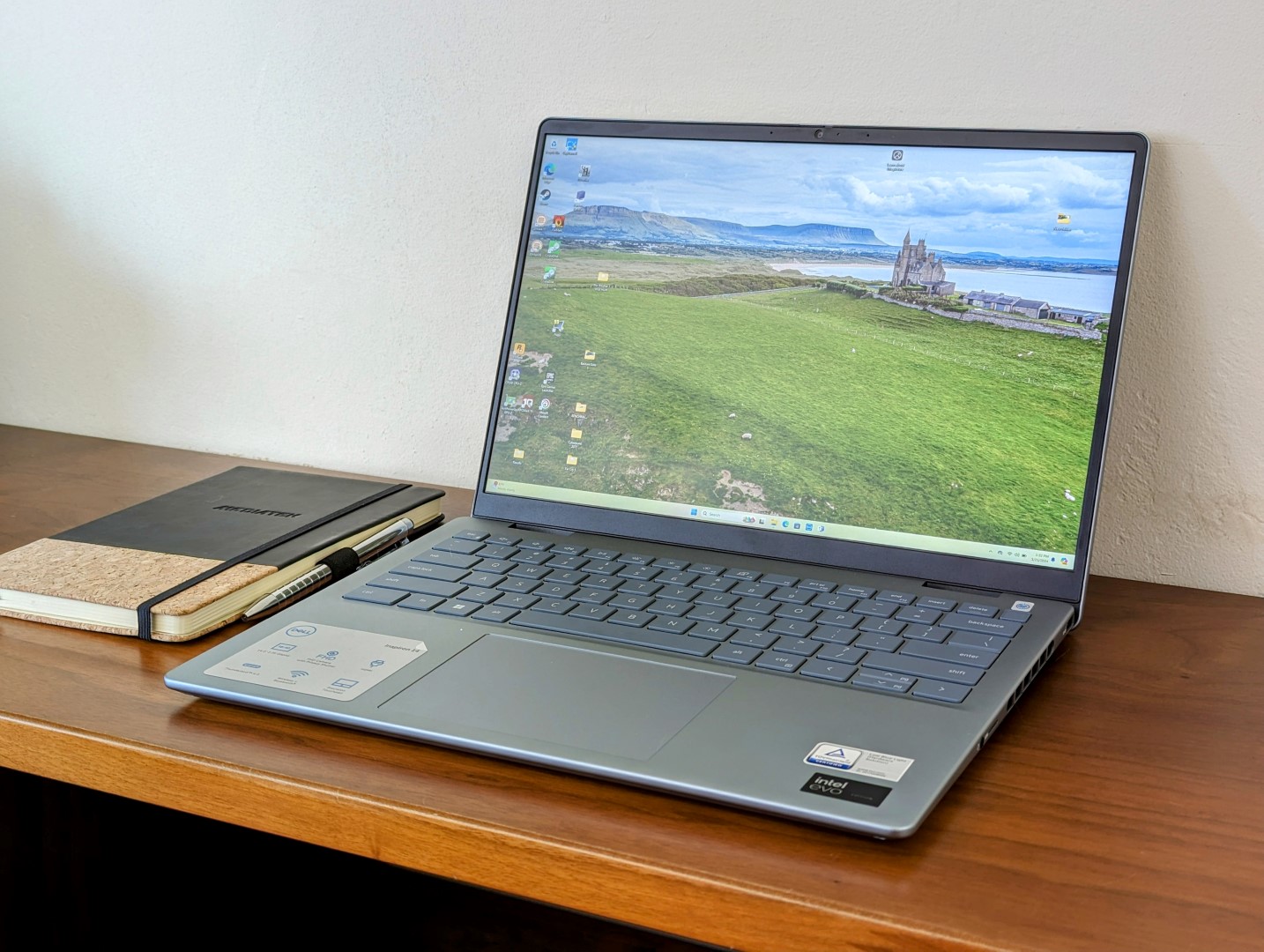
Review of the Dell Inspiron 14 Plus 7440 Laptop: Embracing Intel Arc Graphics
The Dell Inspiron 14 Plus 7440 stands out in the competitive laptop market, marking a shift away from traditional dedicated graphics solutions like the GeForce RTX series to the integrated Intel Arc GPU option. This move reflects a growing trend among laptops to explore alternatives that offer a balance of performance and efficiency.
Design and Performance
The Inspiron 14 Plus 7440 is driven by an Intel Core Ultra 7 155H processor, coupled with an Intel Arc 8-Cores integrated GPU. This configuration aims to deliver a satisfying blend of performance for both productivity tasks and moderate gaming, without the bulk or heat commonly associated with dedicated gaming hardware.
Intel Arc Graphics: A Closer Look
Intel’s entry into the discrete GPU market with its Arc series represents a significant statement. The Inspiron 14 Plus 7440 benefits from the Intel Arc GPU, which strives to serve the needs of users who require a machine that’s not only good for day-to-day tasks but can also handle creative workflows and casual gaming.
Performance Comparison
When compared to other laptops in its category, the Inspiron 14 Plus 7440 shows commendable results. For instance, in frame rate benchmarks, it demonstrates its ability to handle gaming at feasible frame rates, though it might lag behind laptops equipped with NVIDIA GeForce RTX 3050 GPUs like the Asus VivoBook 14X K3405 or its predecessor, the Inspiron 14 Plus 7420.
Gaming and Graphics
For gaming enthusiasts, performance metrics such as frames per second (fps) are crucial. The Inspiron 14 Plus 7440’s Intel Arc integrated GPU delivers acceptable frame rates in numerous titles. While not quite up to par with its NVIDIA-equipped counterparts, it certainly holds its own, particularly when considering thermal management and battery life.
Productivity and Creative Work
For users engaged in photo and video editing, graphic design, and other creative tasks, the Inspiron 14 Plus 7440 provides sufficient power to run various applications smoothly. The transition towards an Intel Arc GPU does not seem to impede performance significantly for these use cases.
Battery Life and Efficiency
One of the advantages of integrated GPUs like the Intel Arc is generally improved energy efficiency, which can translate to better battery life. Users who prioritize portability and longevity may find the Inspiron 14 Plus 7440 to be a compelling option.
Final Thoughts
The Dell Inspiron 14 Plus 7440 reflects the evolving landscape of laptop GPUs, incorporating Intel Arc graphics to offer a machine that’s both versatile and forward-thinking. While it may not cater to hardcore gamers seeking the highest possible graphical fidelity, it represents a solid choice for users who balance a mix of general use, creativity, and occasional gaming. Those interested in a laptop that provides a well-rounded performance profile without the additional cost and power consumption of dedicated gaming hardware should consider the Inspiron 14 Plus 7440 as a worthy contender.
It is important for potential buyers to evaluate their specific needs when considering the Dell Inspiron 14 Plus 7440, as its performance characteristics may align well with those seeking a blend of efficiency, practicality, and moderate power in their computing experience.Selecting the right laptop can be a challenging task, especially when considering high-performance factors like CPU power, GPU capabilities, and how these attributes translate into real-world application performance. This is where understanding benchmarks and comparing various models becomes essential.
For users looking for powerful multitasking capabilities and solid graphical performance, laptops equipped with the Intel Core i7-1255U processor and Intel Iris Xe Graphics G7 with 96 Execution Units (EUs) offer a promising combination. However, performance can vary significantly between different laptop models carrying similar specifications.
The HP Pavilion Plus 14 is a strong contender with the i7-1355U CPU and Iris Xe Graphics G7, providing satisfactory performance for an average user. However, there’s a noticeable difference in frame rates when compared to gaming-optimized laptops like the Dell Inspiron 14 Plus, which pairs the Intel Core i7-12700H with a dedicated NVIDIA GeForce RTX 3050 GPU, achieving an impressive boost in gaming and graphical tasks.
For those eyeing high-performance gaming laptops, models such as the Asus VivoBook 14X with the i5-13500H CPU and RTX 3050 GPU stand out, offering high frame rates that avid gamers desire. The Lenovo IdeaPad Slim 5, with the Intel Core Ultra 5 125H CPU and Intel Arc graphics, also offers commendable performance, slightly above the average for its class, making it suitable for both work and play.
AMD alternatives like the Lenovo ThinkPad L14 featuring the Ryzen 5 7530U CPU paired with the Radeon RX Vega 7 GPU present an alternative choice for those preferring AMD’s CPU and GPU ecosystem. Similarly, the Asus ZenBook 14 and HP Pavilion Plus models featuring AMD Ryzen 7 CPUs with Radeon Vega graphics offer competitive performance that caters to both productivity and moderate gaming needs.
Understanding the performance gap between Intel Arc GPUs and dedicated solutions like NVIDIA’s RTX 3050 is crucial for users with specific performance expectations. For example, the Dell Inspiron 14 Plus and Asus VivoBook 14X achieve a marked improvement in frame rates thanks to their powerful RTX GPUs.
Among the ultraportables, the Huawei MateBook X Pro 2022 makes a statement with its Intel Core i7-1260P CPU and integrated Iris Xe Graphics, delivering a balance between efficiency and power suited for on-the-go professionals. It is essential to consider that while integrated graphics like the Iris Xe are sufficient for everyday tasks and light gaming, dedicated GPUs are typically required for more intensive graphical work and gaming.
In summary, when choosing a laptop for specific needs, it’s critical to compare the CPU and GPU performance benchmarks across models and brands. High-performance Intel CPUs coupled with NVIDIA or AMD dedicated GPUs generally offer the best results for gaming and graphic-intensive tasks. However, Intel’s integrated Iris Xe graphics, especially when paired with upper mid-range CPUs, can still cater to a variety of uses, balancing power efficiency and performance for everyday computing.In today’s increasingly mobile world, finding the right laptop that balances performance with portability is critical. Laptops embedded with integrated graphics units are often a go-to for individuals seeking a machine capable of handling everyday tasks without the added bulk and power consumption of a dedicated GPU.
When it comes to performance comparisons among different laptop models and their integrated GPUs, it is essential to look at frame rates (fps) as a critical indicator. Higher fps can result in smoother visuals and an improved experience, especially in visual applications and gaming.
The Lenovo IdeaPad Slim 5 14IMH9, equipped with an Intel Core Ultra 5 125H processor and an Intel Arc 7-Cores iGPU, shows a solid performance for a machine with an integrated GPU. In contrast, the Asus Expertbook B5 Flip B5402F with an Intel Core i7-1360P and Intel Iris Xe Graphics G7 96EUs or the Huawei MateBook X Pro 2022 with an i7-1260P and similar Iris Xe Graphics illustrates how current generation Intel processors maintain competent performance margins.
On the AMD side, models like the HP Pavilion Plus 14-ey0095cl with an AMD Ryzen 7 7840U and an AMD Radeon 780M provide a significant competition to their Intel counterparts, showcasing robust integrated GPU performance. Likewise, the Asus ZenBook 14 UM3402Y powered by an AMD Ryzen 7 7730U and its AMD Radeon RX Vega 8 (Ryzen 4000/5000) graphics chip highlights the capabilities of AMD’s integrated solutions.
Performance metrics can also be influenced by other factors, including the specific configurations of each model. HP Pavilion Plus 14, for example, offers both Intel and AMD configurations, which can impact its graphical output. The Dell Inspiron 14 Plus 7420 stands out with a powerful combination of an Intel Core i7-12700H and an NVIDIA GeForce RTX 3050 4GB Laptop GPU, leading to significant performance enhancements over standard integrated graphics.
For those interested in the newer Intel Arc iGPU architecture, there are several models to observe, including the Lenovo Yoga Slim 7 14APU G8 and the Dell Inspiron 14 Plus 7440, demonstrating varying degrees of gaming and graphics performance.
In conclusion, when selecting a laptop, it is crucial to consider the types of tasks you will be performing and to carefully compare the fps benchmarks of integrated GPUs across various models. Whether opting for an Intel Iris Xe or an AMD Radeon setup, current laptops continue to push the boundaries of integrated graphics performance, offering consumers a range of options that balance mobility with the necessary power for a multitude of uses.## Detailed Guide to the Latest Laptop Processor and GPU Performance
With the continuous advancements in laptop technology, staying informed about the latest processors and graphics units is essential for anyone looking to buy a new laptop or upgrade their current system. This guide will provide unique insights and practical advice for understanding and comparing the performance of various laptop CPUs and GPUs currently on the market.
### Understanding Processor and GPU Options
The central processing unit (CPU) and graphics processing unit (GPU) are crucial components of any laptop, dictating overall performance, multitasking ability, and the quality of visual rendering. Here are some notable options and recent trends:
#### Intel Processors
– The Intel Core i7-1360P with Intel Iris Xe Graphics G7 96EUs is found in laptops like the Asus Expertbook B5 Flip B5402F, providing a good balance of power and efficiency.
– Intel’s Core i7-1355U is another variant with similar graphics, available in the HP Pavilion Plus 14-ew0153TU, which is suitable for mainstream tasks and some degree of gaming.
– The Intel Core i7-1260P also integrated with Intel Iris Xe Graphics G7 96EUs, is featured in premium laptops like the Huawei MateBook X Pro 2022, delivering high performance.
#### AMD Processors
– On the AMD front, the Lenovo Yoga Slim 7 14APU G8 features the impressive AMD Ryzen 7 7840S along with an AMD Radeon 780M GPU, which gives a strong performance for demanding applications and gaming.
– The HP Pavilion Plus 14-ey0095cl is another option with the same CPU/GPU combo, tailored for high performance in a sleek package.
#### Graphics Performance
– NVIDIA GeForce RTX 3050 4GB Laptop GPU paired with Intel’s Core i5-13500H found in the Asus VivoBook 14X K3405, is well-suited for gaming and creative tasks, delivering solid performance.
– The Intel Arc 7-Cores and 8-Cores integrated GPUs are also gaining popularity, offering improved graphics performance suitable for a range of applications.
### Analyzing Performance
Performance in laptops can often be assessed by looking at frames per second (fps) in gaming, video editing, or rendering tasks. For example, the Asus VivoBook 14X K3405 with its NVIDIA GeForce RTX 3050 GPU offers impressive fps, making it a great choice for gamers.
#### Comparing AMD and Intel
When comparing the AMD Ryzen and Intel Core processors paired with various GPUs, looking at minimum and average fps can be informative. Users should consider their primary use case, whether it’s gaming, content creation, or general productivity to make an informed decision.
### Applying This Information
1. **Identifying Needs**: Think about what you will be using the laptop for. Higher fps and more powerful GPUs are necessary for gaming and video editing, while general productivity tasks might not require such high specs.
2. **Research** : Look up the latest benchmarks for the specific processors and GPUs you’re considering. Benchmarks give a good indication of real-world performance.
3. **Budget Consideration** : Match your performance needs with your budget. Advanced GPUs and CPUs come at a premium, so balance cost with the kind of performance you actually need.
4. **Read Reviews**: Use customer and expert reviews to understand the pros and cons of each component. This research will also reveal any potential issues with specific laptop models.
5. **Future-Proofing**: Choose a laptop with a CPU and GPU that will hold up for a few years. Technology evolves quickly, but opting for a powerful setup now can extend the life of your machine.
Remember, the right choice highly depends on personal requirements and usage patterns. A heavy graphic designer will have very different needs compared to a casual user who only browses the internet and uses office applications.
By following these actionable steps, readers can make an educated decision when selecting a laptop that contains either an Intel or AMD processor, and NVIDIA or Intel graphics, ensuring a purchase that suits their performance needs and budget.


