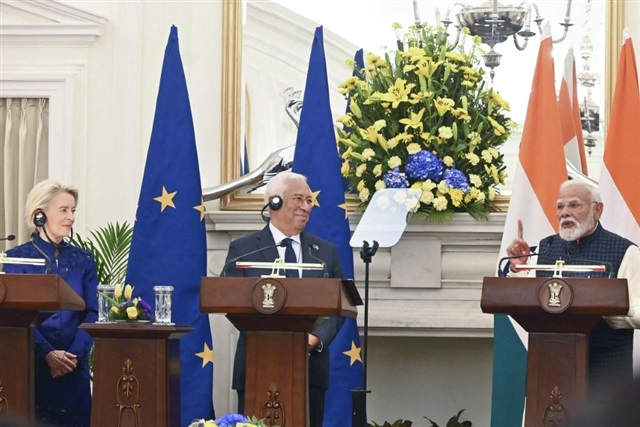
After nearly 20 years of drawn-out talks, India and the European Union have finally concluded a long-anticipated free trade agreement (FTA), marking a major turning point for two of the world’s biggest economic partners. The timing is no coincidence: as new U.S. tariff policies continue to disrupt global supply chains and reshape trade routes, India and the EU are moving to lock in stability, improve market access, and strengthen economic ties in a changing world.
For businesses on both sides, this deal signals a clearer, more predictable trading environment. An EU–India FTA is expected to reduce barriers that have historically slowed cross-border commerce, making it easier for companies to buy, sell, and invest between the two regions. With global manufacturers and exporters navigating uncertainty and rising costs linked to shifting tariffs, the agreement arrives as a strategic response to protect long-term trade flows.
The broader message is simple: supply chains are being rethought worldwide, and large economies are reacting by building stronger regional and bilateral partnerships. By closing this agreement, India and the EU position themselves to capture trade and investment opportunities that could be redirected as companies diversify away from tariff-related risk.
Beyond the headline, this development reinforces India’s growing role as a key global trade partner and highlights the EU’s continued push to secure reliable economic alliances. In practical terms, the conclusion of the FTA could encourage more bilateral trade, support job creation linked to export growth, and help reduce uncertainty for industries that rely on steady international sourcing and demand.
As global trade becomes more fragmented, agreements like this are increasingly about resilience as much as growth. For India and the EU, the newly concluded FTA represents a long-awaited step toward deeper economic cooperation—at a moment when the global supply chain needs it most.