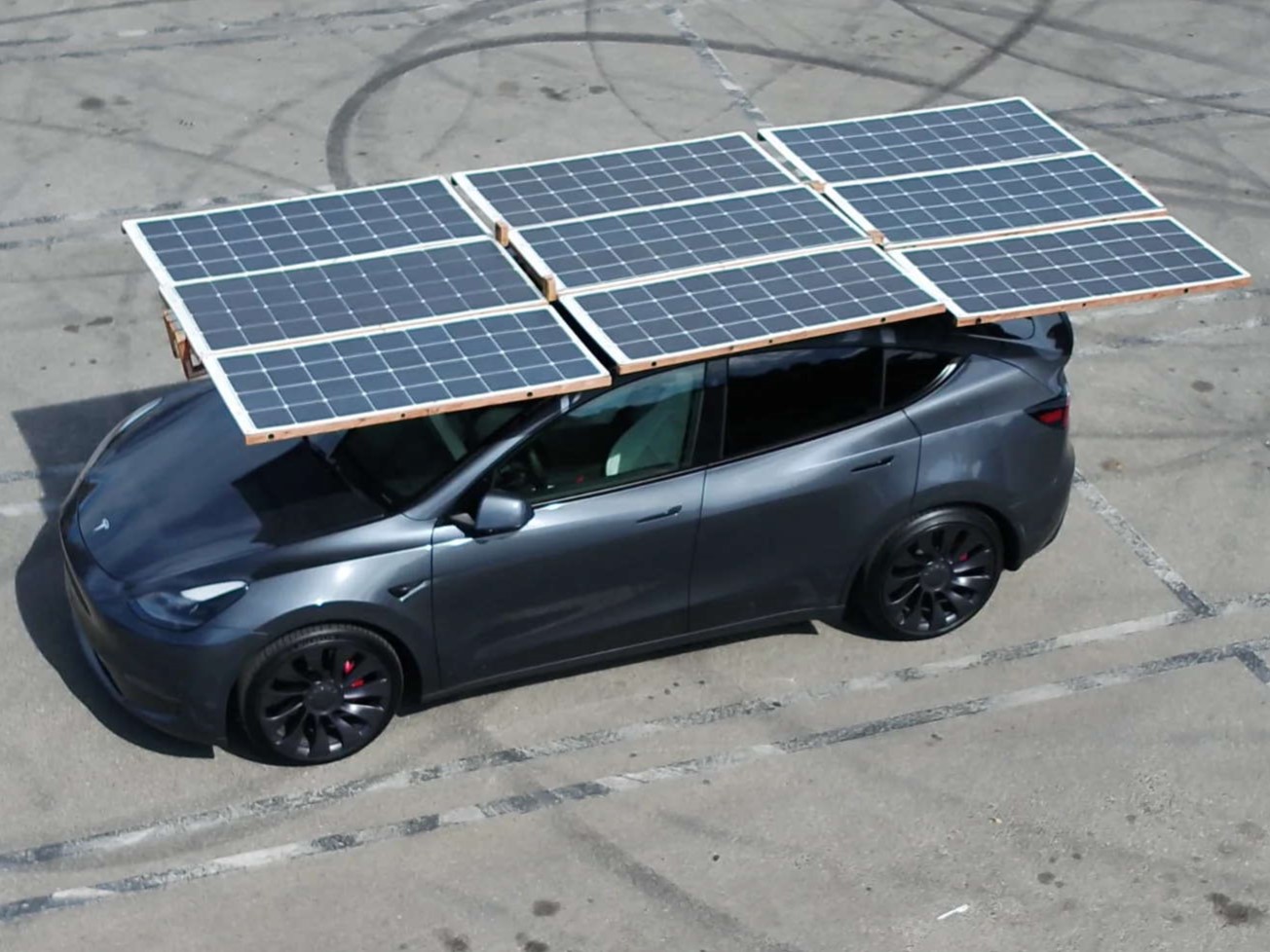
In pursuit of extending the range of electric vehicles, a creative Tesla Model Y owner has devised a solar roof that can be folded and does not require complete removal while driving. This solution presents an intriguing alternative means to boost the range of electric cars, particularly useful for daily commutes in larger metropolitan areas where range issues are prevalent.
Accustomed to relying on the availability of fast charging stations for longer trips, Tesla owners and electric vehicle enthusiasts are continually seeking innovative ways to increase their range. This homemade solar roof illustrates what can be achieved with a little ingenuity. Detailed in an online post, the owner demonstrates a solar panel array that can be conveniently unfolded, potentially offering a significant advantage on sunny days.
The solar roof system is comprised of nine panels, each capable of delivering a peak output of 175 watts. The lightweight design of the system, less than 75 kilograms (165 pounds), ensures that it isn’t a heavy burden on the vehicle’s roof. This collapsible setup can be quickly prepared for road travel, providing both practicality and utility.
On a clear day, charging the solar panels for around five hours can account for an increase in range of approximately 32 kilometers (20 miles). The convenience of the system is notable, as it can be deployed within the dimensions of a standard parking space, making it user-friendly and limiting any potential obstructions.
This project, though still in its nascent stages, shows promise. The materials required for the setup are estimated at about $4,000, with future improvements aimed at better aerodynamics. The owner intends to patent this system and has aspirations to commercialize it, which could make solar charging a more widespread option for electric vehicle drivers looking for extra mileage on their daily drives.
As the world of transportation continues to evolve, with a growing emphasis on sustainability and innovative solutions like this DIY solar roof, the possibilities for enhancing electric vehicle range continue to expand. Sharing innovative projects and ideas such as this one can serve to inspire further advancements in the realm of sustainable transportation.